Why Study Computer Science at PJAIT?
✅ Over 30 years of experience
✅ Hands-on projects starting in the first semesters
✅ A degree recognized by universities around the world
✅ Excellent earning potential after graduating from PJAIT
✅ Classes taught by researchers and IT industry experts
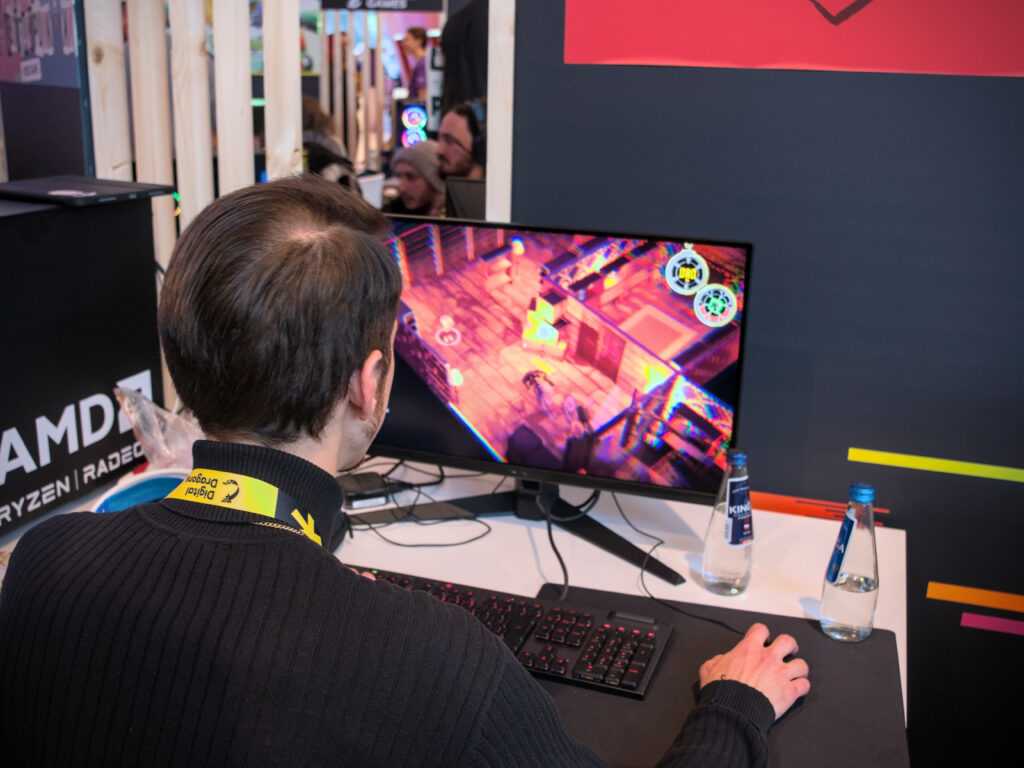
✅ 1,000 state-of-the-art computer workstations
✅ state-of-the-art labs
✅ artificial intelligence, data science, and cybersecurity
✅ collaboration with the business community
✅ international community
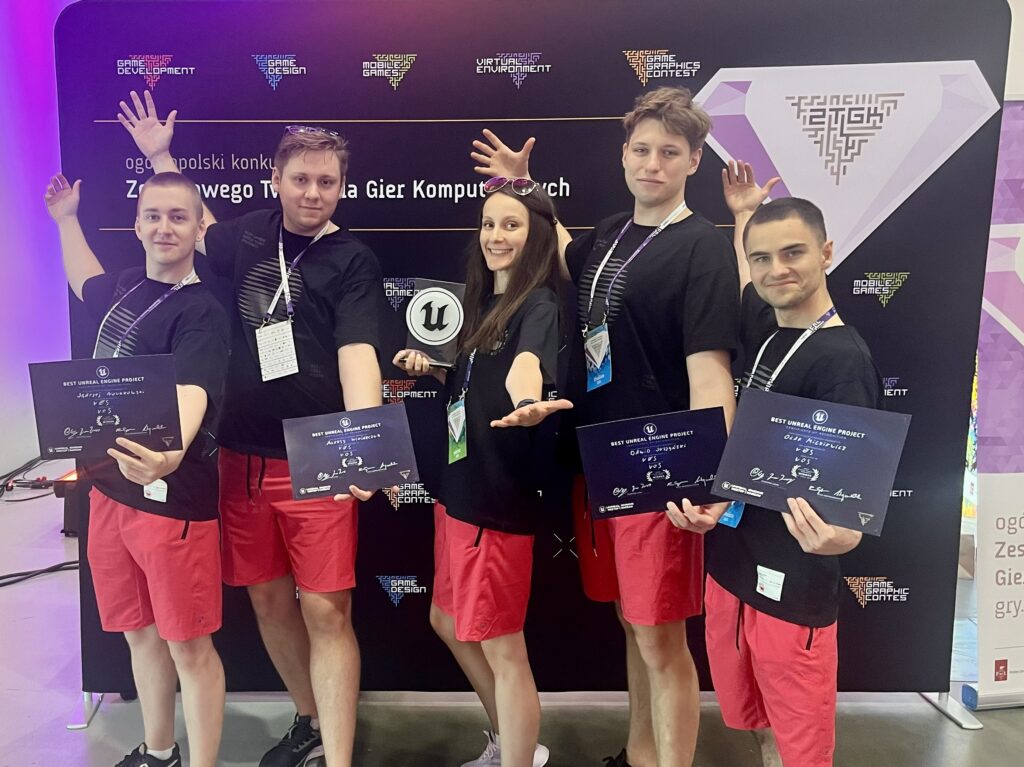
✅ Academic Student Clubs, hackathons, and conferences
✅ the option to study in Polish or English
✅ over 12,000 graduates
Check out the ELA report
For over 30 years, the Faculty of Computer Science at the Polish-Japanese Academy of Information Technology has combined high-quality education with scientific research and cooperation with the technology industry. With the highest scientific category — A — in the discipline of Information and Communication Technology, PJAIT is authorized to award doctoral and postdoctoral (habilitation) degrees, confirming the highest standard of its research and academic activity.
Our study programmes are developed in cooperation with experts and industry partners, ensuring that they meet the current needs of the IT sector. At PJAIT, you can advance at every stage of your academic career—from undergraduate engineering and master’s degree programmes to the Doctoral School—gaining knowledge and experience in an environment where education, innovation, and research complement one another.
First-cycle (Bachelor of Engineering) programmes prepare students for careers in the rapidly evolving world of new technologies by combining theoretical knowledge with hands-on project work.
Second-cycle (master’s) programmes enable students to develop specialised expertise, participate in advanced research projects, and collaborate with industry partners on real-world technological challenges.
Those interested in pursuing an academic career can continue their development at the PJAIT Doctoral School, conducting research in cooperation with the international academic community and industry partners.
The Polish-Japanese Academy of Information Technology offers several modes of study. The choice is yours — select the option that best suits your needs:
1. full-time studies,
2. part-time studies part-time
3. part-time studies (using distance learning methods)
Important information about studying at the Department of Computer Science:
What distinguishes computer science in PJAIT?
The Computer Science engineering program at PJAIT for careers in the IT industry starting from the very first semester. You’ll work on projects, learn to code, develop teamwork skills, and gain familiarity with the technologies used by today’s tech companies.
Learning computer science through practice
An important element of education in the computer science field of study is the development of practical skills that allow graduates to effectively apply the acquired knowledge in practice. The curriculum takes into account practical projects and laboratories, and the university's cooperation with top technology companies in Poland enables students to gain experience through internships while still studying. Thanks to this, students of computer science can gain experience with real IT problems and learn teamwork, which prepares them to function effectively in a dynamically changing labor market in the future.
The future of computer science starts today
Curriculum for the major in computer science at PJAIT only familiarizes students with the latest artificial intelligence (AI) tools, but above all prepares them for the jobs of the future—to be leaders in shaping innovation in IT. Skills in coding, programming, and using the latest AI tools are more valuable than ever, but traditional mathematical knowledge—such as algebra, calculus, and statistics—is also crucial for understanding advanced artificial intelligence techniques. Specializing in specific areas of the IT industry allows students to choose from a wide range of specializations in their second or third year of study. As our graduate Paweł Mączka says:
“At PJAIT don’t just PJAIT how to write code. You learn how to solve problems, design technologies, and collaborate with people who—just like you—want to shape the future of the IT industry.”
Frequently asked questions
Do I need to know how to program before starting college?
No. The program is designed so that beginners can gradually develop their programming skills. At the same time, candidates with prior experience will find many opportunities for further development.
PJAIT a lot of math in the Computer Science program at PJAIT ?
Mathematics is an important component of computer science education because it helps students understand algorithms, data analysis, and artificial intelligence. Classes are conducted in a way that supports the gradual development of these skills.
Is it possible to gain professional experience while in college?
Yes. Many students land their first job as early as their second year of study thanks to job fairs organized on campus. In addition, undergraduate students are required to complete an internship (120 hours) while still in school, while also developing their own projects and participating in research clubs. According to ELA statistics, graduates of this program have a 0% unemployment rate.
Can I study in English?
Yes. field of study computer science field of study computer science PJAIT is PJAIT in both Polish and English.
PJAIT welcoming to international students?
Yes. The Polish-Japanese Academy of Computer Technology is academy international academy attended by students from over70 countries. We foster an open and multicultural environment that encourages collaboration and the exchange of experiences.
Is there a chance for an exchange with Japan?
Yes. All PJAIT students—both male and female— PJAIT apply for the Pasona Group Summer Scholarship: a 3-month internship on Awaji Island.


Interested in studying?
Contact us!
Contact the Admission Office to get answers to all your questions.
Departments of the Faculty of Computer Science
The Department of Computer Science has the following departments:
| Name of the cathedral | Department head | |
|---|---|---|
| Databases | dr hab. Lech Banachowski, prof. PJAIT | |
| Bioinformatics and Artificial Intelligence Applications | Dr hab. Adam Kuzdralinski, prof. of PJAIT | |
| Software Engineering | Prof. dr hab. Kazimierz Subieta | |
| Mechanics, Computer Science, and Robotics | dr hab. Romuald Kotowski, prof. PJAIT | |
| Mathematics | dr hab. Ewa Turska, prof. PJAIT | |
| Programming Methods | PhD Eng. Michał Tomaszewski, Prof. PJAIT | |
| Multimedia | dr hab. Krzysztof Szklanny, prof. PJAIT | |
| Fundamentals of Artificial Intelligence | dr hab. Marcin Sydow, prof. PJAIT | |
| Computer Networks and Distributed Systems | prof. dr hab. Adam Wierzbicki | |
| Intelligent Systems and Data Science | Prof. dr hab. Grzegorz Wójcik | |
| Extended Reality and Immersive Systems | Dr Wiesław Kopeć, Prof. PJAIT |
Who will you be after three years of study at PJAIT?
💻Software Engineer– developer of modern applications and IT systems
🌐Frontend or Backend Developer– specialist in developing web applications
⚙️Full Stack Developer– programmer who develops complete digital solutions
🤖AI Engineer– a designer and developer of artificial intelligence-based systems
📊Data Scientist– an expert who analyzes data and supports business decision-making
🧠Machine Learning Engineer– a specialist who builds machine learning models
🔒 Cybersecurity Specialist– an expert ensuring the security of systems and data
☁️Cloud Engineer– a specialist who designs and manages cloud solutions
🏗️Software Architect– a designer of modern IT systems
🎮Game Developer– a creator of computer games and interactive applications
🥽XR Developer– designer of VR, AR, and Mixed Reality solutions
🤖Robotics Engineer– engineer who creates intelligent systems and robots
📱Mobile Developer– mobile app developer
🚀DevOps Engineer– specialist who automates the software development and deployment process
🔬 Research Engineer– a researcher developing future technologies at the intersection of science and industry.
Technology is changing very rapidly, which is why at PJAIT not for a single profession, but for many possible career paths. We teach design, problem-solving, and continuous development—skills that remain relevant regardless of changes in the IT market.
After graduating from PJAIT prepared to work in the rapidly changing world of new technologies. You’ll gain not only knowledge in programming, artificial intelligence, data analysis, and IT systems design, but above all, experience in project implementation, teamwork, and solving real-world problems.
You will learn to develop technology responsibly by combining technical expertise with creative thinking and the ability to collaborate. It is precisely these qualities that enable PJAIT graduates PJAIT in international technology companies, startups, and research institutions, as well as to launch their own ventures.
Studying at PJAIT the start of a long-term career path. After receiving your diploma, you remain part of our alumni community—people who help shape the IT industry, conduct scientific research, develop innovative companies, and share their experience with future generations of students.
Join the PJAIT alumni community PJAIT LinkedIn and see where they work today and how they’re advancing their careers. You can start planning your career today by consulting with a career specialist at the PJAIT Academic Career Office.
Authorities of the Faculty of Computer Science
Dean of the Faculty:
Dr. Aldona Drabik, Professor PJAIT
Faculty Deans:
Associate Dean for Academic Affairs
Prof. dr hab. Kazimierz Subieta
Associate Dean for Teaching
Dr. Pawel Lenkiewicz
Associate Dean for Study Programs
dr hab. Piotr Habela, Professor PJAIT

Study at the Polish-Japanese Academy of Computer Technology and join the ranks of Poland’s top IT professionals!
Computer science is a rapidly developing discipline whose progress has a huge impact on many fields of science. As an exact and technical science, it deals with information processing, including information processing technologies and technologies for producing information-processing systems. Every well-constructed curriculum should maintain a balance between the fundamentals necessary to understand the core concepts in this discipline and modern applications or fascinating technologies that are changing the way the world works. A distinguishing feature of the educational concept at PJAIT is the clear division of learning outcomes into two categories: fundamental outcomes related to acquiring general computer science knowledge and outcomes concerning specific competencies.
field of study computer science is the program with the longest tradition at PJAIT; it was the first program offered by the university when it was founded in 1994. Faculty of Computer Science, established as recently as 2005, is the university’s largest and most dynamically developing unit. The faculty’s dynamic growth is evidenced by its student enrollment—in 1994, 90 students began their studies, and today there are 5,500.
The tradition and development of the Faculty of Computer Science at PJAIT constitute not only the foundations of the university's history, but also reflect the dynamic development of computer science as a whole. Its evolution from its inception to its current scale and number of students is undeniable proof of the growing importance of this field in society.
What else?
Studying at PJAIT not just about learning. It’s also an opportunity to pursue your passions, gain experience, and meet people with similar interests. It’s academy truly interdisciplinary academy that understands that innovation thrives in an open environment.
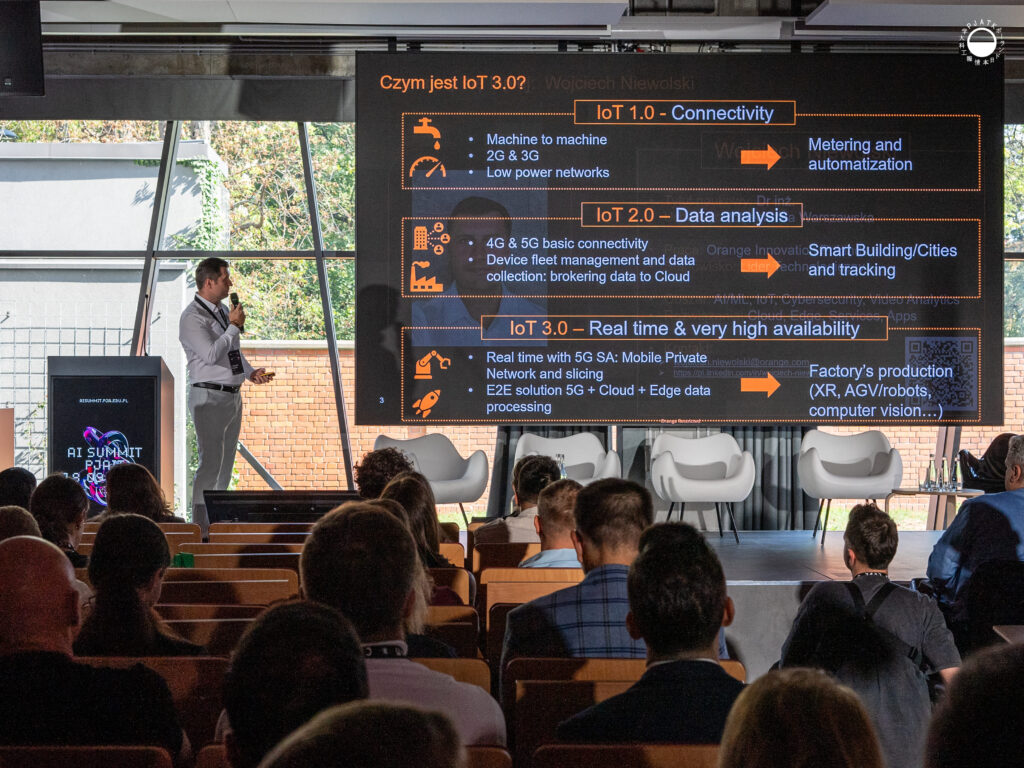
Joinresearch clubs, work on your own projects, and participate inhackathons, competitions, and conferences. Represent PJAIT the Academic Sports Association (AZS)or develop your skills withNINJA PJAIT, our esports team. On campus, you’ll find events, workshops, and initiatives that make your college experience more than just acquiring knowledge.
Interested in studying?
Contact us!
Contact the Admission Office to get answers to all your questions.