Announcements
Scientific research
Scientific research conducted by the Department of Multimedia covers issues of interface usability, speech, multimedia data analysis, and the application of multimedia in medicine.
The research interests of the Department's staff include speech recognition and translation, speech synthesis, speech disorder research, sign language recognition, music and musical instrument analysis, usability in medicine and therapeutics, as well as augmented reality and image analysis.
Department staff conduct research in national and international projects and participate in statutory research at PJAIT. The Department organizes a regular conference on MIDI usability (link) and runs seminars with the participation of PJAIT staff and students, as well as invited guests.

Classes

The staff of the Department of Multimedia conduct numerous classes, mainly at the Faculty of Computer Science and the Faculty of NeMA of PJAIT. The subject matter primarily covers the creation and operation of multimedia applications, as well as photography, graphics, animation, and sound. The Department offers students 3 specializations at the Faculty of Computer Science, and the Department's staff also assist students of the Faculty of NeMA as technical supervisors.
Laboratories and Equipment
Our Department has professional laboratories equipped with the latest hardware and software necessary to conduct classes.
Students of the Department of Multimedia and students of the NeMA studio, working under the supervision of our educators, have access to equipment that enables them to work with state-of-the-art software.
We are glad that the classes and educators are popular among students and highly rated in surveys. We encourage you to join our classes and expand your interests in the environment of multimedia, computer game modeling, audio creation, and 2D and 3D animation.

Multimedia: An Introduction
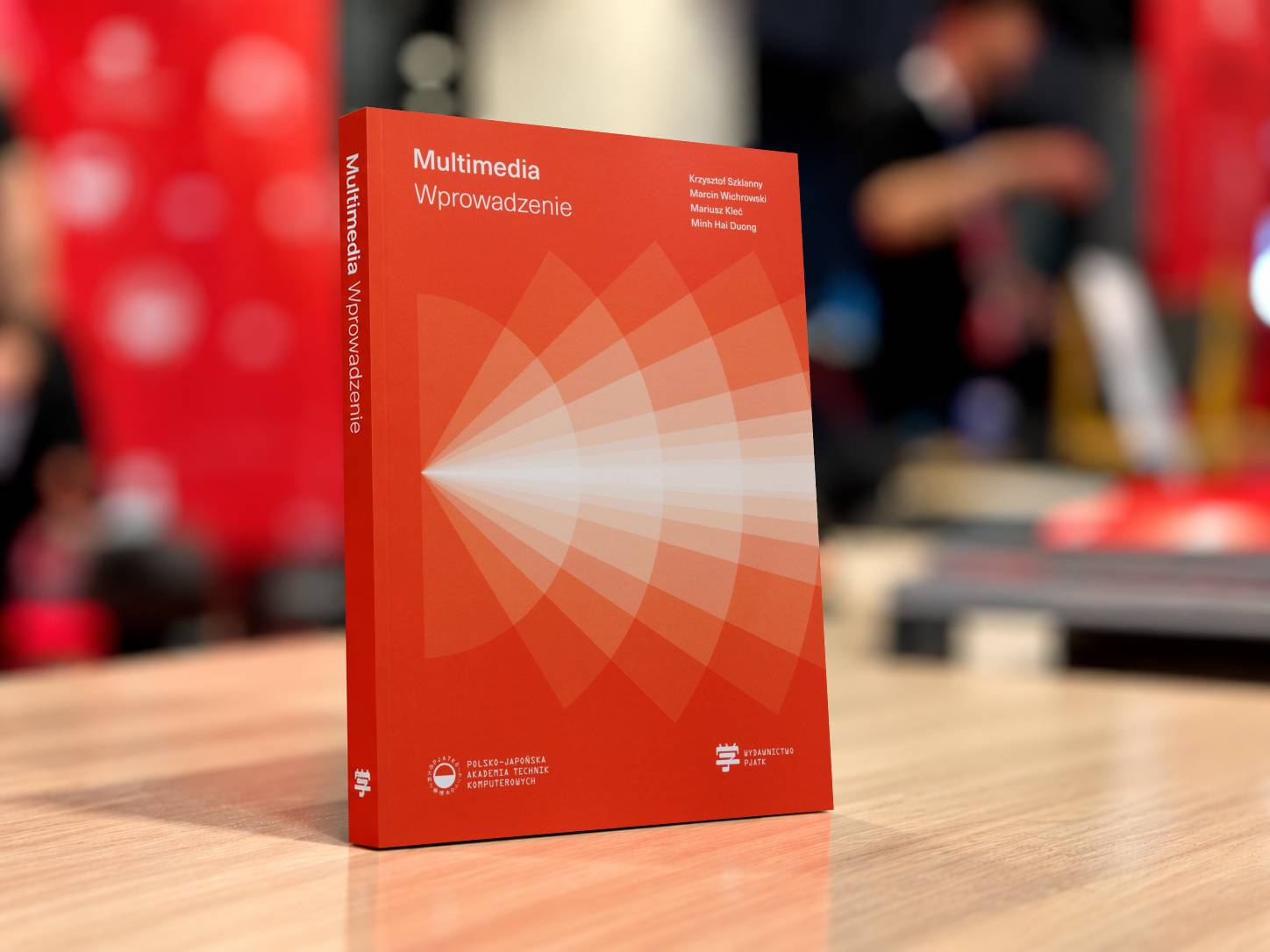
"Multimedia: An Introduction" is a publication by the Department of Multimedia, dedicated to issues in multimedia communication.
From an excerpt of a review: Throughout the long and complex history of civilization, people have used various methods to communicate. For centuries, oral tradition dominated. It was through this tradition that, among other things, Homer’s verses survived. Then writing emerged. Written messages were in many ways superior to those conveyed orally, because the sender and recipient did not have to be in the same place—or even at the same time. The invention of printing further streamlined and improved this written communication. However, the development of electronics, telecommunications, and computer science—which began in the 20th century and has gained significance in the 21st—has led people to desire more multidimensional forms of communication, ones that are tailored to the richness of the senses and more engaging. A demand for multimedia has emerged. And since people want to use multimedia, they also need knowledge about it.