Curricula and syllabi
The part-time curriculum at the Faculty of New Media Arts, Bachelor's degree starting from the 2024/2025 academic year has been shortened by one semester and aligned with the full-time curriculum.
All mandatory lectures and exercise classes conducted in the full-time program are included in the part-time program with an adjusted number of hours and as elective subjects, giving students a broader area of options to build their own curriculum tailored to student preferences. A change has also been introduced in the way diploma studios are conducted, which, starting from the 2024/2025 academic year, will be elective from 4 available thematic studios. The new studio system will apply from the 2nd semester of studies, for 3 consecutive semesters, until graduation.
Elective studios are accompanied by specialized elective subjects that deepen students' knowledge in a selected specialized area. The change in the way diploma studios are conducted is a key element of the new part-time curriculum.
The introduced change will allow for the creation of class groups for selected studios, and the curriculum—tailored to the type of diploma studios—will depend on the student's interests.
Regardless of this, the curriculum has been supplemented with new, previously unconducted lectures and exercises, which will significantly expand the knowledge acquired by students during their studies.
Diploma Exam Rules at NeMA
The thesis defense should take place after five semesters of study at the Faculty of New Media Arts for the program implemented until 2025/2026.
The program, which runs from 2024/2025, lasts 4 semesters and the defense should take place after four semesters.
The principles and topics of the work should be consulted on an ongoing basis with the promoters: the main, technical and theoretical, as well as during the graduation studio classes.
Course subjects
The aim of the subject is to learn advanced traditional and 2D animation techniques, and to acquire the skills of creating a script and storyboard for the needs of film animation and computer games.
The aim of the subject is to learn basic and advanced 3D modeling techniques, and to acquire the skills of analyzing and preparing for modeling real objects.
The purpose of the lecture is to impart knowledge about the main currents of anthropology, prominent anthropologists and the basic concepts of cultural anthropology. Formation of students' attitudes in terms of awakening interest in anthropology; formation of a reflective attitude towards cultural reality.
The aim of the subject is to familiarize oneself with a very wide range of techniques used in photorealistic and hyperrealistic special effects for film, television, and advertising. Special emphasis is placed on digital techniques. We focus on the most advanced elements of image manipulation in film. We use photorealistic rendering algorithms available in 3D programs. Simulation of daylight, strategies for integrating effects into a real image. The curriculum content includes elements of basic film set lighting techniques, daylight simulation, and photorealistic textures.
Introduction to the basic concepts in the area of psychoacoustics of hearing, sampling rate principles, as well as PCM and DSD formats; examples of using film space shaping methods in selected feature films; methods for selecting sound format and metadata.
GIL teaching is based on two aspects: aesthetic and technical. A major role is played here by the designer's awareness of "flexibility" and stepping out of habits. The goal is the ability to create illustrations in various graphic styles, achieving an equally high standard across all versions. It is essential to be able to offer a prospective commissioner or client a service of the highest quality and, importantly, one that is alternative and diverse.
A continuation of the course Design vs. Motion. The laws of perception and composition transferred to time-based media. Synthesis and abstraction in visual language as means of enhancing the message. Developing previously developed compositional awareness, confronting challenges at a higher level of abstraction. Working with multi-element arrangements in 2.5-3D graphics and animation. Animation synchronized with music.
The course focuses on the problems of movement, rhythm, synchronicity in relation to specific tool strategies related to graphic design computer and multimedia (image , sound, word). Practice in digital graphics, editing, image post-production (bitmap, video image), 2D (2.5 D) raster and vector animation with elements of sound design (postsynchron and pre-synchron). The goal is to create an individual original project for a specific audience and type of application (e.g. motion design, music visualization, moving typography, music video, etc.).
Improvement of graphic design workshop; application of computer techniques in graphic design workshop.
Creating a series of graphics in a chosen technique.
The subject aims to provide knowledge in the area of advanced sound processing, taking into account conscious design decision-making and the use of professional terminology. The mini-projects created during exercises place a strong emphasis on dynamics control for broadcast on the big screen, radio, TV, or the internet. The final project should be a television commercial, animated logo, or a short film trailer with a properly created and mastered soundtrack that makes maximum use of the potential of available tools and techniques.
The subject teaches the student how to organize an animation project in terms of file compatibility of various types, draws attention to issues and key elements from the area of motion design work, teaches how to automate daily work using expressions and useful scripts, and how to animate with them in After Effects.
The lecture is a presentation of the most important trends of animated film, both world and Polish, in chronological terms. As part of the lecture, the student acquires knowledge of both the history of cinema and the contexts necessary to better understand the issues discussed. By learning about the broad background of literature, visual arts and customs, the student prepares to more fully perceive the film work.
The lecture presents the history of contemporary design – industrial design and interior design as well as applied art. The issues of the emergence of new forms and solutions, as well as the introduction of modern materials into contemporary design, are shown against the background of earlier trends and historical and social transformations.
The lecture presents the history of contemporary design – industrial design and interior design as well as applied art. The issues of the emergence of new forms and solutions, as well as the introduction of modern materials into contemporary design, are shown against the background of earlier trends and historical and social transformations.
The classes provide an introduction to the knowledge of Japanese culture, society, aesthetics, and art. Both spiritual and material culture elements will be discussed, and the analysis will cover, among others, the family institution, etiquette and human behavior norms, religion, work, education, entertainment, culinary culture, sport, fashion, specific hygiene rules, houses (architecture and urban structure of Japanese cities), and applied art.
Understanding the history of European graphic design and Japanese woodblock printing: knowledge of key artists, historical, stylistic, and ideological determinants; the ability to perform formal and comparative analysis and to determine interrelations with culture, politics, ideology, and technology; competence regarding the communication of artistic issues
The lecture presents the most important trends in world and Polish art in a chronological approach, starting from the 1950s to the present day. As part of the lecture, the student acquires knowledge of both art history and the contexts necessary for a better understanding of the discussed issues.
Learning insightful observation of nature and developing the ability to capture it analytically and synthetically; enriching the observation of nature through emotional painting studies; developing the ability to analyze one's own creative process; searching for one's own painterly form based on the study of nature; expanding technological knowledge in the area of painting.
The aim of the classes is to familiarize students with the fundamental aspects of human-computer interaction, user-centered design (UCD), the creation of usable user interfaces (UI), and system usability testing methods
subject Photographic Creation will provide students with knowledge not only of photography, but also of the application of photographic techniques in various fields such as 3D scanning, 3D images, advertising, special effects, etc. During the course, students will have the opportunity to use professional equipment in the photo studio to experiment and create beautiful works for various purposes and projects.
The classes aim to familiarize the student with issues related to organizing an exhibition. They provide practical knowledge concerning the process of creating an exhibition concept, working on its script, criteria for selecting objects and exhibition space. They show the role and work of a curator, currently functioning curatorial models, and the activities of exhibition designers, taking into account the graphic design of exhibitions.
Students acquire knowledge in the area of structural and post-structural design. Through the chain-of-association method as well as other related methods, eliminating improper solutions, they select, together with the instructor, the most appropriate ones (clear and strong message for the recipient, engaging the recipient, attractive form of message). Through conceptual problem-solving during exercises, practical workshop research, and the comparison of their observations and discoveries with the solutions of other graphic designers.
When designing posters, billboards, info graphics or advertising campaigns, students learn how to create a relationship between visual forms and the content of the ideological assumptions of a specific task, how to design Students also learn the secrets of advertising photography and digital image processing techniques.
The educational goal is conscious and professional digital publication design through acquired knowledge in the area of online publishing. Expanding purely artistic knowledge with technical knowledge. Making the project more attractive through movement elements introduced into it. Acquiring elementary knowledge about the differences in displaying and perceiving RGB and CMYK. The course curriculum is based on consolidating knowledge of techniques used in digital design, with particular emphasis on the specifics of preparing materials for their readability and web ergonomics.
To familiarize and develop the student's creativity in creating his own visual compositions on a specific plane or in space using various drawing techniques and methods. Sensitizing to the perception of reality and forming skills for independent exploration and creation in the drawing area. Workshop exercises shaping imagination and proficiency in illustrating the word - a plastic image using illustrative drawing. Forming artistic individuality and workshop skills to create their own drawing realizations with concern for artistic and aesthetic values.
The master's seminar aims to prepare the student to write the theoretical part of the master's thesis
The program is designed to teach students the basics of designing an advertising campaign and to provide knowledge in the area of the history of advertising, psychology of advertising, marketing, as well as learning Adobe Photoshop, Illustrator, and InDesign software. The goal of the program is also to develop students' sensitivity and skills in creating simple visual communications, 360’ advertising campaigns, as well as raising awareness of the role of advertising in the modern world.
The aim of the subject is to learn basic and advanced techniques of 2D and 2.5D digital animation, as well as to acquire the skills of creating a script and storyboard for the production of commercials and commercial presentations.
Graduate Profile
The professional qualifications of graduates will allow them to consciously make and implement creative decisions. Graduates will possess extended knowledge regarding the function of art history in culture and society, and will be prepared to use traditional and modern means of artistic expression. The proposed education profile gives our graduates a solid foundation for designing in the following areas: advertising, short film forms, video clips, computer games, websites, user interfaces, and 2D and 3D visual information design. This study profile will provide excellent preparation for work in: advertising agencies, television, art galleries, cultural and educational institutions, computer and internet service companies, the film industry, exhibition institutions, and the visual setting of performances.
Thanks to English language classes held throughout the entire period of studies, graduates achieve fluency in English. This enables them to find employment in Polish companies and institutions in positions requiring fluent English, in foreign companies and representative offices of international organizations in Poland, as well as abroad. Graduates will be prepared to undertake third-cycle (doctoral) studies.
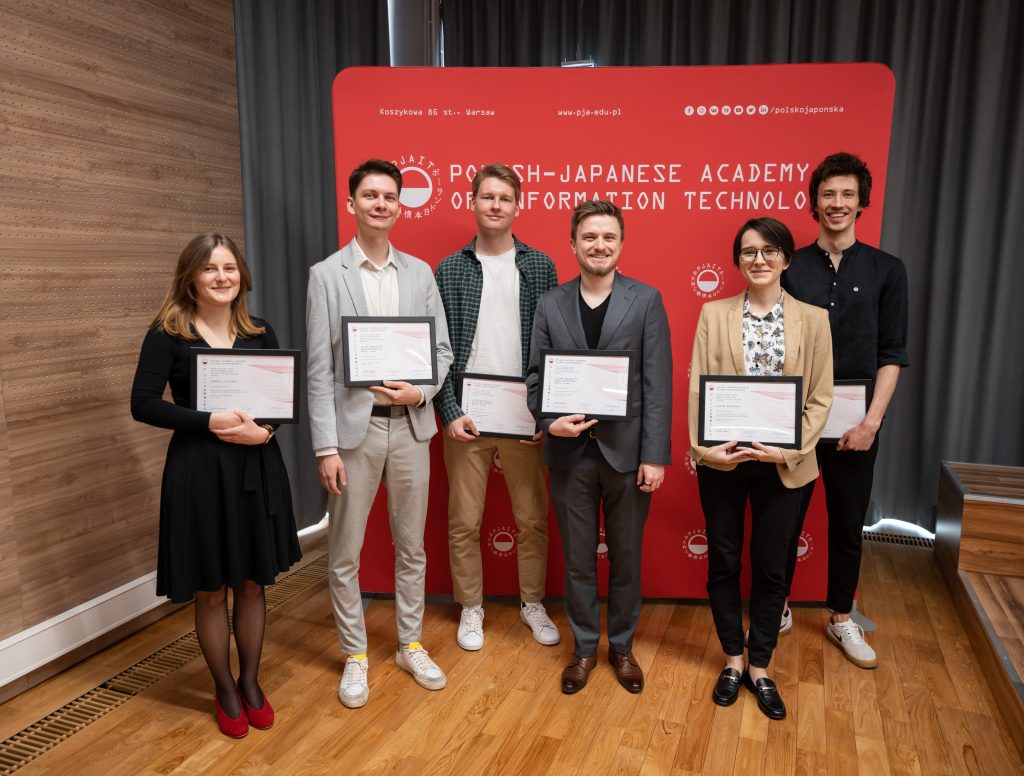
Best Diploma Projects
of the Faculty of New Media Arts
!
Check out the best diploma projects of part-time students!