The fall edition of " Career Fair "PJAIT is coming up tomorrow—October 22!


As recently as the turn of the millennium, space exploration was almost exclusively the domain of government agencies and major world powers. Today, that same space is filled with private initiatives, and technology companies are charting courses that, a decade ago, seemed like science fiction scenarios. This is a transformative shift for civilization—and it’s happening right before our eyes.
According to data from the Polish Economic Institute, the global space sector is currently valued at $464 billion, and forecasts by the Industrial Development Agency predict that it will grow to as much as $1.8 trillion by 2035, with an average annual growth rate of 9%. This pace clearly outstrips global GDP growth and signals that the space industry is becoming one of the driving forces of the modern economy.
Private investors are primarily responsible for a fundamental shift in the cost model. Reusable rockets, mass production of satellites, and an agile approach to engineering—modeled after the IT sector—have made launching payloads into orbit significantly cheaper than it was just a decade ago. Behind this revolution are primarily two corporations, which today symbolically set the bar for the entire industry’s ambitions.
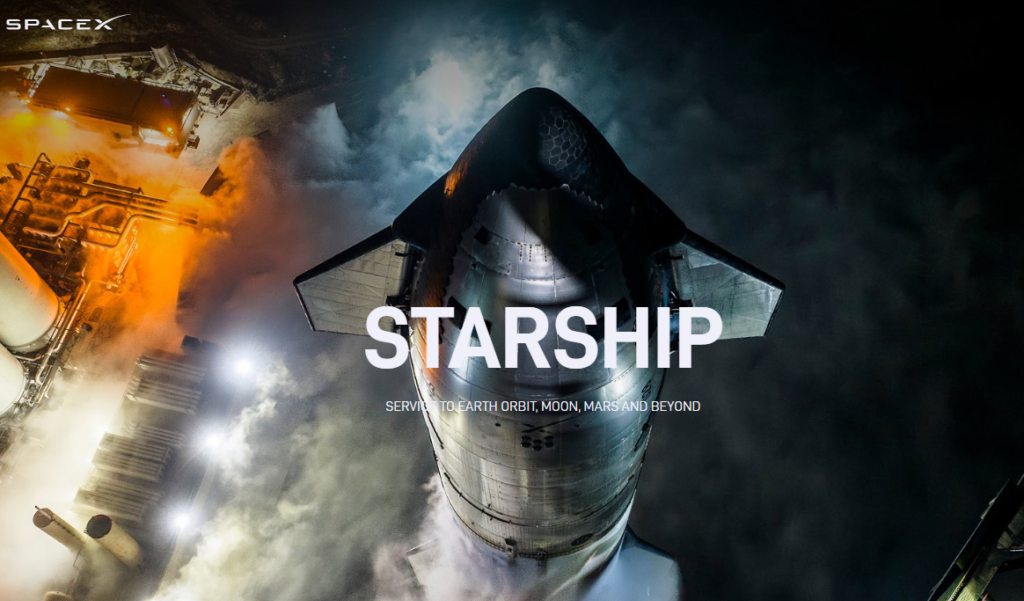
Starship remains the flagship project—a massive, fully reusable rocket designed for missions to the Moon and Mars. By the end of 2025, SpaceX had conducted a total of 11 test flights of Starship, refining key technologies such as booster landings and in-orbit refueling.
Elon Musk’s SpaceX has had an impact on the space sector comparable only to the advent of the Internet in telecommunications. In 2025 alone, the company conducted 165 orbital launches (up from 134 the previous year), accounting for more than half (51%) of all orbital launches worldwide last year. By comparison, the total number of orbital missions worldwide was 324 (up from 259 the previous year)—the rest of the world combined could barely keep up with a single company.
https://x.com/elonmusk/status/2020640004628742577For those who aren't aware, SpaceX has already shifted its focus to building a self-sustaining city on the Moon, as we could potentially achieve that in less than 10 years, whereas Mars would take 20+ years.
— Elon Musk (@elonmusk) February 8, 2026
SpaceX's mission remains the same: to extend consciousness and life as we know it to…
Interestingly, in 2026, SpaceX announced a shift in priorities—instead of focusing exclusively on Mars, the company is aiming to build a self-sustaining city on the Moon within less than 10 years, viewing this goal as more technologically feasible and taking half the time.
At the same time, SpaceX is building the Starlink mega-constellation, which will ultimately consist of thousands of satellites providing broadband Internet access around the globe. This project makes Musk’s company both a space infrastructure operator and a telecommunications service provider for millions of users on Earth.
If we consider that SpaceX operated in a vacuum of commercial competition for years, we can now safely say that this era has definitively come to an end. Jeff Bezos’s Blue Origin achieved another milestone on April 19, 2026, when the New Glenn rocket launched into space for the third time—this time using a previously flown first stage, nicknamed “Never Tell Me The Odds” by the team. The NG-3 mission deployed AST SpaceMobile’s BlueBird 7 satellite into low Earth orbit, and less than six minutes after separation, the booster landed precisely on the “Jacklyn” barge in the Atlantic Ocean.
The road to this point was not easy. During its debut in January 2025, New Glenn reached orbit but failed to recover the first stage. It wasn’t until the NG-2 mission in November 2025—the one that launched NASA’s ESCAPADE probes toward Mars—that both the payload launch and the booster’s first landing were successful. NG-3 completed this evolution, proving that Blue Origin is capable not only of recovering but also of reusing the same rockets.
Most importantly, however, the emergence of another reliable private partner represents a strategic diversification for NASA—the agency is no longer dependent on a single contractor.
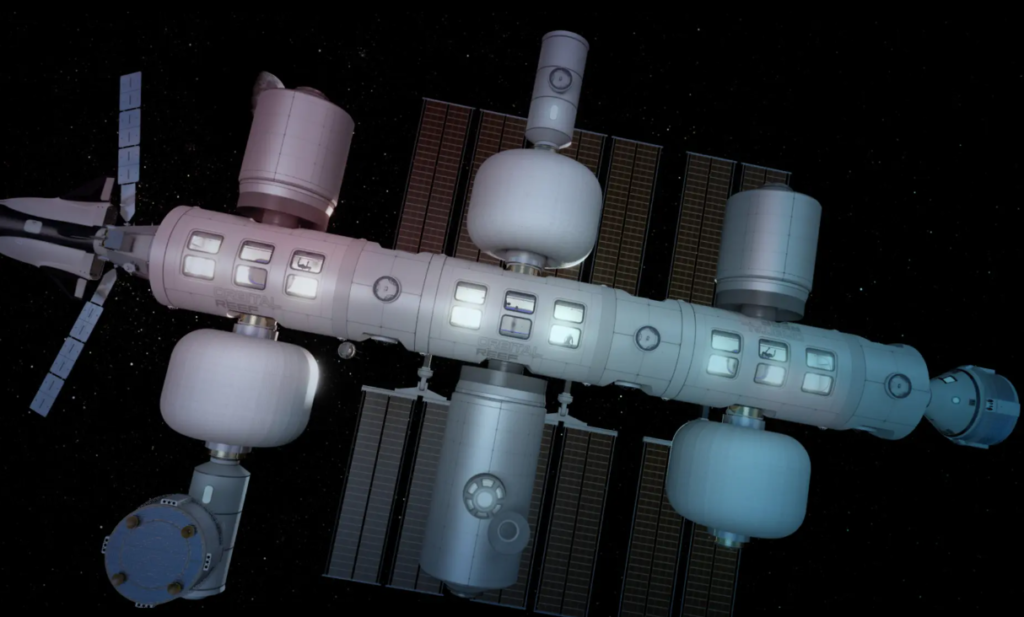
The sector is also expanding into new areas, which are linked to the race to find a successor to the aging International Space Station—a race that is currently being waged on several fronts simultaneously. Blue Origin and Sierra Space are working on the Orbital Reef project—described as a space industrial park involving Boeing and Redwire Space—with a planned launch no earlier than 2027.
The Voyager Space and Airbus consortium plans to launch the Starlab station into orbit a year later, and the ESA has already signed a preliminary agreement regarding its use by European astronauts. Meanwhile, the launch of Vast Space’s Haven-1 module—following further schedule delays—is now planned for the first quarter of 2027 using a Falcon 9 rocket.
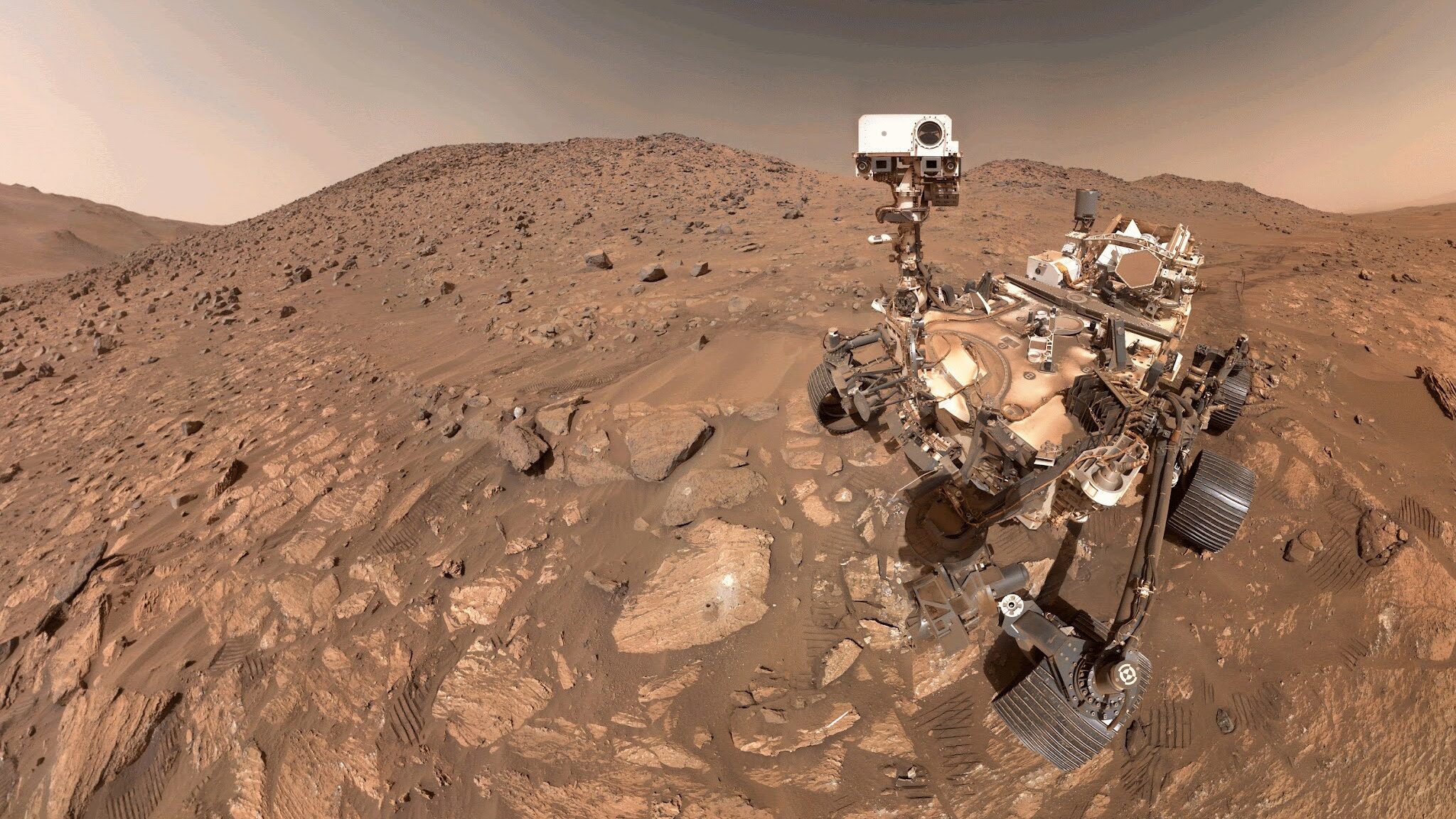
The technological thread that ties all these initiatives together is artificial intelligence. Without machine learning algorithms, autonomous exploration missions would be impossible—since signals from Earth to Mars take several minutes to arrive, the rover must independently analyze the terrain, plan routes, and respond to unforeseen obstacles. One example is the Perseverance rover, which fully integrated AI capabilities for terrain analysis (AEGIS) and navigation (AutoNav) during the Mars 2020 mission.
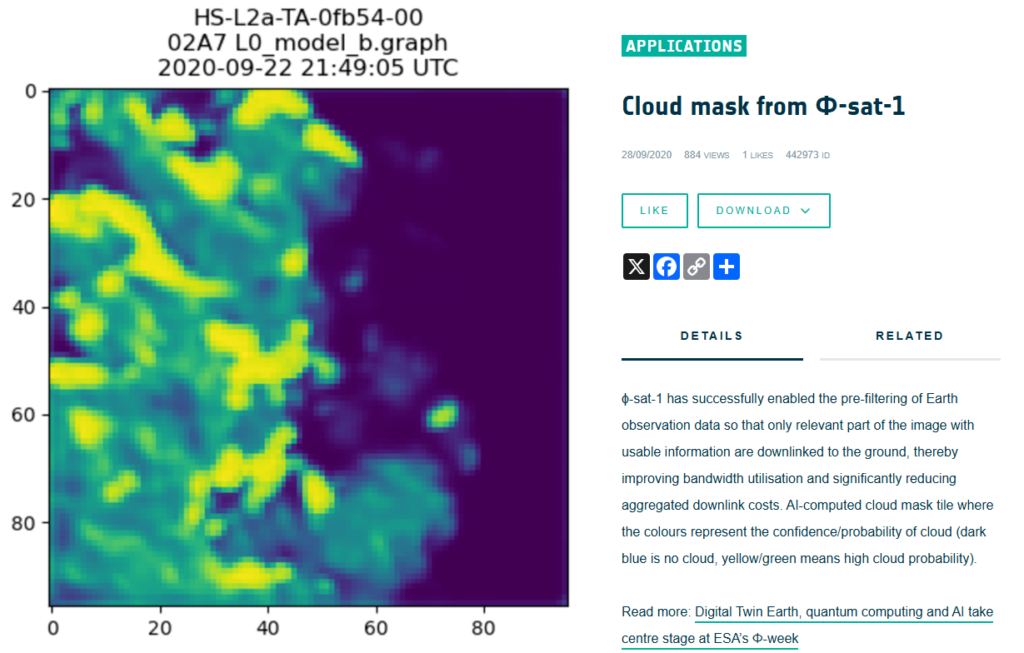
Artificial intelligence is also changing the way satellite constellations are managed, processing vast amounts of telescope data in real time, and optimizing the logistics of space missions. Technologies such as Phi-sat-1 demonstrate how AI algorithms can filter out irrelevant satellite data right on board—reducing the load on communication links and speeding up operational decision-making.
However, this connection between space and AI is not detached from Earth. On the contrary—as Marcin Mazur of the Polish Space Agency emphasized at the PJAIT 2025 AI Summit —each of us uses space technologies every day: checking the weather forecast, using GPS navigation, conducting banking transactions, or monitoring transportation. For us, space is not so much a distant frontier of science as it is the foundation of our everyday digital infrastructure.
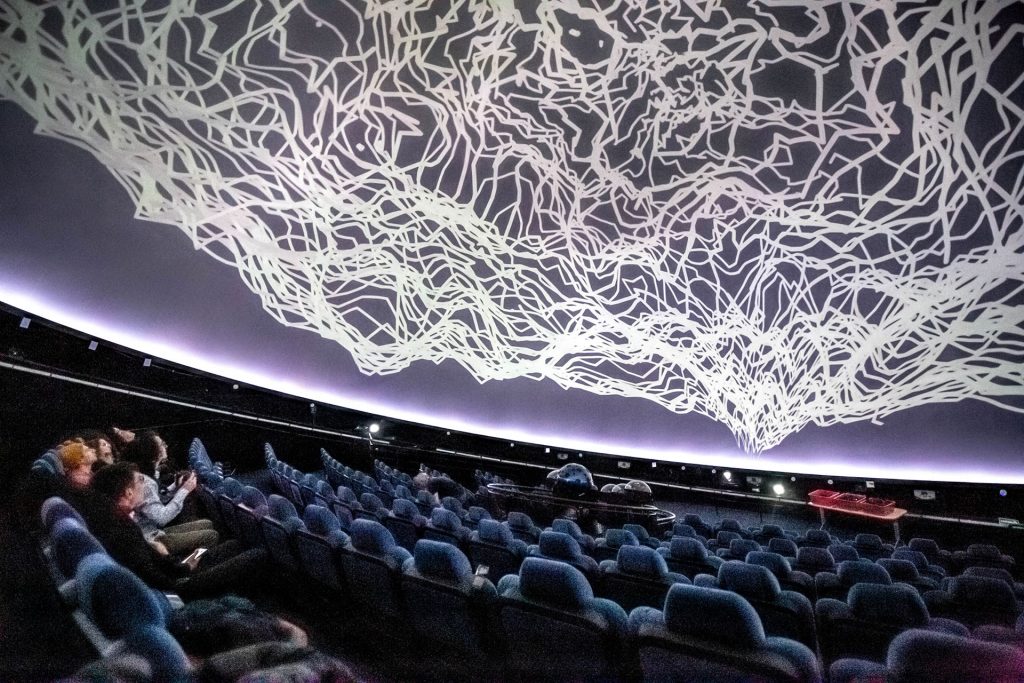
It was precisely this unexpected connection between space and everyday life that became one of the key themes of the second edition of the PJAIT AI Summit, held on September 17, 2025, in Warsaw. Over nearly 10 hours of lectures and panel discussions—featuring 40 experts representing more than 30 companies and institutions—the participants, AI explorers, not only discussed the future of technology but also discovered surprising connections between its various fields. A presentation by Marcin Mazur of the Polish Space Agency titled “AI in Space—Challenges and Trends” shed light on a perspective that is rarely considered—how artificial intelligence is transforming the space sector in both civilian and military contexts.
The conference was not limited to space. There was extensive discussion ofthe use of AI in the military, analyzing the experiences of Ukraine and Israel with AI-based offensive and defensive systems. Questions were raised about the role of Europe and NATO in this technological race—questions that, fortunately, were met with answers that inspire cautious optimism.
Marcin Mazur also discussed challenges related to security, satellite communications, and space exploration—demonstrating that AI today is not only an analytical tool but a strategic pillar of modern space infrastructure. This is an important context, as SpaceX rockets launch not only commercial satellites but also intelligence assets, and satellite constellations are becoming a key element of security architecture.
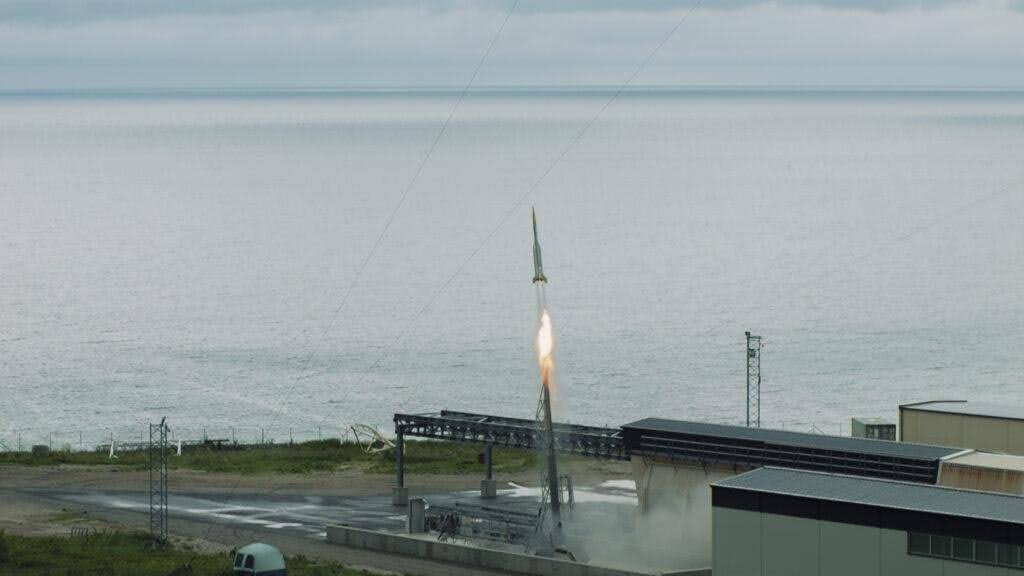
Amid global giants, Poland is steadily building its position in the space sector. Perhaps not yet on a commercial scale, but it is worth noting that in 2024, the ILR-33 Bursztyn 2K rocket mission was a success, reaching outer space on July 3, and in the same year, POLSA announced a call for proposals for a feasibility study on Poland’s first lunar orbital mission. The Polish Space Agency also expanded the POLON telescope network to include new locations—in Utah and Hawaii—designed to monitor outer space and warn of collisions with orbital debris.
The value of the Polish space sector exceeds 12 billion zlotys in a broad sense, and the number of active entities stands at around 170. Employment at the 21 leading companies increased by more than 30 percent in 2024 compared to two years earlier—proof that space in Poland is no longer just an academic curiosity, but a rapidly growing industry.
POLSA plans to build a Polish constellation of more than 50 observation satellites over the coming decade and to further develop Space Situational Awareness systems. In addition, last year saw the first Polish technology mission to the ISS, during which Polish astronaut-in-training Sławosz Uznański conducted 13 scientific experiments—including research on nanomaterials and the applications of AI in space.
If the previously mentioned AI Summit PJAIT 2025 conference demonstrated just how deeply AI has already permeated our daily lives, then this year’s third edition of the conference— AI Summit PJAIT 2026, scheduled for September 16, 2026, in Warsaw—promises to be an even more ambitious platform for knowledge exchange in this field.
The program for this year’s edition will focus on topics that are currently shaping the boundaries of technological possibilities: robotics and automation, defense and military applications of AI, the risks associated with deepfakes, as well as the broad prospects for the future of artificial intelligence.
These are issues that cannot be viewed in isolation from space exploration—all of these fields form a shared ecosystem of innovation, in which progress in one area immediately drives progress in the others.
Space exploration is increasingly resembling the Internet—an infrastructure that everyone uses, rather than a trophy for a single winner. Private companies are driving down costs and accelerating innovation, government agencies are providing funding for scientific research and establishing regulations, and universities—such as our PJAIT and technology institutes are “producing” talent and generating knowledge that transforms discoveries into practical applications.
What’s really at stake isn’t a flag on the Moon, but satellite infrastructure that protects Earth from natural disasters, communication systems that connect digitally excluded areas, and observation technologies that serve security and environmental purposes. Data from space processed by AI algorithms, managed by autonomous systems, and delivered by reusable rockets—this is the civilizational significance of space exploration in the 21st century.