Exhibition of Works by Part-Time Students NeMA

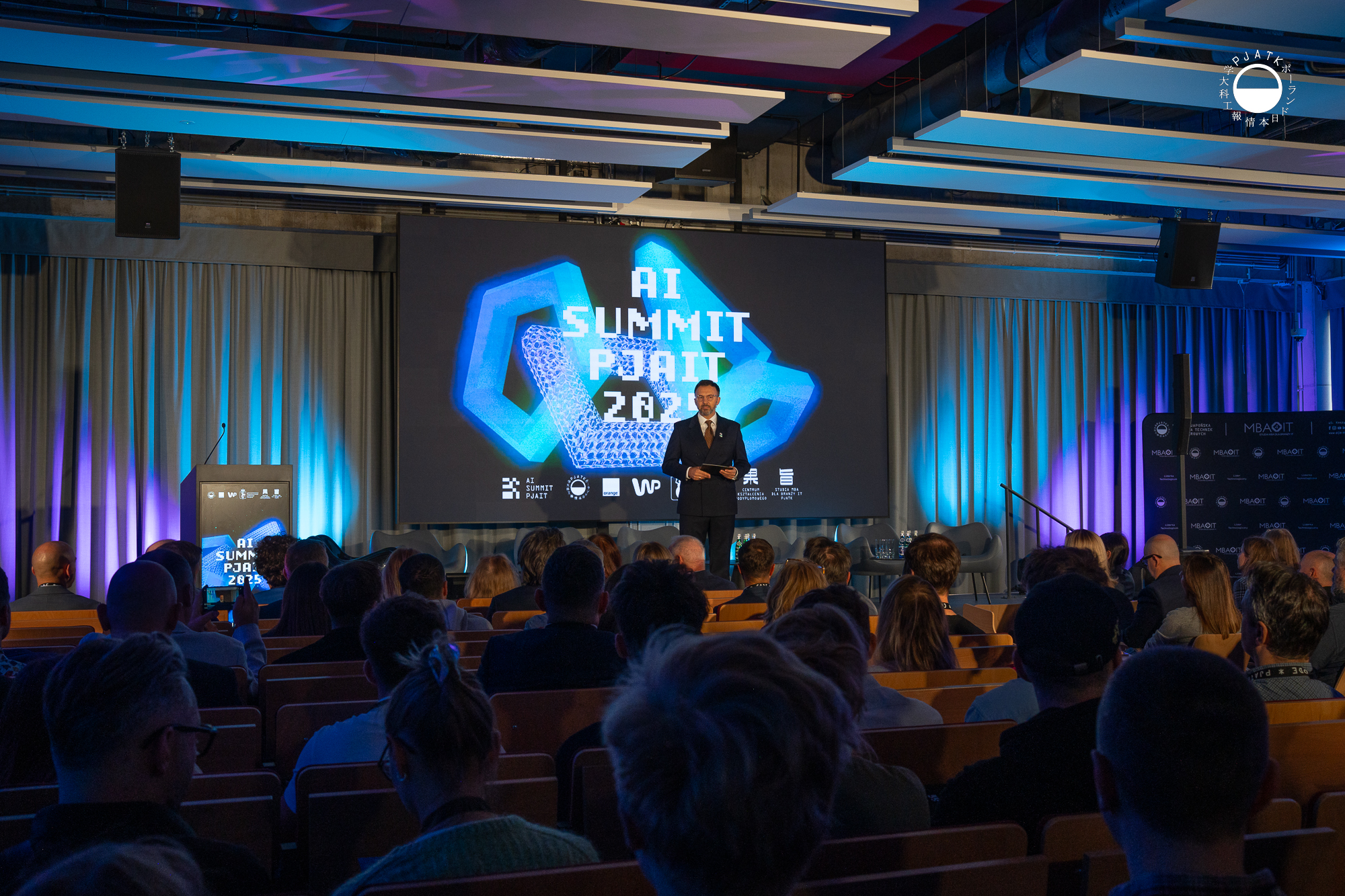
The 2nd edition of the AI Summit PJAIT conference, dedicated to the future and development of AI and its challenges, is behind us. This year's conference brought together the knowledge and experience of as many as 40 speakers from more than 30 companies and institutions, who shared it with the large number of participants in the room.
We organized the AI Summit PJAIT 2025 conference together with our flagship partners Orange Poland and Wirtualna Polska, creating for this entire one day a unique place for science and business to meet with artificial intelligence enthusiasts.
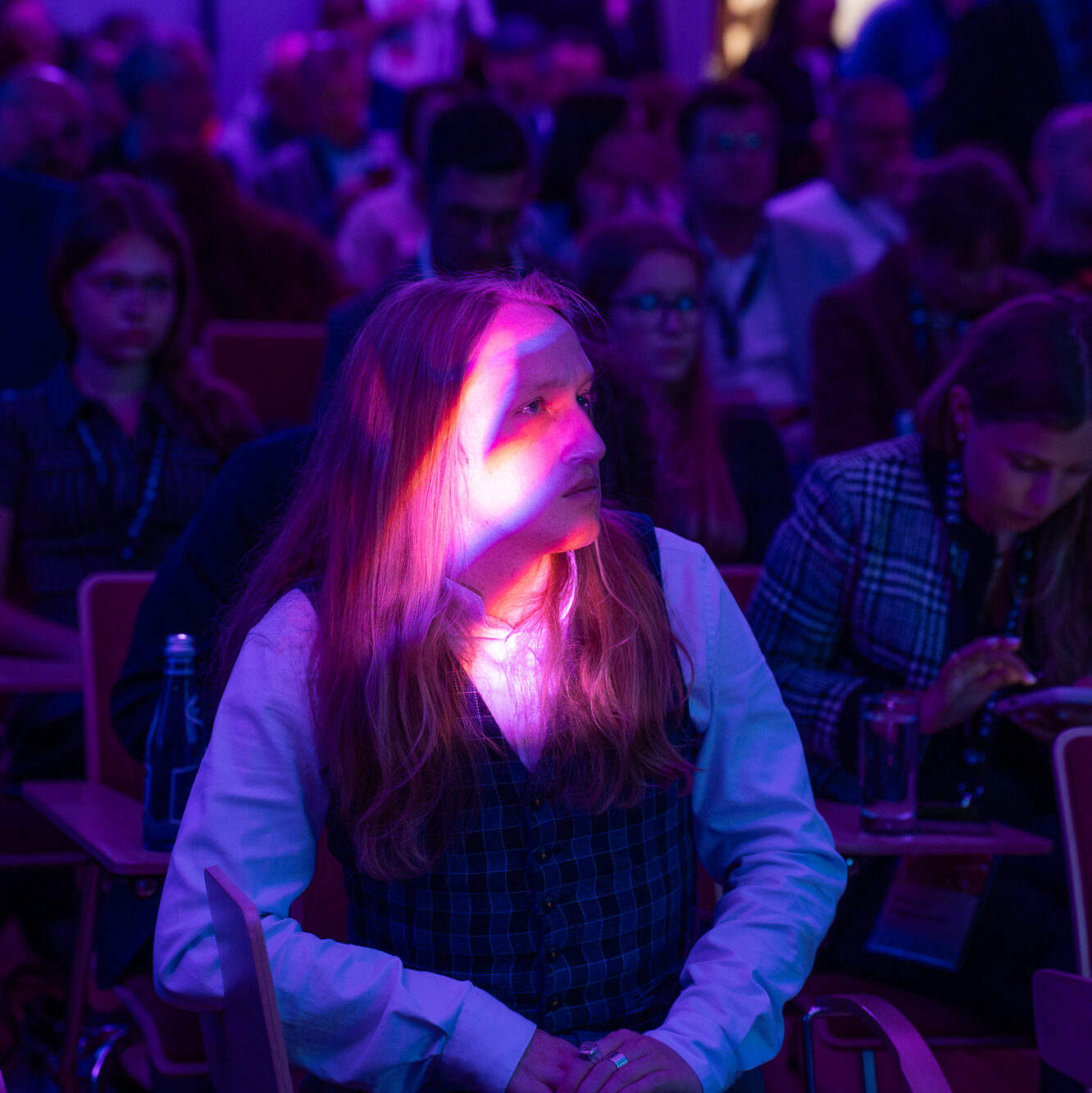
Expectations for our conference were huge, as the entire hall was filled to capacity from the early morning hours, but most importantly - the vast majority of participants stayed with us until the very end.
Nearly 10 hours of various speeches and panel discussions, followed with interest, many times in response to interesting or surprising statements, we were met with ovations directly from the room listening to how experts, scientists and practitioners today see the present and future of artificial intelligence.
The enthusiasm and interest of the conference participants could be seen and heard throughout the day, not only in the hall, but also in the breaks, during which there was extensive discussion of what was heard about during the speeches - behind the scenes, the words AI and ChatGPT were conjugated through all cases.
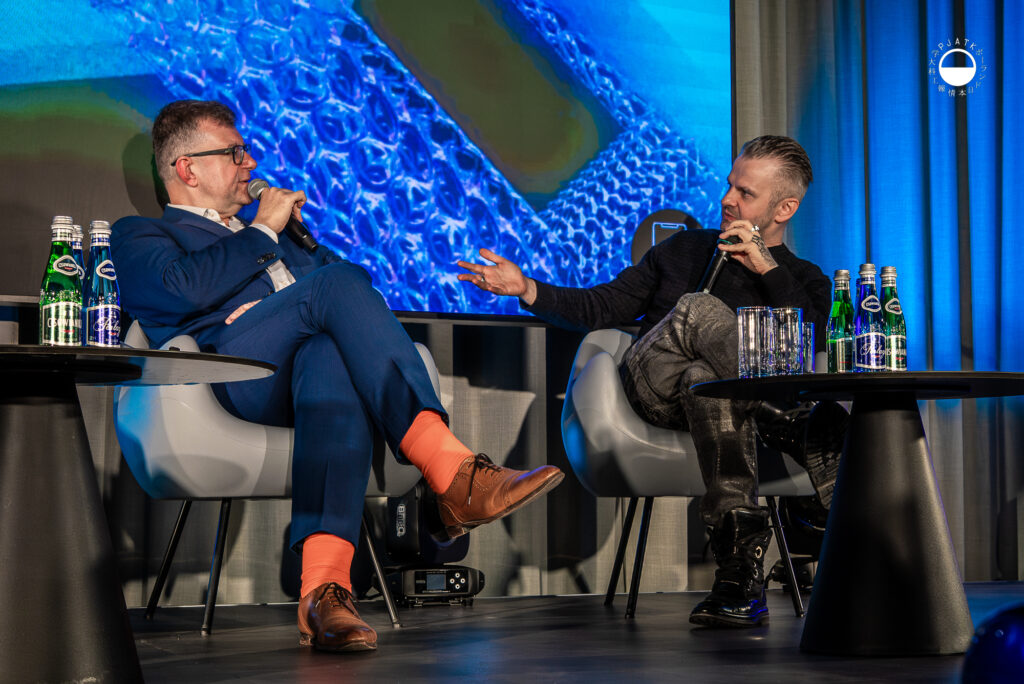
As an indication of how interesting it was, let's say that during the last panel discussion - already late in the evening, when Dariusz Rosiak announced that we had run out of time and asked the audience if they could ask one more question to Jacek Dukaj and Andrzej Dragan, the audience enthusiastically expressed their willingness to continue listening.
Well, but let's start at the beginning. Of course, it is impossible in one summary to summarize these many hours and all the interesting information that filled the minds of the attendees, but let's take a look, if only briefly, at what we witnessed this past Wednesday.
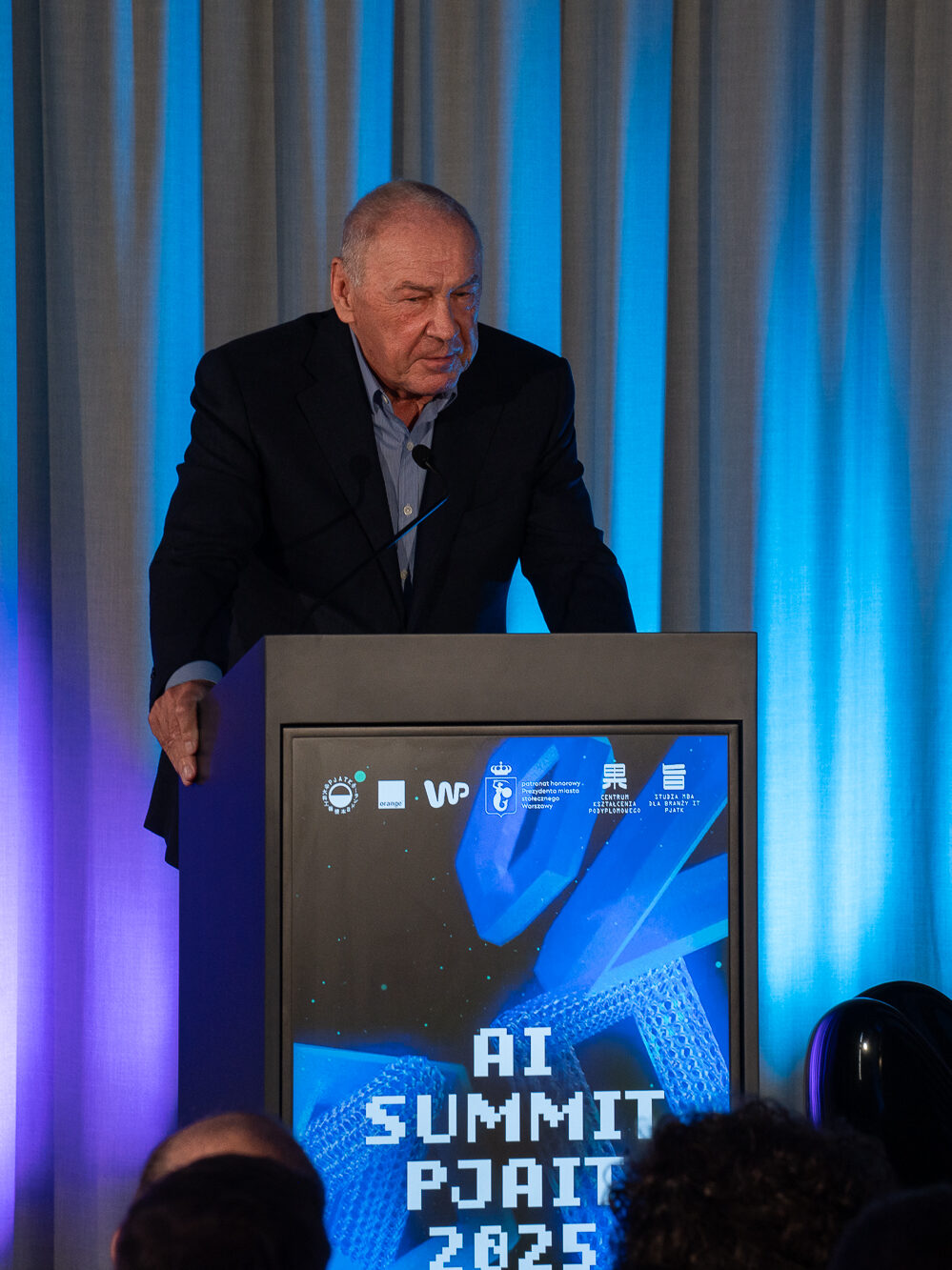
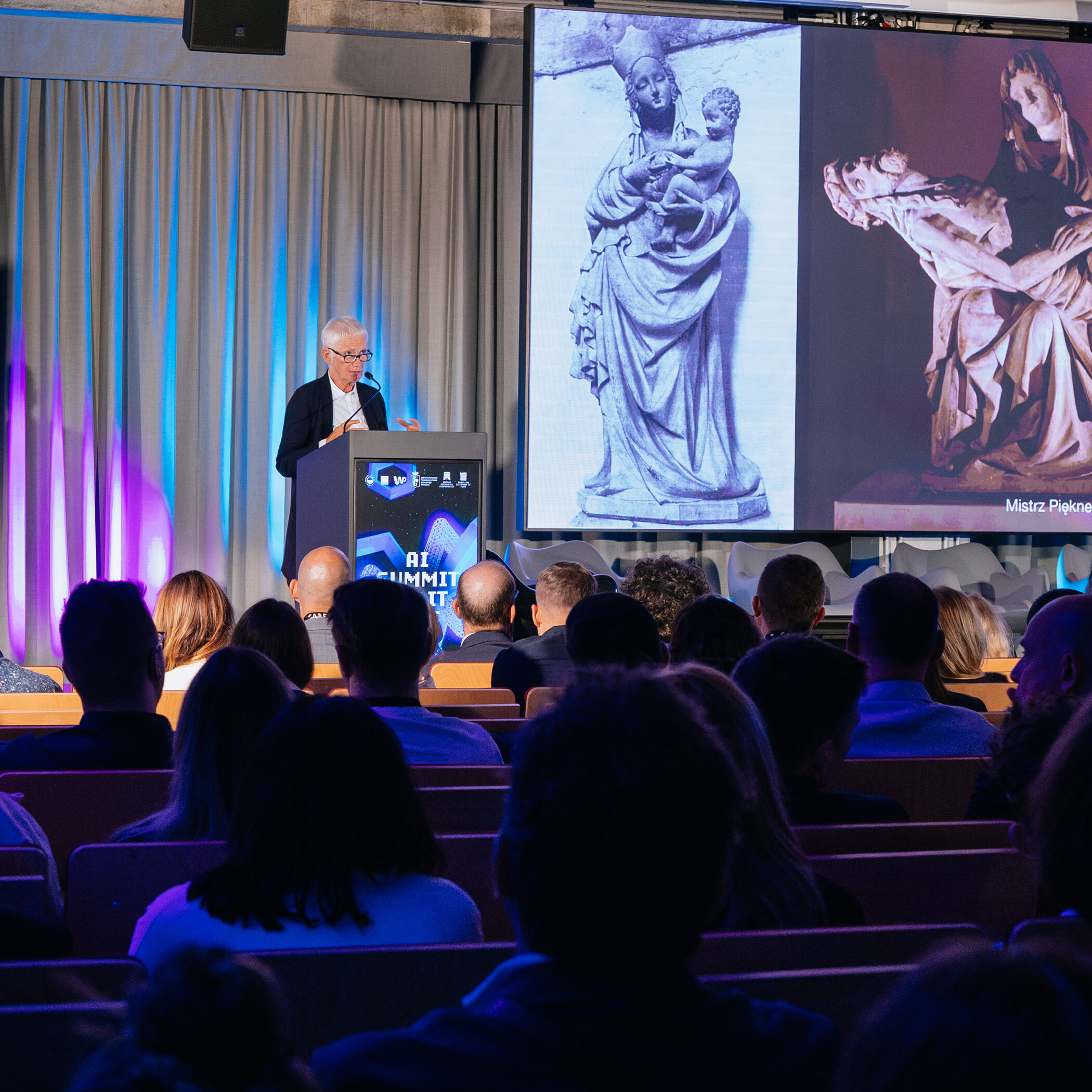
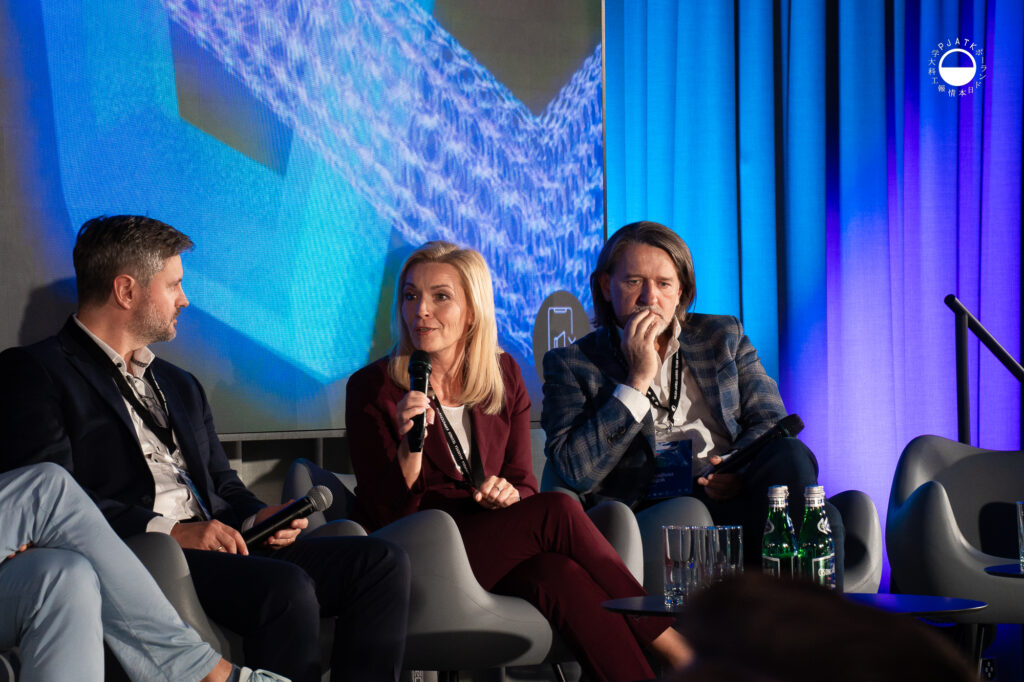
The author of the first lecture was Ewa Satalecka, Ph.D. - Dean of the Faculty of New Media Arts at PJAIT, who in her speech wondered whether art would survive the advent of AI. Of course, she had no doubts about this, not only because of the history of art - the first discovered works of art date back 75,000 years, and by modern man to 30,000 years, but as she quipped in a later panel discussion - Art is art if it is recognized as art, whether you create it with a hammer, chisel or AI is your choice.
A good example in the context of the aforementioned history of art, which was given in the panel discussion, was the example of painters who at one time were frightened that this art would not survive with the advent of photography - as we know, nothing of the sort happened.
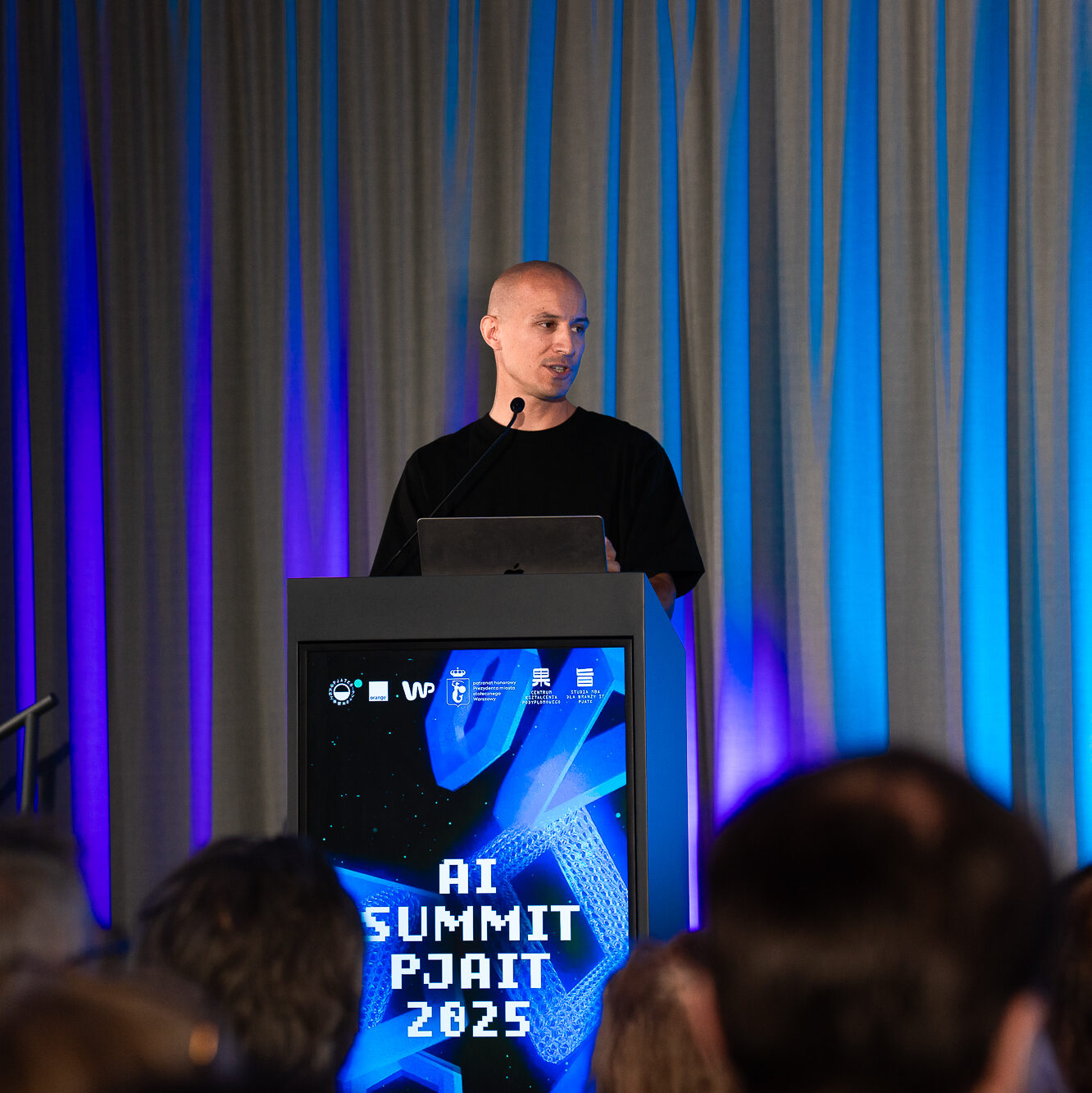
Extremely interesting was the next lecture by Kamil Soldacki of ElevenLabs, who, with the help of the entire speech of Dr. Ewa Satalecka, created a live conversational AI agent, which in an instant became the assistant of Ms. Dean and later answered questions from the audience, related to the knowledge she had just shared. A question was just asked from the floor, precisely about whether art will survive, and like Dr. Ewa Satalecka, the AI had no doubt about it.
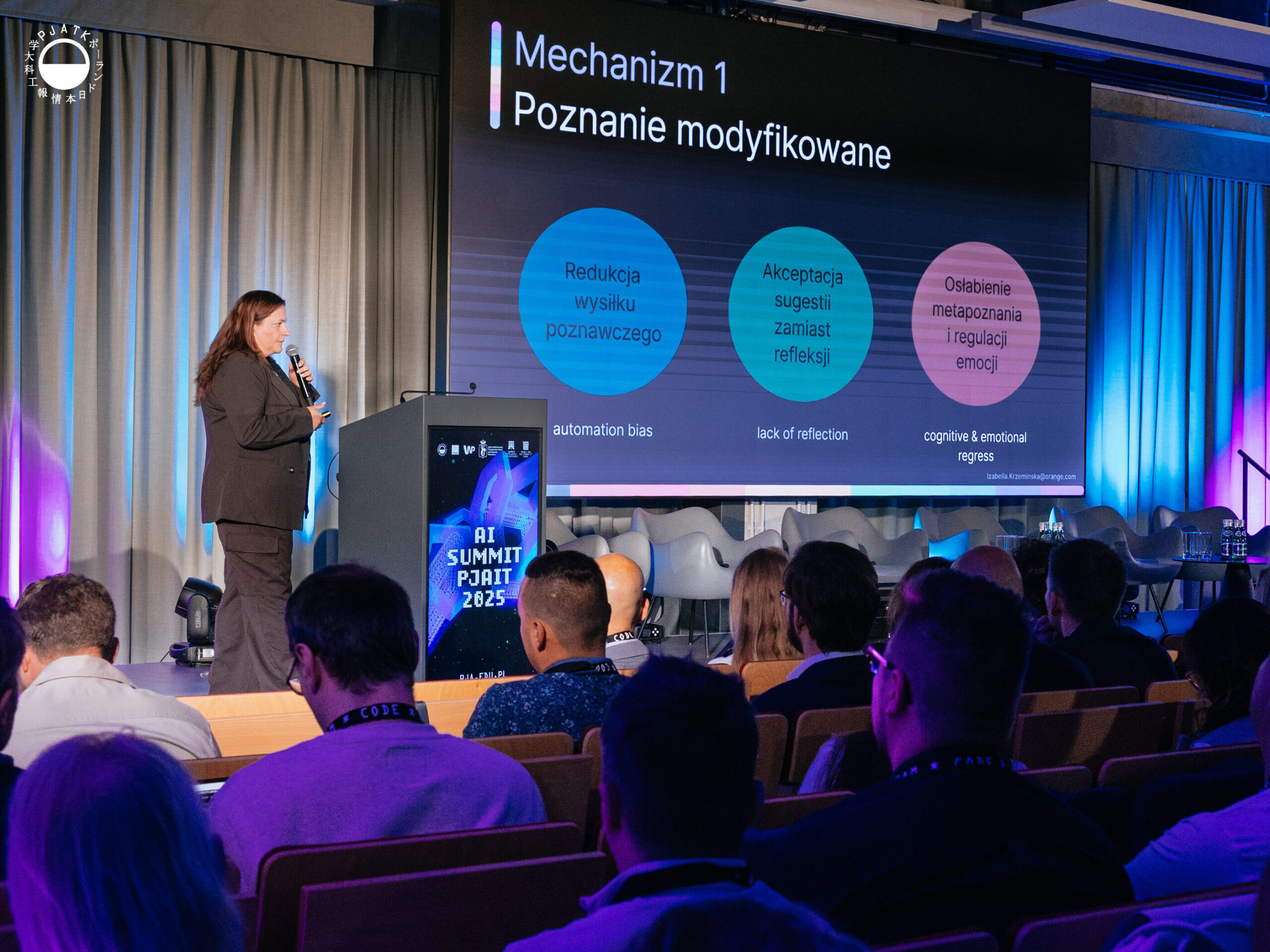
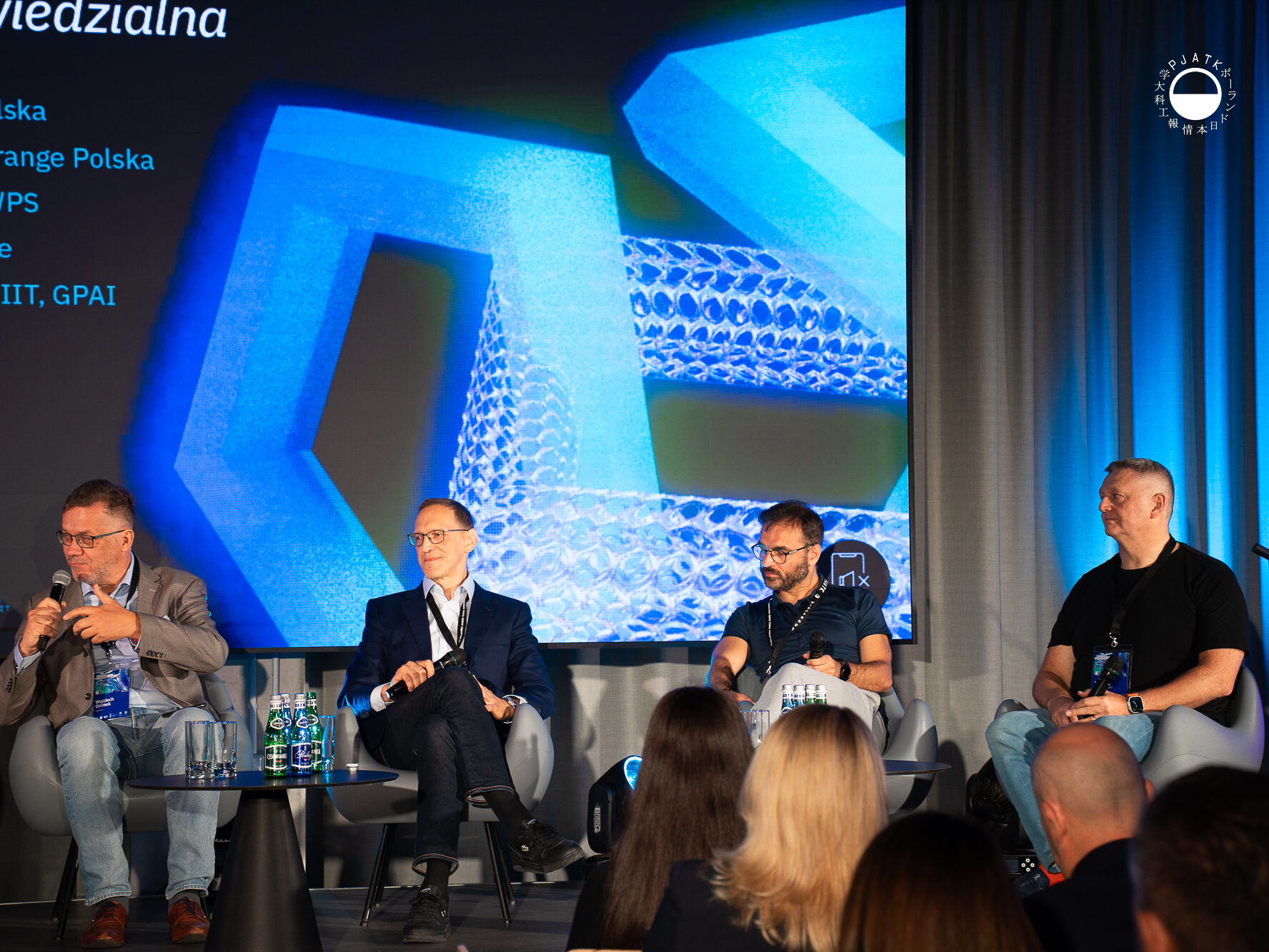
In the next lecture, which was an introduction to the next panel discussion on responsible AI, Iza Krzeminska from Orange Poland made the audience aware that AI carries certain risks for us, in particular related to the fact that artificial intelligence accustoms us to immediate answers, and thus we think less and less, and worst of all, this can ultimately lead to a lack of reflection on those answers. The panel discussion on this topic, on the one hand, pointed out the irresponsibility behind the implementation of AI. It was decided here, first, to make it available to basically everyone in the world, without first testing the effects of its application by society. As a result, it is being modified on a living organism, and we still don't really know the long-term consequences of using it.
What is known today, AI deprives us of self-confidence, among other things. Here, Konrad Maj from SWPS University cited academic examples of experiments in which students were assigned to perform certain tasks with AI support, and then perform others on their own - the students, unfortunately, already chose the less challenging and less difficult tasks.
On the other hand, this AI peloton is already on its way, so even if someone now resists this revolution, they will be left behind and will eventually have to join it anyway, necessarily, too. At the same time, there is no doubt that AI is changing us, just as every like on Facebook or smartphones changed us, so the problem we have to face now boils down to finding a solution that would make AI change us positively, for the benefit of its users, not the bigtechs themselves.
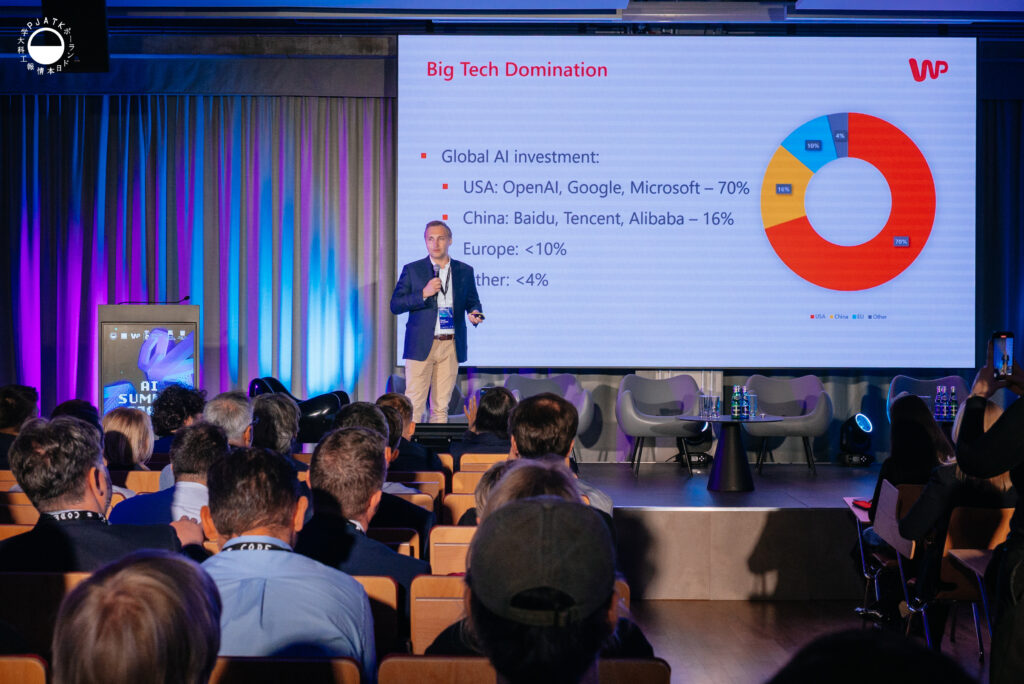
The next lecture, by Pawel Krupinski of Wirtualna Polska, focused on the need for Europe to become more involved in building and developing AI. As of today, it is the US and China that control as much as 75% of the AI market worldwide, Europe only 10%. This raises issues of privacy, transparency and ethics of the AI solutions we all use today.
This is primarily due to the fact that the global production of the chips needed here, is located precisely in the US (NVIDIA) and Asia (Samsung and TSMC). At the same time, Europe, being able to boast distinguished technical universities in Zurich, Oxford, Cambridge or Warsaw, churning out excellent IT talent every year, allows for their later export to the US and Asia.
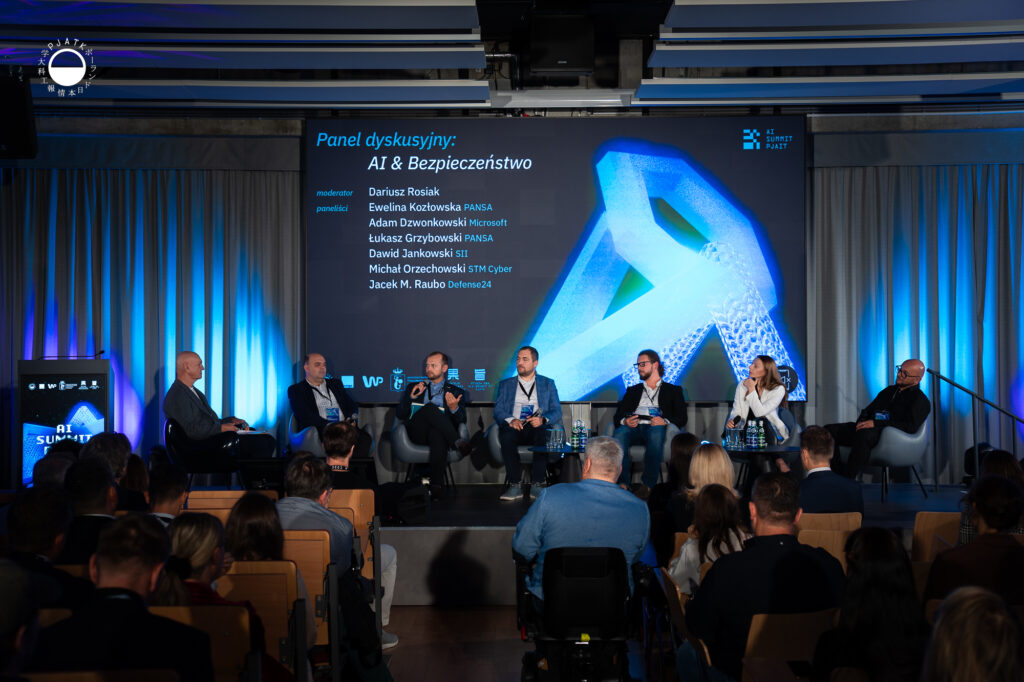
Extremely important in the context of our geopolitical situation was a panel discussion devoted to the use of AI in militaries. The use of AI in offensive and defensive systems in Israel or Ukraine, countries currently directly involved in hostilities, was extensively discussed here. There was also no shortage of answers to questions about where Europe and NATO are in this now, which is fortunately investing heavily in artificial intelligence solutions and their application on the battlefield.
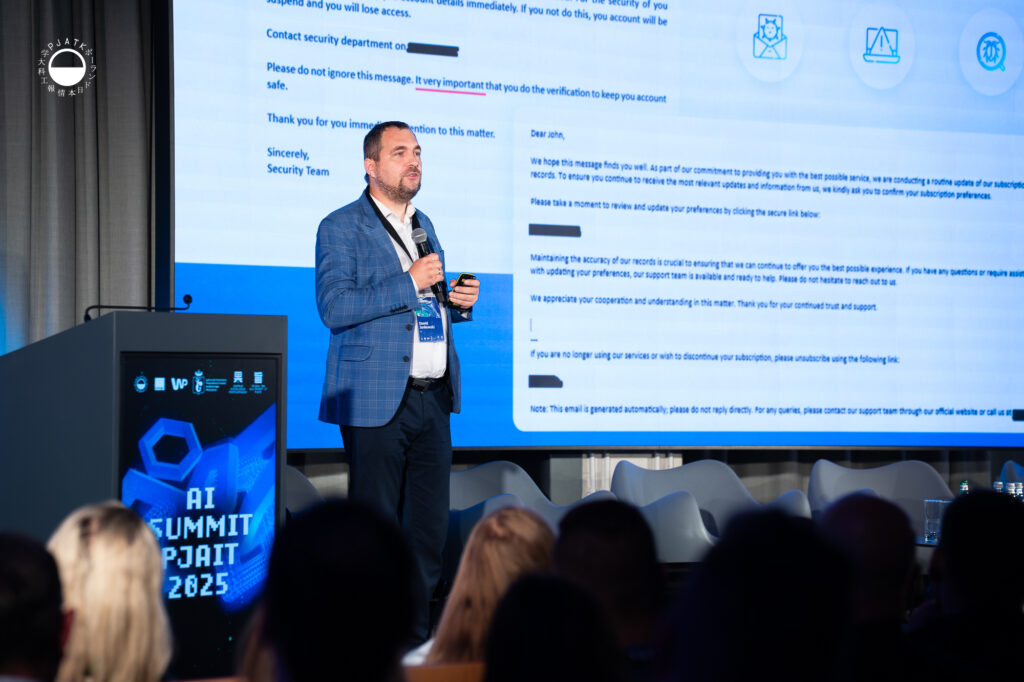
Similar topics, the use of AI in attack and defense systems, albeit in a different area of cyberspace, were raised by Dawid Jankowski of SII. He argued that the object of cyber attacks is 80% humans, and therefore the weakest link. AI has made them increasingly precise and effective. For example, phishing attacks, thanks to artificial intelligence, are already devoid of errors in fake e-mails, making it easier for some employees of large companies not to get "caught."
Similar dangers are posed by vishing attacks, now carried out on a scale never seen before - it used to take an entire call center to do this, today AI takes care of it.
The next panel discussion focused on the applications of artificial intelligence in business, and primarily on issues about what the use of AI in key processes brings to businesses today that want to compete in the market. Obviously a river topic, however, the theme that came through from the discussion was that AI today is a real advantage in business. It gives businesses first and foremost process optimization, efficiency, information and efficient processing and analysis.
At the same time, as Alexandra Suchorzewska of Accenture argued , the implementation of AI in companies cannot be just a part of digital transformation, it is not enough to "put" AI in one or another department, it is necessary to rebuild the entire business and implement it in the right places and at the right scale.
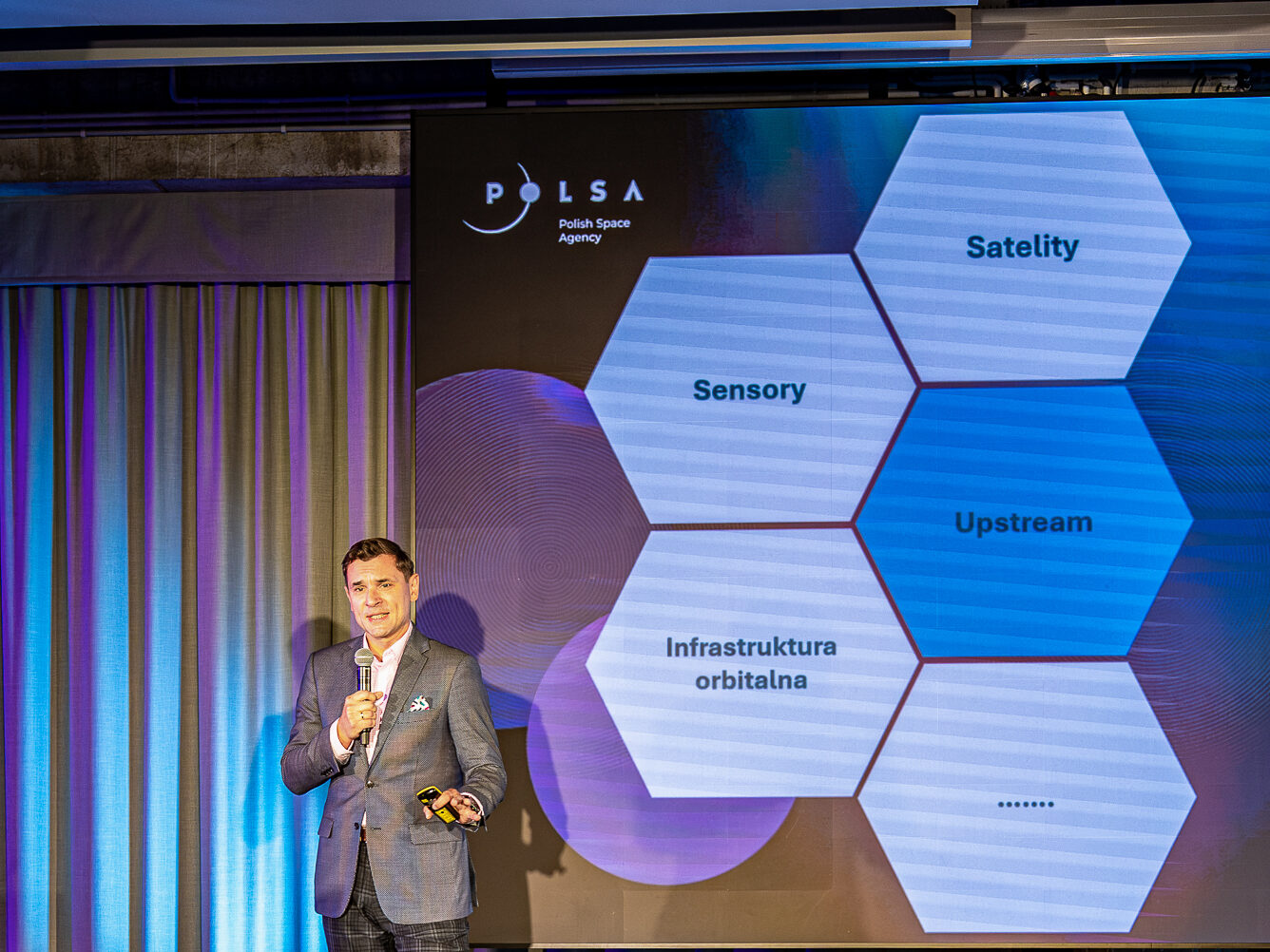
A very interesting lecture was given by Marcin Mazur from the Polish Space Agency, who introduced the audience to the fact that everyone is already using space technologies. For example, when checking the weather forecast, navigation and car maps on the phone, using the Internet, banking systems or monitoring transportation.
In a panel discussion on AI implementations, the dangers it brings to education resonated strongly. Pupils and students are using artificial intelligence solutions en masse today, which can be clearly seen in statistics checked during school breaks, when their use is clearly declining.
The hope here is to make available AI tools that will not write entire essays, but will only help guide through the entire process of creating them. A good example here is Gemini Canvas from Google. As for AI implementations in companies, it often doesn't look optimistic either. Entrepreneurs invest, buy AI solutions, and then employees mostly use it only to help write emails. Artificial intelligence should have a much broader application here, if only to collect data, information and analyze it deeply, which greatly simplifies and speeds up many processes in companies.
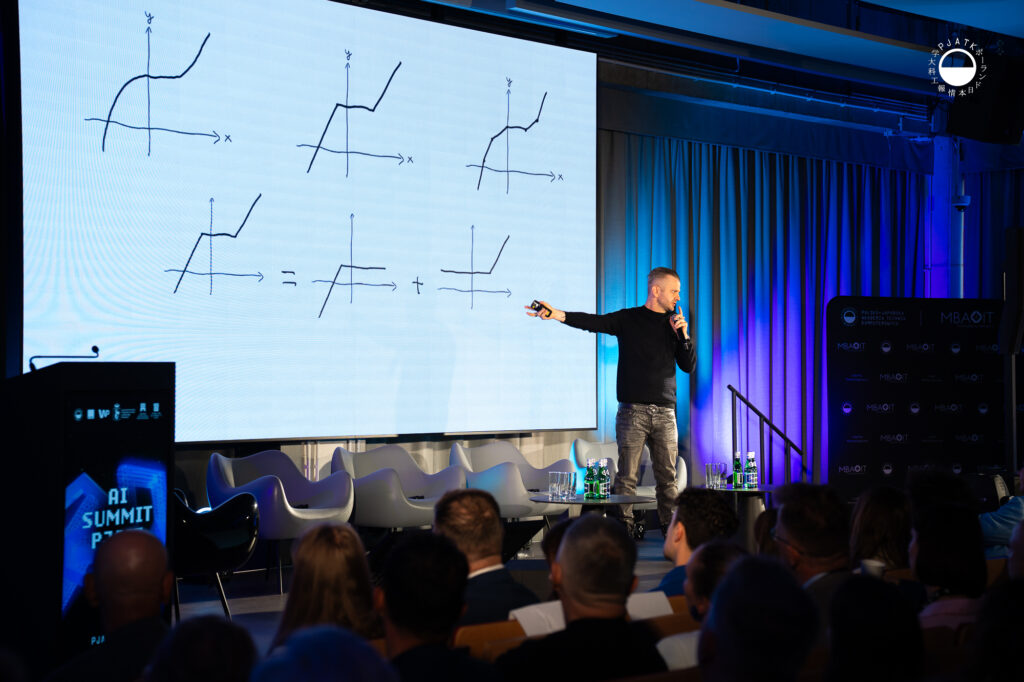
The icing on the cake was a lecture by Andrzej Dragan, who explained in a simple way for everyone how artificial intelligence works and doesn't work using the example of ChatGPT. Here we learned, in clear and accessible language, a description of the path from simple LLM models to models capable of solving complex operations on their own, and even winning a mathematical Olympiad. Interestingly, win it by solving 5 out of 6 tasks and admitting in the process that the sixth one she couldn't solve - without hallucinating.
Finally, we were able to listen to an extremely interesting and lively discussion between Jacek Dukaj and Andrzej Dragan, which we already mentioned at the very beginning. Basically, it was an argument about the future of AI, about where AI is going, and in particular whether we are right to call artificial intelligence, intelligent.
To sum up the whole conference already, all the lectures and discussions, provided the guests with a huge dose of knowledge, which certainly threw perhaps not completely new, but different and in many aspects deeper insights into what artificial intelligence is today in our daily lives and what it will be in the future. The dispute, of course, was not resolved, but the arguments of both sides were extremely interesting - regret if you were not there!
The success of the previous and this year's AI Summit PJAIT conference, as told by the participants themselves, is a huge challenge in organizing the next edition. We will try to meet it and inspire you even more next year as well. The AI Summit PJAIT 2026 conference will be held on September 16, 2026, to which we warmly invite you already - we assure you that it will be happening! Perhaps already in another reality...