
Meet-and-greet with Dr. Jaśmina Wójcik!


The year 2025 brought long-awaited news to the IT industry. The pessimism of the last two years is definitely over, and the employee market is experiencing a clear rebound. The report "IT Job Market 2025/2026" prepared by No Fluff Jobs clearly indicates that the IT sector is still worth considering – both as a job seeker and as a high school graduate thinking about choosing a field of study.
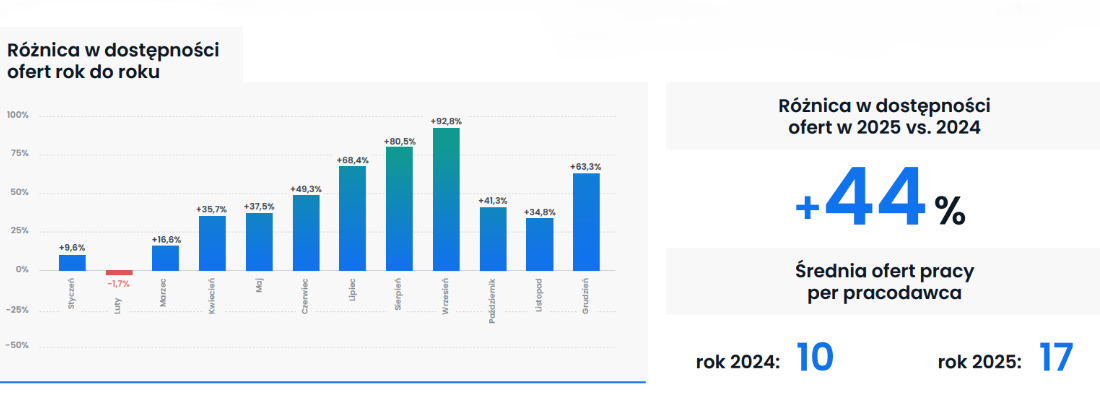
The year 2025 brought spectacular growth in the number of job offers available for IT specialists. The IT market rebounded, with 44% more job offers published than in the previous year. The same figure also appears in the analysis of individual employers: the average number of offers published by a single employer increased from 10 in 2024 to 17 in 2025.
Although Tomasz Bujok, CEO of No Fluff Jobs, rightly points out that there is no reason for "hurray optimism" because, compared to 2021-2022, when demand for IT was historically highest, and the current situation still does not match those times, these signs of a return to a stable and normal market are undoubtedly a positive development.
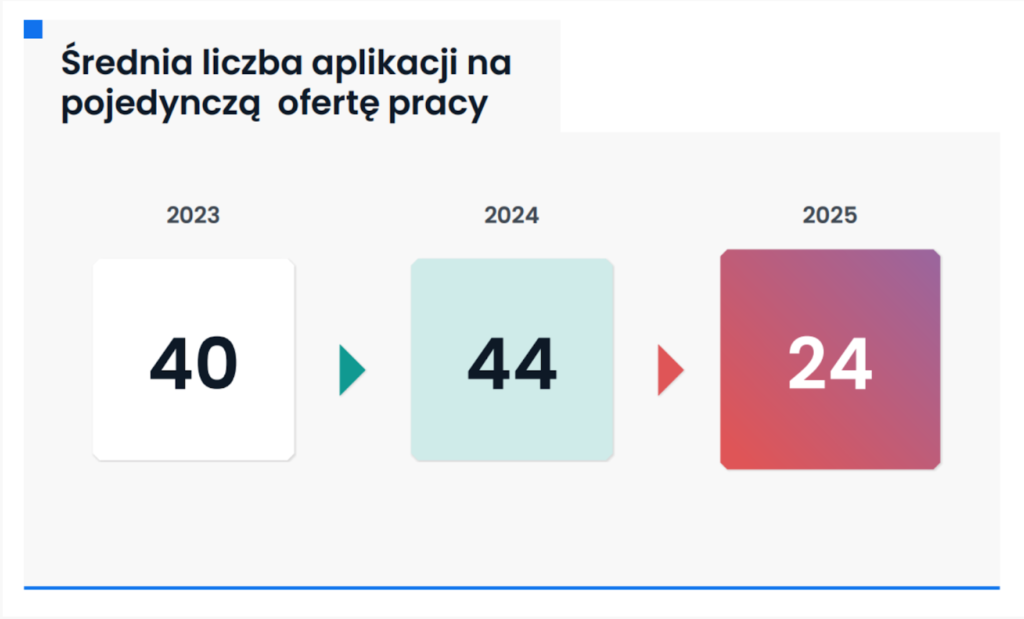
As the availability of jobs has increased, competition in the market has decreased. The average number of applications per job opening has fallen by as much as 45% year-on-year. This is fantastic news for candidates—it means that their chances of getting hired have increased significantly.
Importantly, the decline in competition is comparable for job advertisements targeting both entry-level employees and experienced professionals.
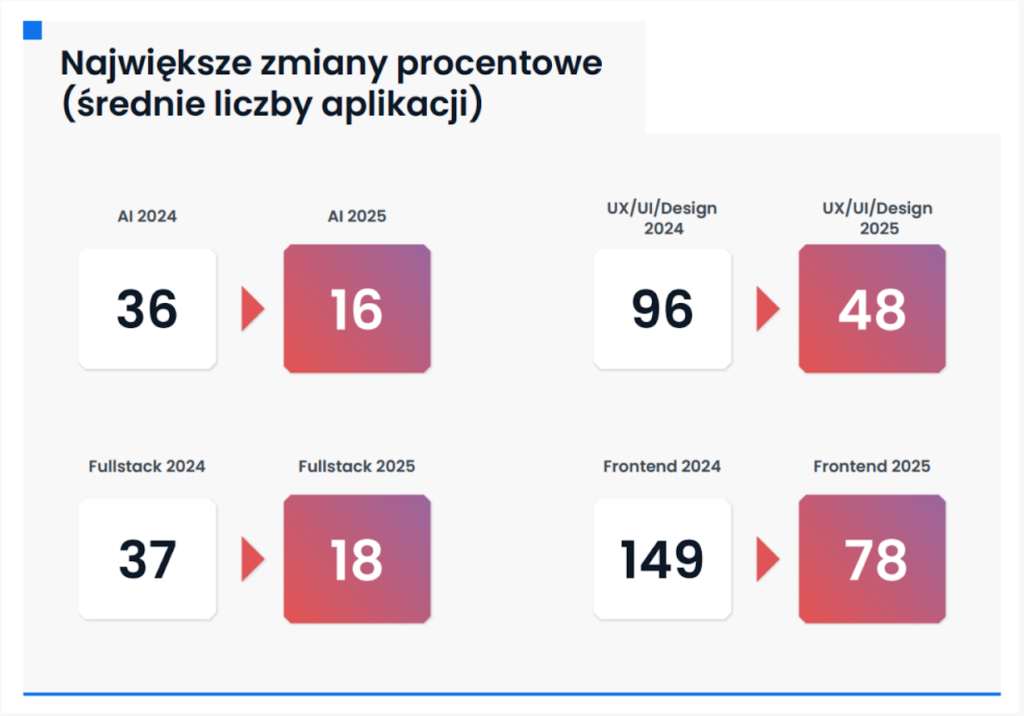
Competition decreased the most in the categories of AI, Fullstack, and UX/UI/Design, while the largest number of resumes continue to be submitted for Frontend positions—an average of 78 applications per job posting, although this also represents a significant decrease from the average of 149 applications per posting.
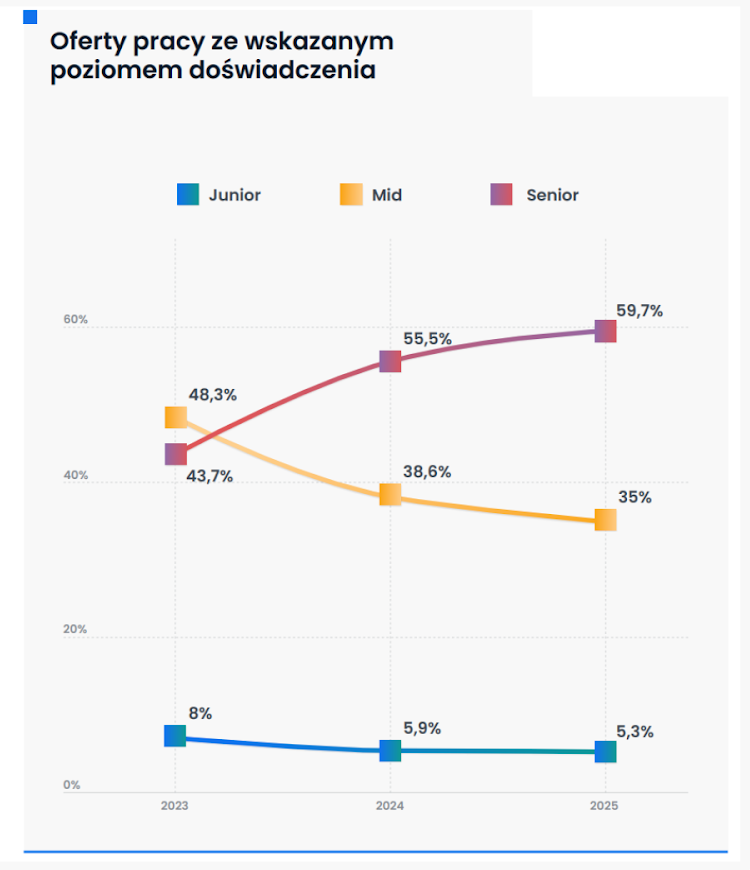
The report clearly shows a certain change in the IT job market. Nearly 60% of currently open positions are for senior roles, and only one in twenty job offers is aimed at juniors.
This is an important signal for those considering studying computer science. Although entering the job market may seem a little more difficult than it did a few years ago, this does not mean that it is impossible. Rather, it points to the need to be better prepared for the challenges posed by the modern IT industry.
That is why it is crucial for future IT specialists to build a solid foundation during their studies. It is becoming increasingly clear that theoretical preparation from university alone is not enough—employers are looking for candidates who can demonstrate practical skills and experience.
Computer science students should therefore start building a portfolio of projects while still in school. It doesn't have to be anything complicated – it can be a GitHub repository with their own projects, web applications, or tools they have created. A portfolio is the best proof for potential employers that a candidate can actually program and carry out projects from start to finish.
Our academy this challenge by offering students the opportunity to actively participate in projects, competitions, and industry networking from their very first semesters.
Students have access to mentors from the IT industry, can participate in hackathons organized by technology companies, and work on projects for real clients. It is this kind of experience that sets graduates who will be competitive on the market apart from students who only know theory.
In addition, the structure of computer science studies computer science PJAIT helps to better prepare graduates for the modern job market. After the fourth semester, students choose two specialization paths, tailoring their education to specific areas that interest them and are in demand on the market. Thanks to this approach, our graduates enter the job market with specialized knowledge that meets the real needs of companies.
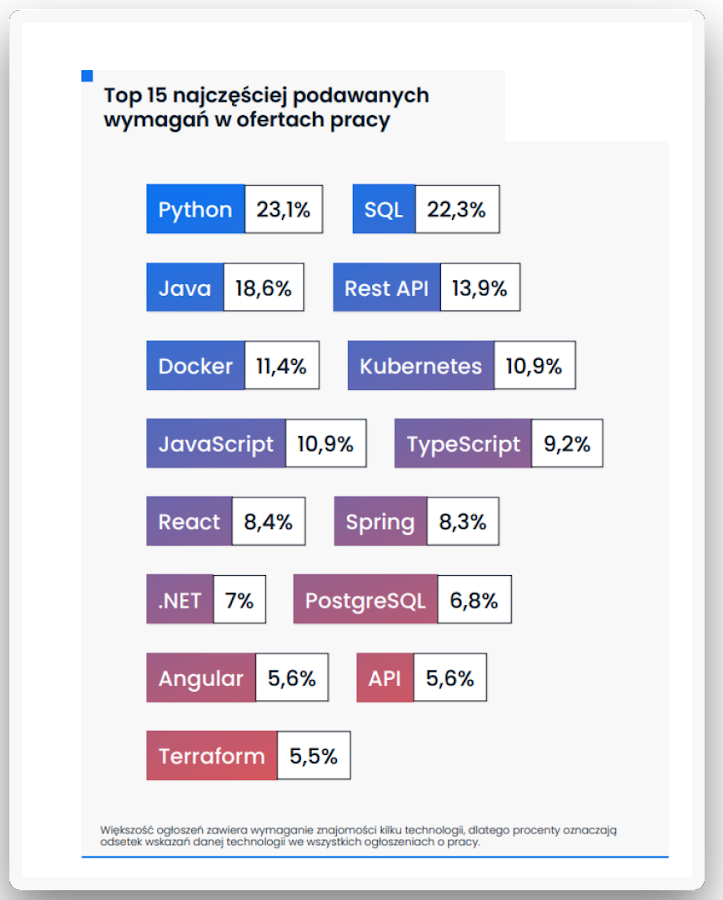
When it comes to practical skills, the No Fluff Jobs report shows which technologies should be the focus of those planning a career in IT. Among the requirements for candidates,Python (23.1% of offers), SQL (22.3%), and Java (18.6%)reign supreme.
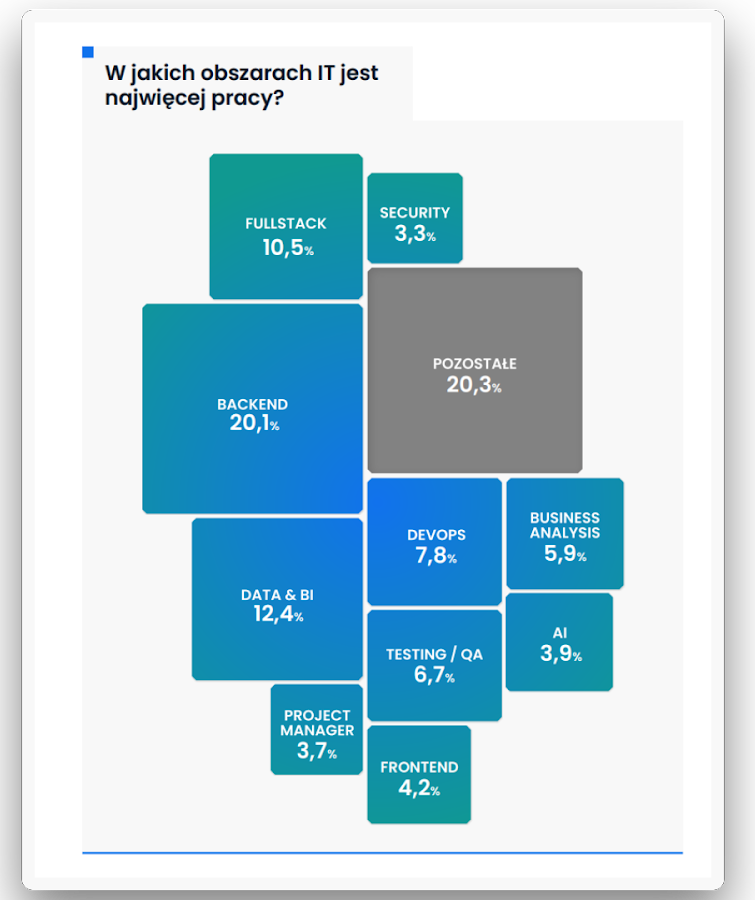
These are essential tools for backend developers, full-stack developers,and data analysts —specializations that are consistently in high demand on the market.
It is also interesting to notethat Python is steadily growing in importance, gaining 3–4 percentage points year on year. Last year, it accounted for 23.1% of all job ads, which indicates the growing importance of this language, especially inthe context of artificial intelligence and machine learning.
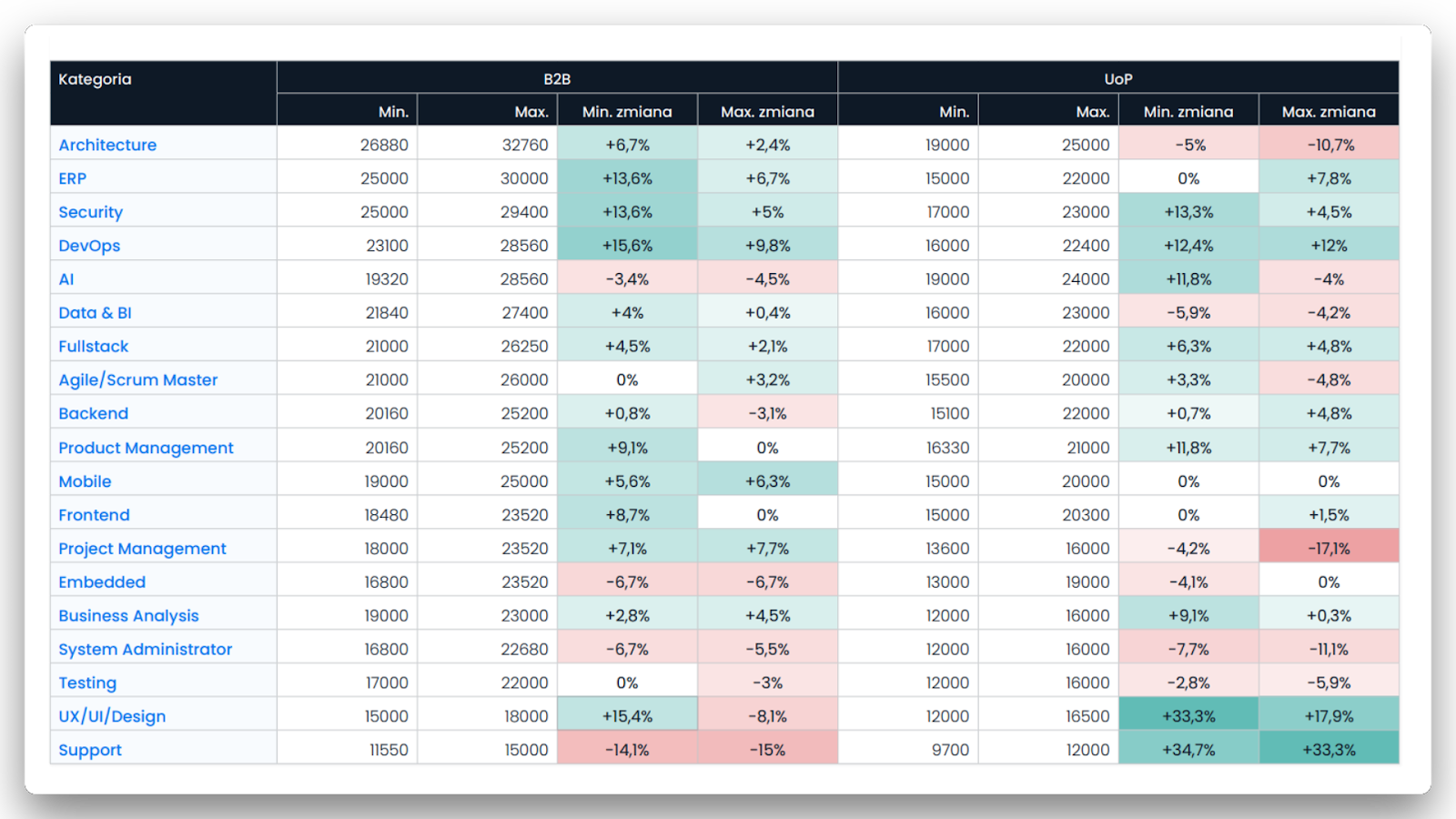
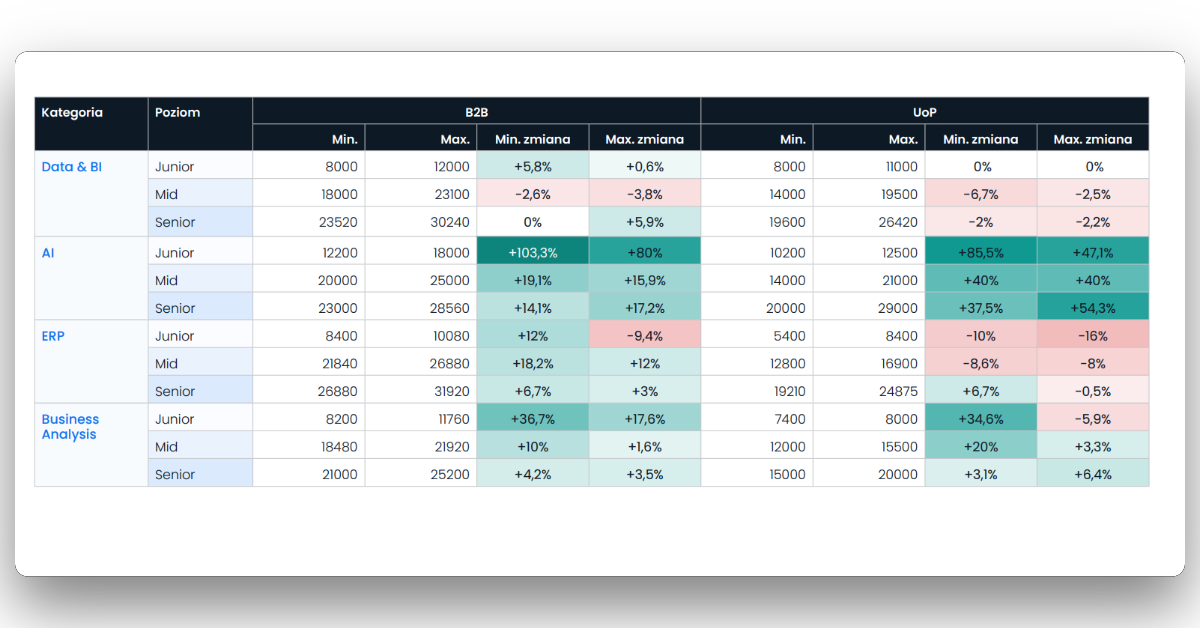
Financial prospects are also important to future graduates. The NFJ report shows that salaries in the IT industry are growing, although more dynamically for B2B contracts than for traditional employment contracts. The median lower salary range for B2B contracts increased in 13 of the 19 categories analyzed.
The largest increases were recorded in the categories of DevOps (15.6% increase in the lower range), Security (13.6%), and ERP (13.6%). For comparison, the Architecture category remains the best paid – the median upper range for B2B is PLN 32,760 net, while for an employment contract it is PLN 25,000 gross.
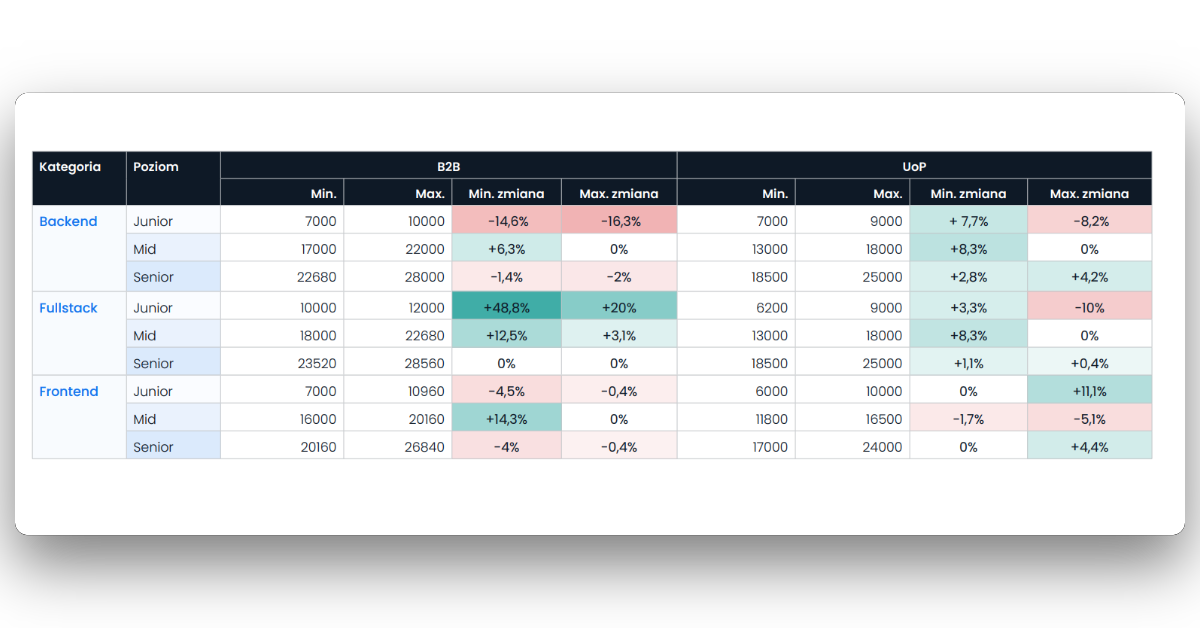
For juniors, the financial prospects are obviously more modest, but still attractive. A backend programmer on a B2B contract can expect to earn between PLN 7,000 and 10,000 net, and on an employment contract, between PLN 7,000 and 9,000 gross.
The AI category is particularly interesting in the context of percentage salary increases – for juniors, the current range for B2B is PLN 12,PLN 200–18,000 net, and for UoP (employment contract) PLN 10,200–12,500 gross, which indicates enormous potential and attractive earnings in this specialization.
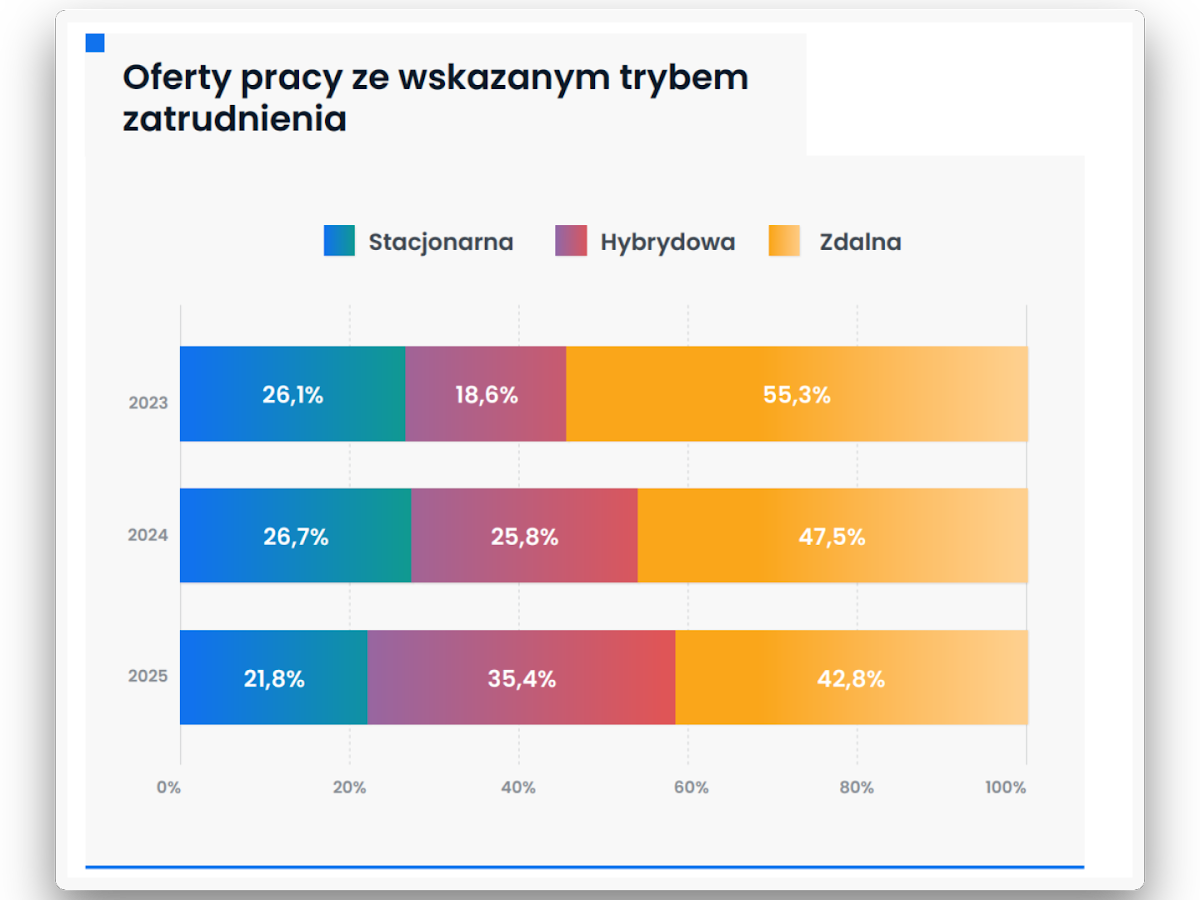
For many people working in IT, employment conditions are almost as important as salary. The report shows that remote working continues to dominate, with this option appearing in 43% of job advertisements. However, there has been a significant shift in the popularity of hybrid working.
In 2023, the possibility of working partly from home and partly from the office appeared in only 19% of job offers. Currently, 35% of job ads mention a hybrid model. This indicates that the market is maturing, moving away from extreme models (completely remote or completely stationary) in favor of balanced solutions.
Agnieszka Grzybowska, IT Recruitment Leader at Link Group, explains this trend as follows: "Hybrid work in the IT sector is no longer a temporary solution, but is increasingly becoming the target model for work organization. The dynamics of this trend indicate that employers are increasingly consciously choosing hybrid as a way to reconcile operational efficiency with candidates' expectations for flexibility."
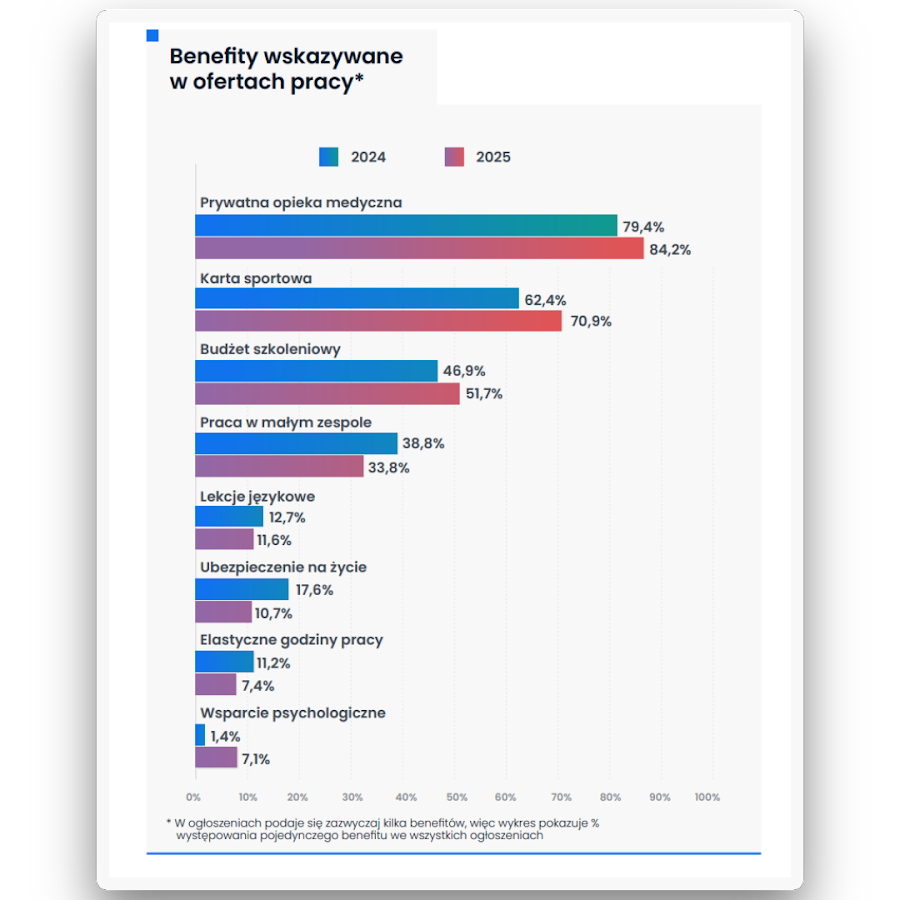
Employers compete for talent not only with salaries, but also with non-wage benefits. In 2025, private medical care still ranks first, appearing in 84.2% of offers, but this is still 5 percentage points more than a year earlier. Second place goes to sports class subscription cards – 70.9% of offers, an increase of 8 percentage points.
The growing importance of psychological support is also interesting, appearing in 7.4% of offers, which represents an increase of almost 6 percentage points. This means that employers are increasingly concerned with a holistic approach to employee health.
Although the No Fluff Jobs report highlights the real challenges facing those starting their careers in IT—particularly the significant decline in the number of junior positions—this should not be a reason to reject the idea of a career in this industry. Quite the contrary.
The market rebound, salary increases, and decreasing competition for positions (especially in the categories of AI, Fullstack, and UX/UI/Design) all indicate that the IT industry in Poland has solid prospects ahead. Companies are investing again, recruiting again, and the demand for experienced specialists is at an all-time high.
For students deciding on a field of study, the message is clear: IT studies continue to open doors to an industry with high earning potential and dynamic growth.
However, track success today requires more commitment than in the past—building a portfolio, gaining practical experience and specialization in specific technologies, and developing soft skills. Studies atPJAIT, which integrate this type of practical learning into the structure of their programs, give students a significant competitive advantage.
The No Fluff Jobs report clearly shows that the IT industry is not dying. On the contrary, it is undergoing a transformation, changing into a more professional, experienced, and consciously specialized market. For those who are ready to take on this challenge and work hard from the very beginning of their studies, the future in this industry is definitely promising.