The IT Market in 2026. What Skills Open the Door to a Career Today?


Today, the Polish IT sector is showing clear signs of a market “restart,” and these trends are working in favor of candidates in the technology segment. The No Fluff Jobs report shows that in 2025, the number of new job postings increasedby 44% year-over-year, while the average number of applications per posting fellby 45% — meaning that companies are actually “unfreezing” their hiring more often, and competitive pressure on individual job postings is lower. At the same time, the market is reorganizing the work model: remote work still dominates (over 42% of job postings), but the share of hybrid work is growing rapidly (35%), which in practice offers more flexible work and learning scenarios.
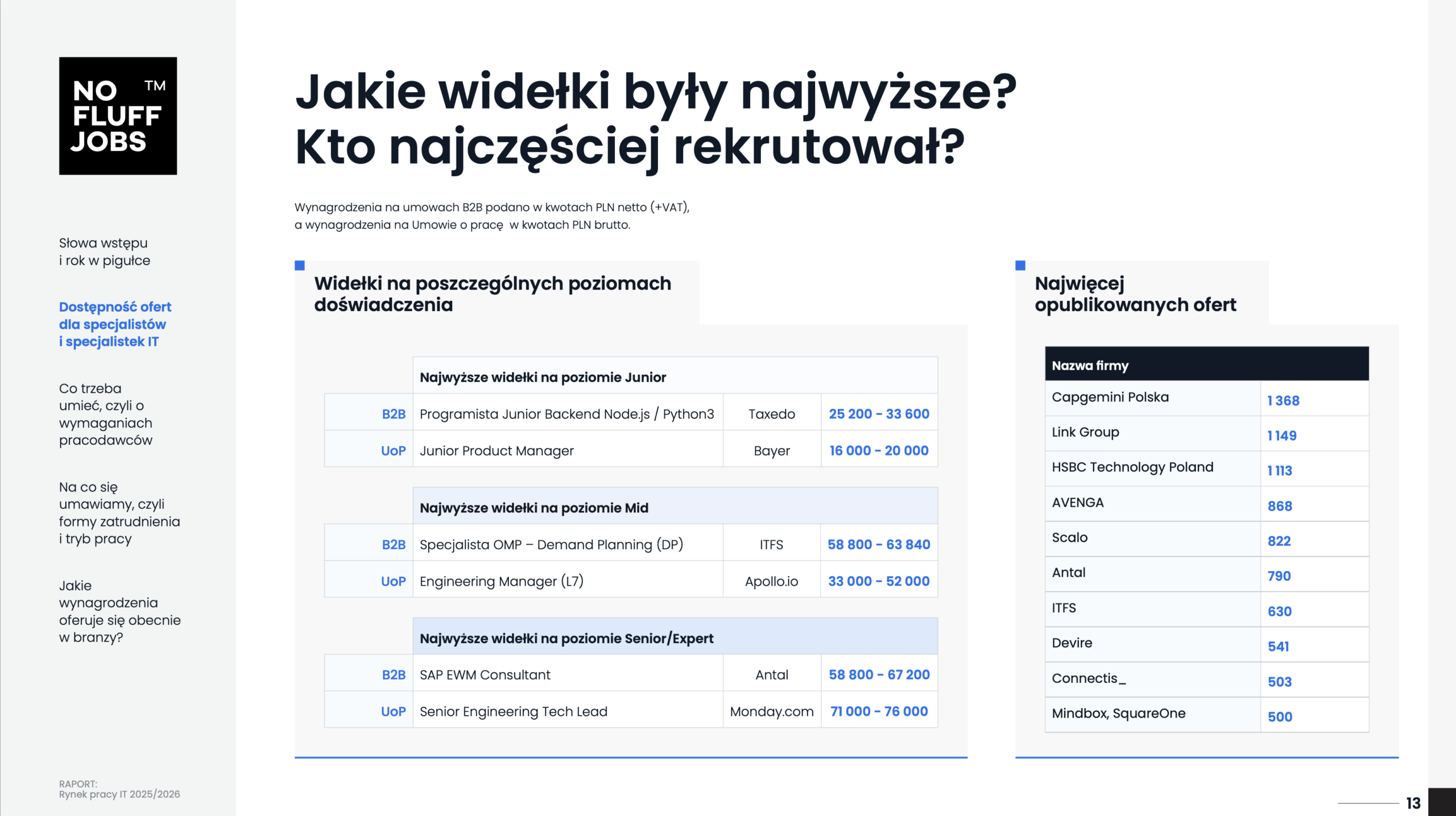
Material from the report "The IT labor market in 2025/2026" created by NFJ
There’s no revolution in technical skills— and that’s actually good news, because it means it’s worth investing in a solid foundation. In the “Top 15” most-requested skills, backend and data technologies lead the way:Python (23.1% of job postings),SQL (22.3%), andJava (18.6%), with growing demand also forSpringandREST API, among others. This signals that employers are still looking for people who can build stable applications, work with data, and understand how a system works “from the inside,” rather than just knowing a single tool.
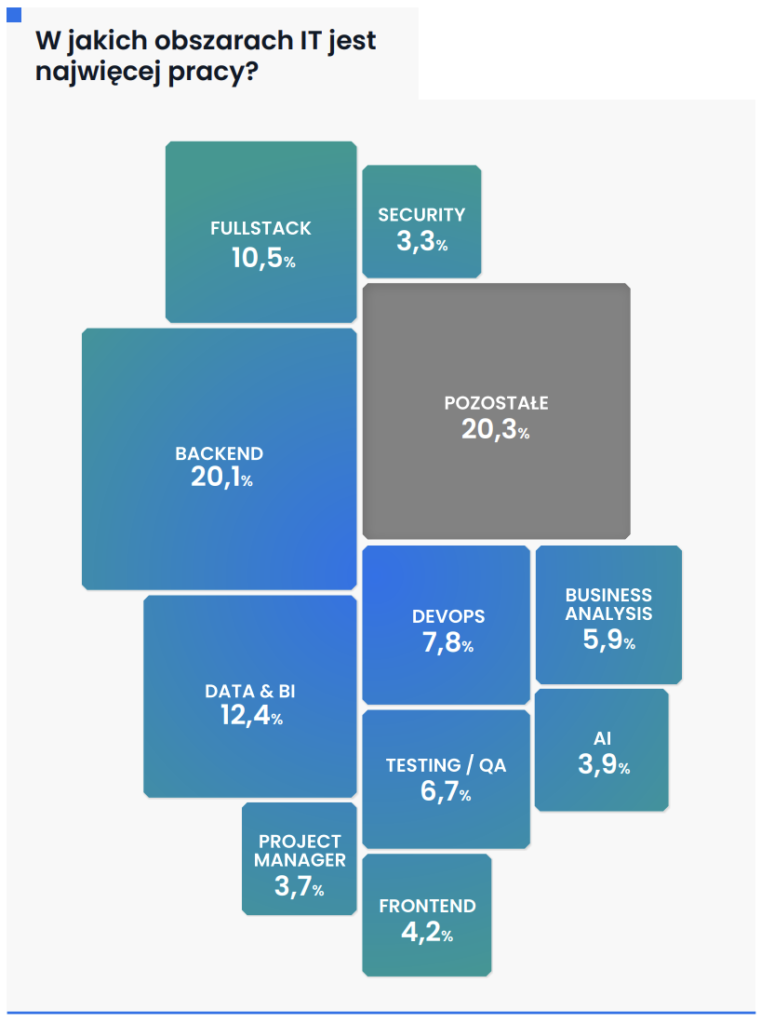
At the same time, today's market is more selective towards people just starting out. The report shows that offers for juniors account for approximately5.3%of the total, and nearly60%of positions are at the senior level — which is why entering the industry requires better preparation than it did a few years ago. In practice, those who win are those who, in addition to the basics, also have project experience: they know how to work in a team, deliver tasks, understand quality (testing, security, maintenance), and can show a portfolio. This is where studies are a real advantage: a well-designed program, work on projects, and contact with practice allow juniors to "jump" faster from the stage of learning technology to the stage of solving problems — exactly what companies expect. In addition, the report indicates that the structure of specializations is stable, with a slight increase inData & BIandBusiness Analysis, among others, confirming that data/analytical skills will continue to be one of the best paths for development in IT.
Material from the report "The IT labor market in 2025/2026" created by NFJ
Report prepared by HSBC Technology Poland and No Fluff Jobs. See how the IT market is recovering:
That’s why it’s becoming increasingly important to be well-prepared “from the start”: with practical projects for your portfolio, teamwork skills, and an understanding of how to actually deliver solutions (rather than just “knowing the technology”). This is precisely where a college education offers great value—a well-designed curriculum and project-based work help junior professionals transition from learning tools to acquiring the competencies employers expect. And in 2026, this could be a key advantage in the competition for that first, high-quality role in the industry.
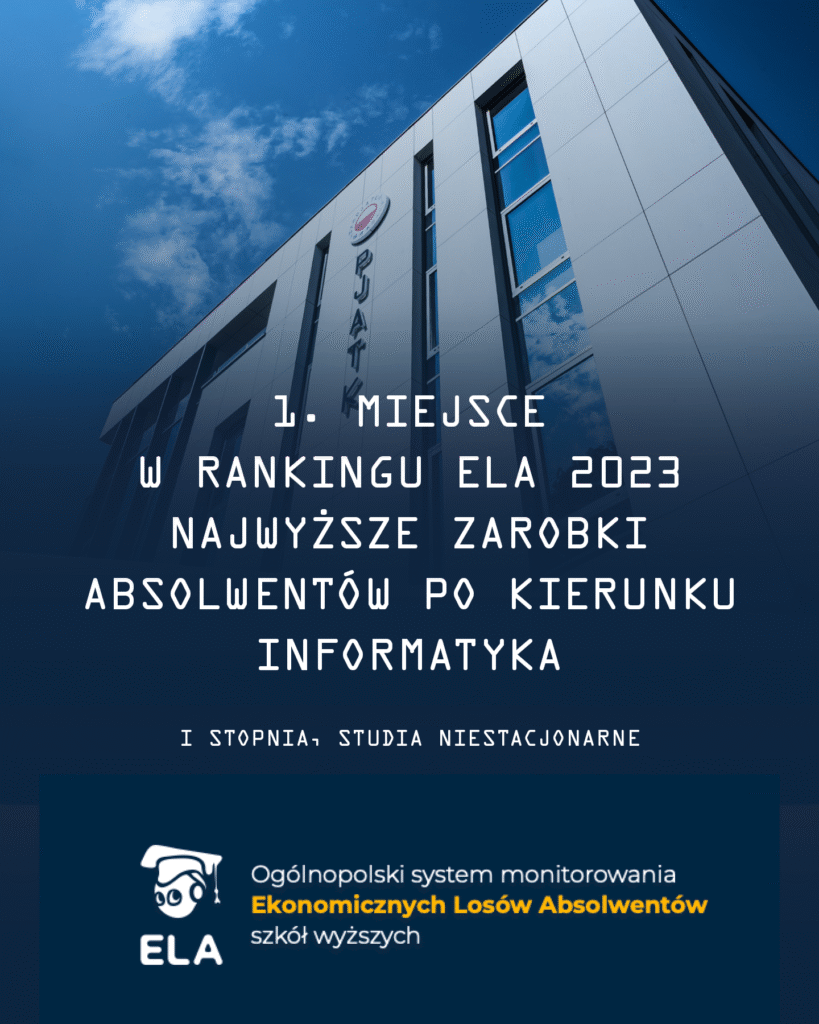
For years, PJAIT formerly known as PJWSTK) has been educating the best IT staff in Poland. The quality of education and its results are evidenced by PJAIT high positions PJAIT the rankings of graduates of the Polish-Japanese Academy of Information Technology. Be sure to check the earnings of PJAIT graduates PJAIT the ELA system.