





No-code/low-code platforms – a revolution in software development


Agile project management has revolutionized modern software development, introducing a flexible and adaptive approach to the execution of technology projects. Agile methodologies have emerged as a response to the limitations of traditional, rigid project management models, offering IT teams the ability to respond more quickly to changing business requirements and deliver valuable solutions more efficiently.
Agile ("agile"), represents a project management philosophy based on an iterative and incremental approach to software development. A key characteristic of this methodology is its focus on delivering high-value solutions in short work cycles, known as sprints, while maintaining a high degree of flexibility in responding to changing customer needs.
The foundation of Agile is the belief that project teams should focus on continuous collaboration with the client, regular delivery of working pieces of software, and a willingness to adapt in the face of changing market conditions. This approach contrasts with traditional project management methods, which are characterized by rigid planning and sequential execution of project phases.
Agile project management divides large projects into smaller, manageable stages called iterations or sprints. Each iteration typically lasts one to four weeks and ends with the delivery of a potentially release-ready product increment (a portion of the project that is fully functional, tested and meets the requirements established at the beginning of the iteration or sprint).
Agile methodologies can be traced back to the last decade of the previous century, when developers and project managers began to recognize the limitations of the cascading (Waterfall) model, in what was, after all, already a rapidly changing technological environment. The turning point came in 2001, when a group of seventeen software development experts met in the mountains of Utah to formulate an alternative approach to traditional project management methods.
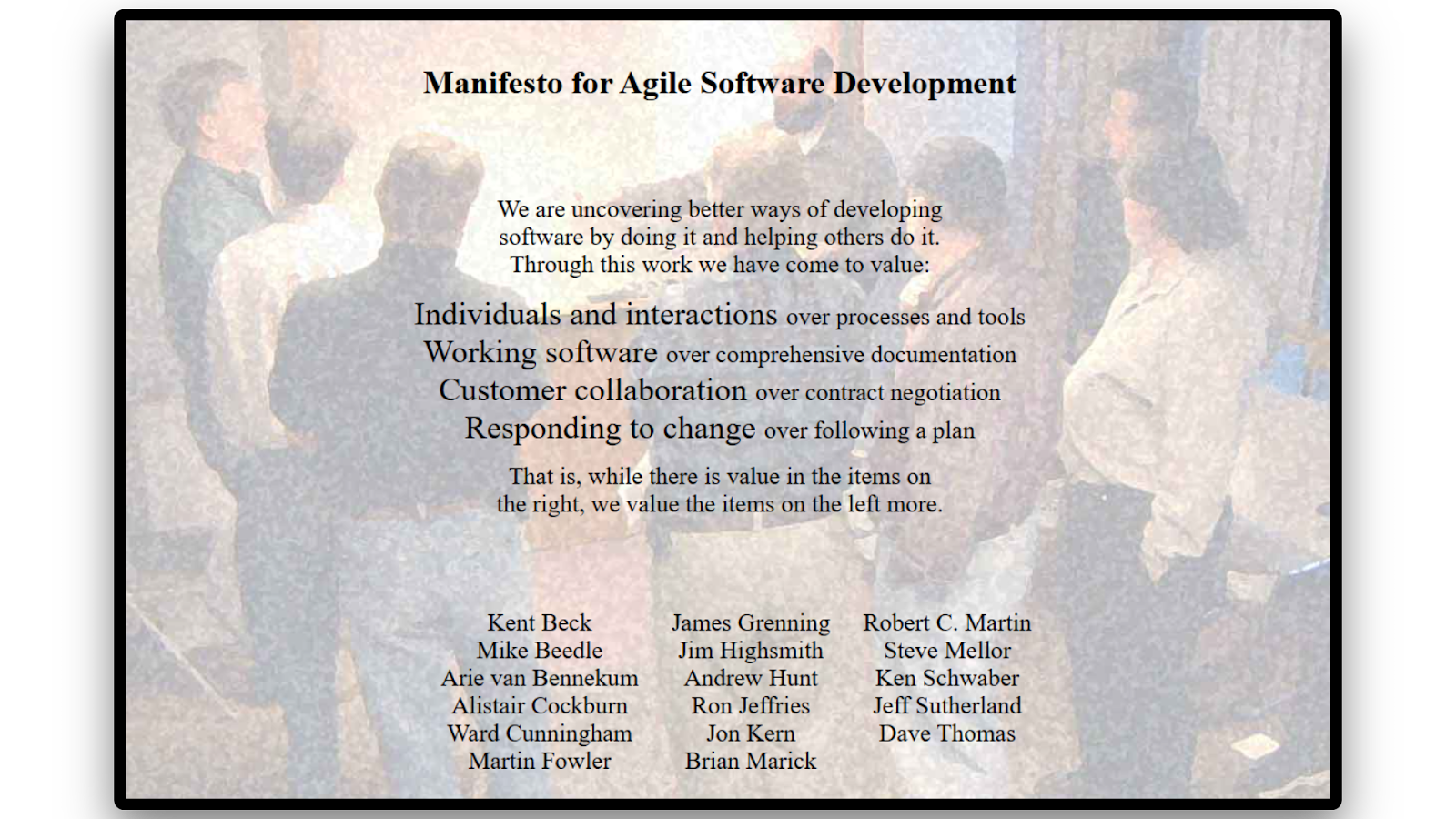
The result of this three-day meeting (February 11-13, 2001) was the creation of the "Manifesto for Agile Software Development" (Agile Manifesto), a document defining the four core values and twelve principles of the Agile methodology. Since then, the agile approach has gained popularity and started to be applied not only in the IT industry, but also in other sectors of the economy.
The Agile Manifesto identifies four fundamental values that underpin an agile approach to project management:
People and interactions over processes and tools - this value emphasizes that while processes and tools are important, effective communication and collaboration among team members are critical to project success. Agile promotes face-to-face conversations as the most effective method of communicating information within a team.
Working software over extensive documentation, which of course does not mean at all that documentation is unnecessary, but rather that the priority should be to deliver functional solutions. Agile emphasizes minimizing documentation to the bare minimum, focusing on creating a valuable product.
Working with the client beyond negotiating contracts, that is, promoting a partnership approach to the relationship with the client, where both parties work together every day throughout the project to achieve the best possible result.
Responding to change over following a plan - the last value emphasizes the importance of flexibility and adaptability. Agile teams accept changing requirements, even at a late stage of development, treating them as a competitive advantage.
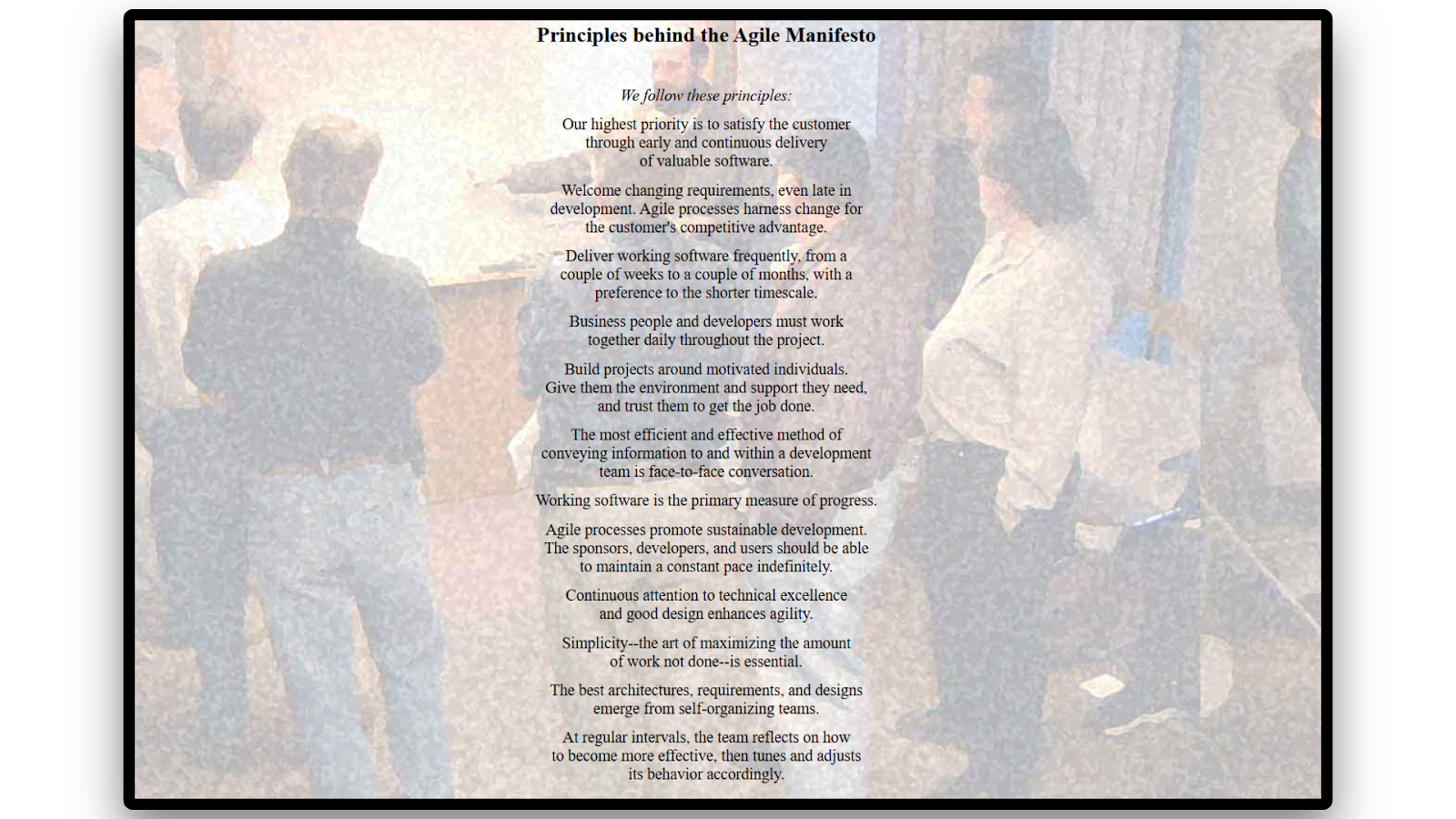
These values are supplemented by 12 detailing principles, of which the following can be mentioned as the most important:
Agile encompasses a variety of methodologies, each of which offers a specific approach to implementing agile principles. Choosing the right framework depends on the nature of the project, the size of the team and the specifics of the organization.
Scrum - the most popular framework
Scrum is currently the most widely used Agile framework, characterized by a structure based on sprints—short work cycles, typically lasting 1–4 weeks—and it is based on three main pillars: transparency (every team member has insight into the entire product development process), inspection (monitoring the workflow without disrupting the process), and adaptation (quickly adjusting processes and the product to unpredictable scenarios).
This framework defines three key roles: Product Owner (literally, the owner of the product, but more specifically, the person responsible for product development), Scrum Master (a Scrum specialist who ensures effective work according to Scrum principles), and Development Team (the team responsible for developing the product).
Kanban - workflow visualization
Kanban focuses on visualizing work and effectively managing the flow of tasks through the use of boards with cards representing individual work items. The methodology does not impose rigid roles or time frames, making it more flexible than Scrum.
Kanban's core principles include visualization of work, reduction of work in progress, flow management and continuous process improvement. Kanban is particularly effective in systems maintenance teams and in environments where work flows in unpredictably.
Extreme Programming (XP) - focus on code quality
Extreme Programming places special emphasis on technical practices and high code quality. The framework introduces such practices as pair programming, Test-Driven Development (TDD), Continuous Integration (CI) and code refactoring (modifying existing program code to improve its structure, readability and quality - without changing its functionality).
The methodology is also characterized by short release cycles, collective responsibility for the code and intensive collaboration with the customer. This approach is particularly valuable for software development teams that prioritize the technical quality of the software they develop.
Above all, Agile enables teams to respond quickly to changing business and technology requirements. With an iterative approach, it is possible to regularly adjust the priorities and direction of product development in response to customer feedback and changes in the market environment.
Agile project management methodologies also allow faster time-to-market by delivering functional pieces of software on a regular basis. Instead of waiting for the entire project to be completed, customers can benefit from valuable features while the project is already underway.
What is even more important here, frequent testing, regular reviews and continuous process improvement contribute to higher quality of the final product. Errors are detected and corrected at early stages of development, minimizing the cost of fixing them.
There are also the not insignificant benefits of greater involvement of project teams, to whom Agile provides greater autonomy in decision-making, and thus they feel more responsible for the success of the project, and, well, more motivated to work.
On the customer side, on the other hand, with whom there is constant contact here and regular delivery of working features, Agile provides better cooperation and trust-building by providing the customer with the opportunity to influence the field of study product development as it is being developed.
The values and principles behind Agile alone would not be enough here for ultimate success, of course, without the right tools.
Such project management is facilitated here by a tool like Jira, designed specifically for development teams using Agile methodologies - it offers ready-made Scrum and Kanban templates, comprehensive reports and integration capabilities with developer tools.
An equally popular tool for its simplicity and intuitiveness is Trello, based on the Kanban methodology, ideal for small and medium-sized teams - it is characterized by ease of use and flexibility to adapt to different work processes.
In doing so, however, it should be remembered that the success of Agile implementation depends on many other factors, including organizational culture, team commitment and the right choice of the tools and frameworks mentioned above. Those interested in developing competence in the area of such project management should consider the field of study of study Information Management at PJAIT, which provides a solid theoretical and practical foundation in this area.
In addition, we recommend you to read our article on the role of Project Manager in IT, which details the career path in this area.
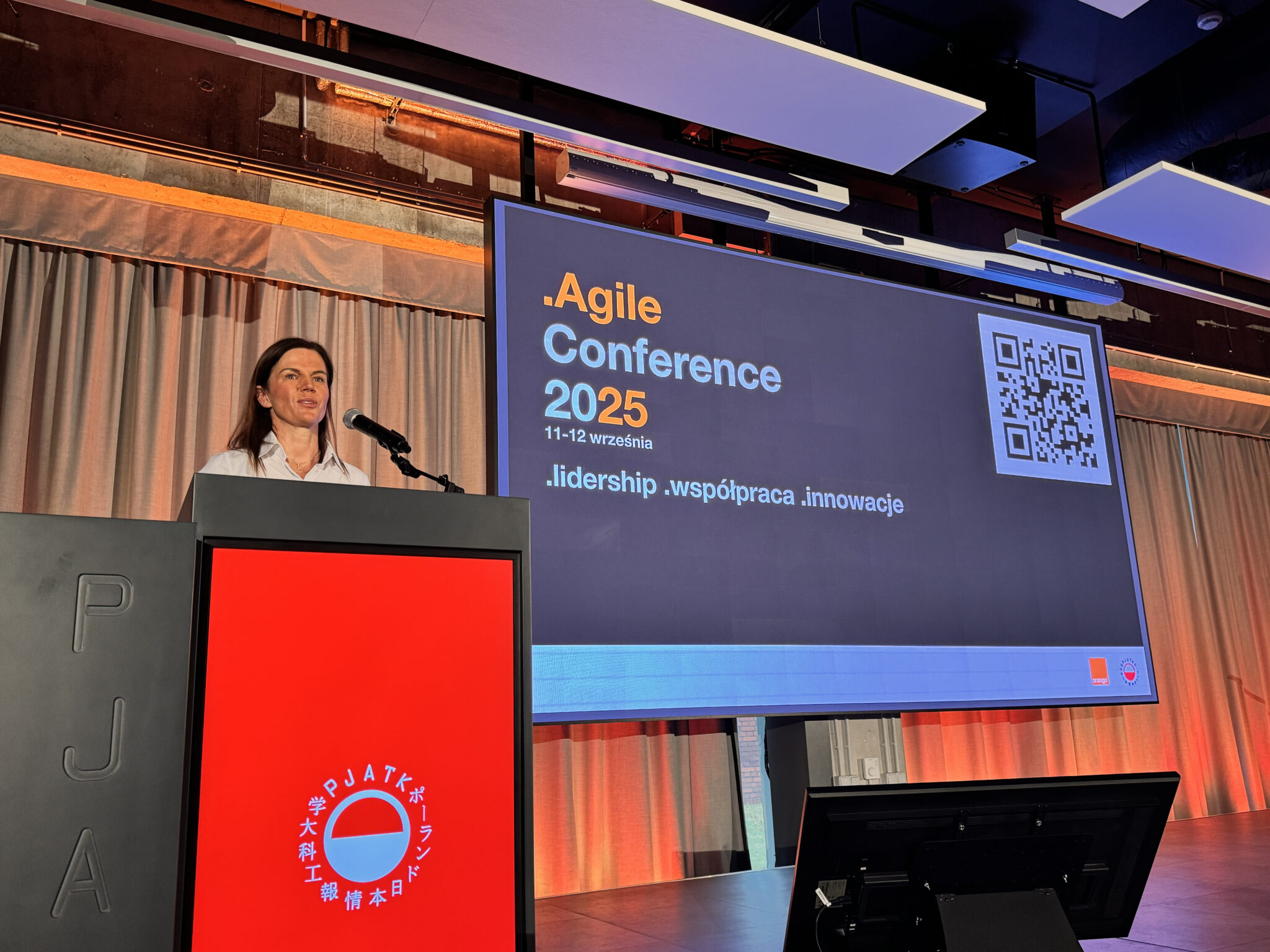
It is also worth noting here that our academy actively supports the development of agile methodologies, co-organizing with flagship partner Orange Poland the Agile Conference, which provides a platform for the exchange of experience and best practices for the Agile community in Poland.
Without a doubt, Agile has revolutionized the way IT projects are managed, offering a flexible and efficient approach to software development. Agile methodologies enable organizations to respond faster to market changes, better collaborate with customers and deliver higher quality products.
While agile methodologies are not a one-size-fits-all solution for all organizations and projects, their skillful application can significantly increase the chances of success for many technology projects. The key to a successful Agile implementation is understanding that it's not just about using specific tools or processes, but about adopting a new way of thinking about teamwork and creating value for the customer.