Exhibition of Works by Part-Time Students NeMA

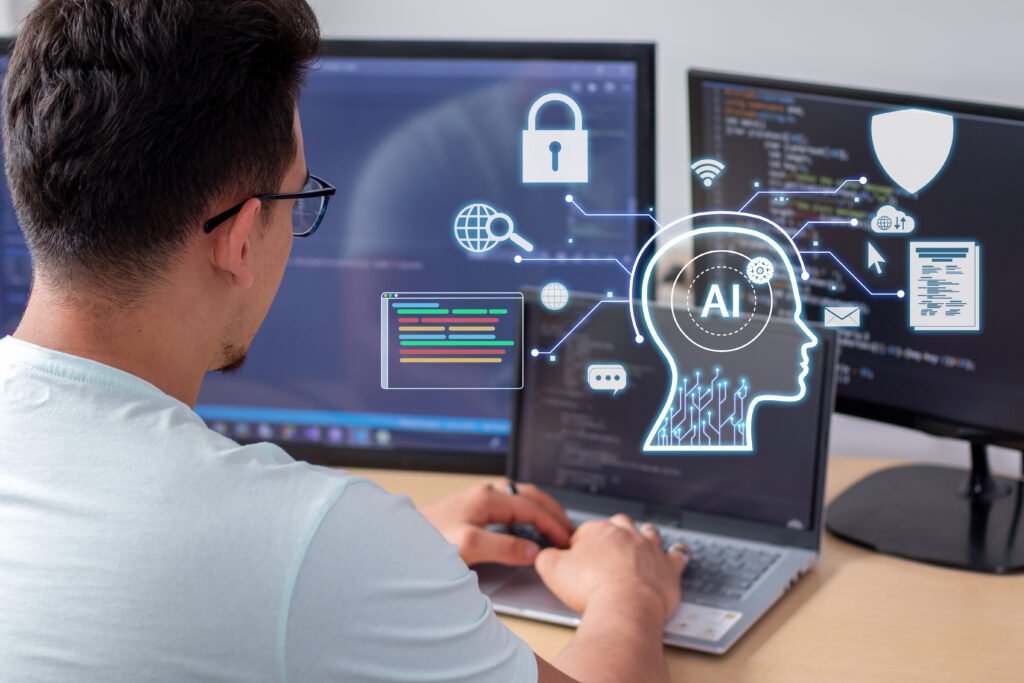
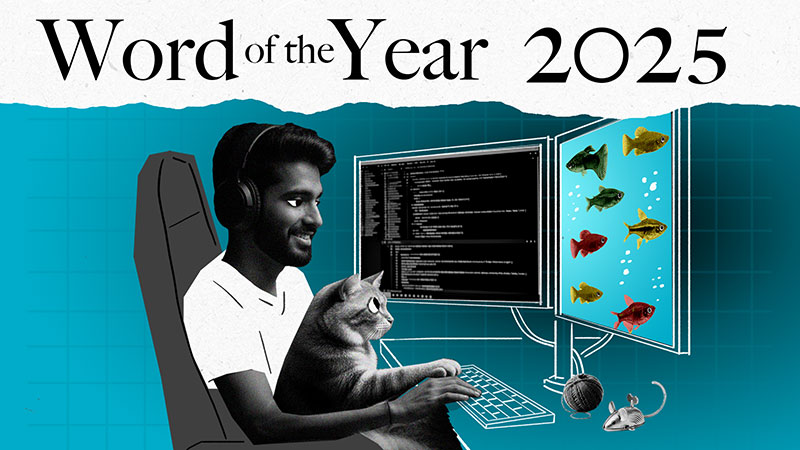
In the age of artificial intelligence, the way we work is changing radically. A few years after its widespread adoption in a wide range of applications, 2025 brought us a significant new word of the year announced by the famous Collins Dictionary – vibe coding.
This concept has become a sign of the times and perfectly captures field of study in which the world of technology and programming is heading. But what exactly lies behind this enigmatic term, and what consequences does it have for the programming profession?
Vibe coding is a term coined by Andrej Karpathy (co-founder of OpenAI and former leader of the AI team at Tesla), which is defined as programming assisted by artificial intelligence and controlled by natural language. Instead of laboriously writing code to instruct the machine using programming syntax, we simply tell the AI what we want to achieve—in natural language. The computer does the rest.
Sounds revolutionary? That's because it is. Vibe coding is a shift from traditional, precise code writing to a more intuitive approach based on "vibes" – the atmosphere, intention, and overall direction we want to give our project. It's a paradigm shift from "what do I need to type" to "what effect do I want to achieve."
Collins Dictionary chose vibe coding as its word of the year for a reason. The term transcends the programming community and touches on a fundamental issue of our relationship with technology. In a world where AI is becoming ubiquitous, vibe coding symbolizes a broader cultural shift— the rapidly growing role of artificial intelligence in everyday professional life.
This concept has resonated far beyond Silicon Valley. While experts debate whether it is a revolution or a risky experiment, the developer community has clearly embraced the concept. Vibe coding shows us something important about where we are headed—a world where intelligent algorithms increasingly define our creativity and work.
For programmers, vibe coding is both an opportunity and a challenge. The future does not belong to those who know every line of syntax perfectly. The ability to clearly articulate problems and collaborate with AI will be more important.
Programmers need to learn a new skill— prompt engineering. Instead of coding, we will spend more and more time on:
Paradoxically, vibe coding can free programmers from monotonous coding and allow them to focus on what really matters—designing systems, solving complex problems, and creating innovative solutions. Instead of spending hours writing boilerplate code, we will be able to think more strategically.
This means that programmers who learn to work with LLM (Large Language Models) will gain a huge competitive advantage.
However, vibe coding also raises new questions. If AI writes our code, who is responsible for errors? How do we ensure security and performance? How do we verify the quality of code generated by algorithms?
Developers must become more accountable for oversight and verification, while also becoming more independent in making architectural decisions.
An interesting question is which programming languages will remain popular in the era of vibe coding? Naturally, it comes to mind that these will be the ones that AI "understands" best.
Languages such as Python andJavaScript, with rich documentation and large amounts of training data, may gain popularity. On the other hand, more niche languages may become even more marginalized if AI struggles with them.
For those just starting their adventure with programming, this means that the choice of language must be even more carefully considered. It is worth choosing something that has a rich AI support ecosystem.
Universities and educational platforms must adapt their courses. The traditional approach to teaching programming—where students spend hours writing code from scratch—may need to be revised.
If you are considering studying computer science, it is worth remembering that education atPJAIT nowPJAIT not only a solid foundation in traditional programming, but also skills in working with AI, prompt engineering, and critical thinking about algorithm-assisted design.
This, in turn, is a question that concerns many programmers, especially beginners. The answer? Probably not—at least not in the foreseeable future.
AI is a tool, and tools require the ability to use them productively and effectively. Instead of removing programmers from the equation, vibe coding simply changes their role. From code executors, they become architects, decision-makers, and verifiers.
However, this also comes with a warning: developers who fail to adapt to new tools (GitHub Copilot, Cursor, or AWS CodeWhisperer) may find themselves at a competitive disadvantage. The future belongs to those who can work with AI, not against it, or worse, who fear it.
Vibe coding is just one of many trends that appeared on the list of words for 2025. It is worth noting that the choice of this term reflects the main contradiction of our times: we simultaneously accept AI and fear it.
Other words on the list, such as "clanker" ( an insulting term for artificial intelligence) and"broligarchy" (the power of a few tech billionaires), show our complex relationship with technological progress. Vibe coding is a symbol of hope, while clanker is a symbol of fear.
However, vibe coding became the word of the year, and let's stick with that, because it's a sign of things to come. The world of programming is entering a new era, where artificial intelligence is not only a supporting tool, but also a partner in the creative process.
For programmers, this means the need for continuous learning and adaptation. Those who learn to harness the potential of AI while maintaining critical thinking and ethical responsibility will succeed. The rest, unfortunately, may fall out of the job market.
The future of programming is exciting, full of challenges and uncertainty. But one thing is certain—the days when programmers spent all day writing boilerplate code are slowly coming to an end. An era is coming where thought and intention are more important than syntax. An era of vibe coding is coming.