
Exhibition of Works by Part-Time Students NeMA

The world's first World Humanoid Robot Games were held in Beijing on August 15-17, 2025.
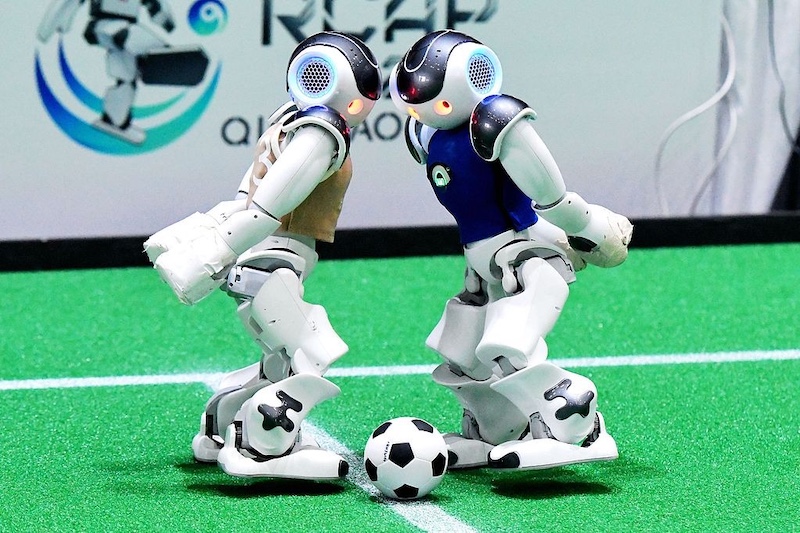
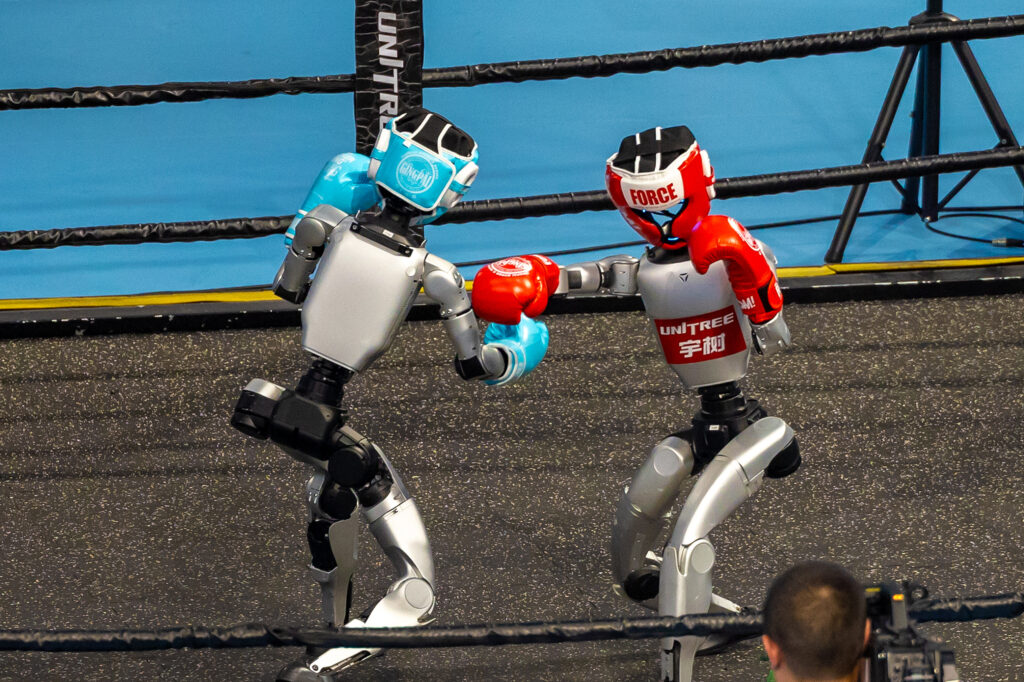
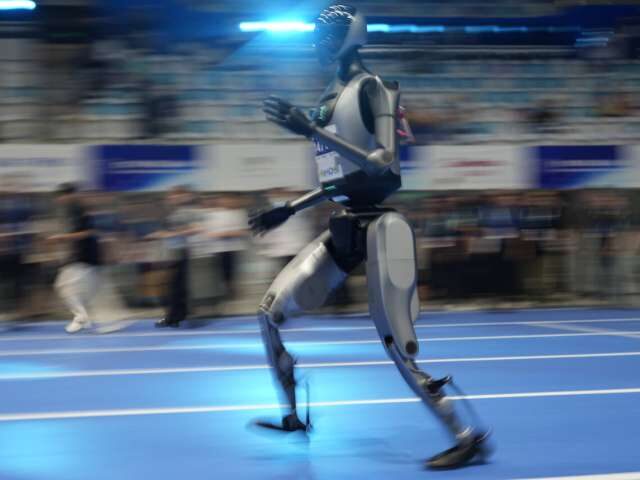
More than 500 humanoid robots from 280 teams from 16 countries competed in spectacular sports competitions, artistic demonstrations and tasks that tested their usefulness in everyday life - from dancing and music, to soccer, to cleaning and sorting medicines.
This unique event not only entertained, but also inspired - allowing engineers to experiment, learn from mistakes and explore entirely new possibilities. For all young science enthusiasts, it proves that computer science and robotics are fields full of challenges, creativity and real impact on the future - ready for you to co-create them together!
Although the robots during the competition often stumbled, fell over or had to be rescued by operators, the audience reacted vigorously and with great enthusiasm. Instead of discouragement, the stands were dominated by laughter and joy at watching a show that combined science, technology and fun.
The climactic moment occurred during a soccer match. One of the robots scored a goal, and the goalie... spectacularly fell to the ground. The whole scene caused salvos of laughter among the audience, showing that the competition is not only a competition, but also a real spectacle of emotions.
Despite many funny situations, there were also some impressive achievements. X-Humanoid won as many as 10 medals, including gold in the prestigious 100-meter run and in practical competitions such as material handling tasks. This proved that humanoid robots are not just a curiosity, but a technology with enormous potential.
It can be compared to a mechanical version of a human simulator - every step, every raise of the hand is the result of thousands of calculations, similar to what our brain does.
China has been investing in robotics, artificial intelligence and automation for years as part of its "Made in China 2025" strategy.
The result? Chinese engineers are able to demonstrate events like the World Humanoid Robot Games faster than the rest of the world, demonstrating progress not only in theory, but also in practice.
Contact the Enrollment Department to get answers to all your questions.
rekrutacja@pja.edu.pl