


No-code/low-code platforms – a revolution in software development


Artificial intelligence is already present in products that millions of people use every day. Behind its implementation are specialists known as AI developers (AI Devs). It is one of the most in-demand tech professions of recent years, and the job market in this field is growing at a rate the IT industry hasn’t seen in decades.
An AI Developer is a specialist responsible for designing, building, and implementing AI-based systems—their primary task is to transform artificial intelligence models into functional, production-ready solutions.
At this point, it is worth comparing and immediately distinguishing this role from related positions:
Of course, as is often the case in practice, the lines between these positions can be blurred, and in smaller organizations, a single person may combine several of these roles.
The work of an AI developer is varied and depends heavily on the specific nature of the company and the project. However, there are several areas that regularly come up in day-to-day tasks.
A large part of an AI Dev’s daily work isn’t building models from scratch, but rather fine-tuning them. Large language models (LLMs) serve only as a starting point here—using fine-tuning techniques (such as LoRA, PEFT, or RLHF), a specialist “teaches” the model to behave in accordance with the requirements of a given product, without incurring the costs of training it from scratch on their own computing infrastructure.
Even the best model won’t deliver valuable results if it’s fed inconsistent or incomplete information. The AI Developer builds and oversees entire data processing chains—from data acquisition and initial cleaning, through transformations, all the way to normalization, ready to be fed into the model. This is a stage that requires meticulous attention to detail and determines the final quality of the entire solution.
A well-functioning model must be integrated into the architecture of a real-world application. AI Dev is responsible for exposing it via a REST API, integrating it with the backend layer (e.g., using FastAPI or Flask), and ensuring that the entire system operates stably under load. Frameworks such as LangChain, which are essential here and enable the efficient development of RAG systems—solutions that connect the model to external knowledge bases—are growing in popularity.
Deploying a model in a production environment marks the beginning of a new phase of responsibility in this role, not the end of it—unless, of course, the organization also employs the MLOps Engineer mentioned earlier.
If not, then AI Dev monitors the quality of the generated results, responds to model drift—that is, the gradual divergence between the data used to train the model and the data coming in during production—and optimizes the system for response time and infrastructure costs. Thus, expertise in MLOps is crucial here—it is estimated that the vast majority of AI projects never make it to production precisely because of oversights at this stage.
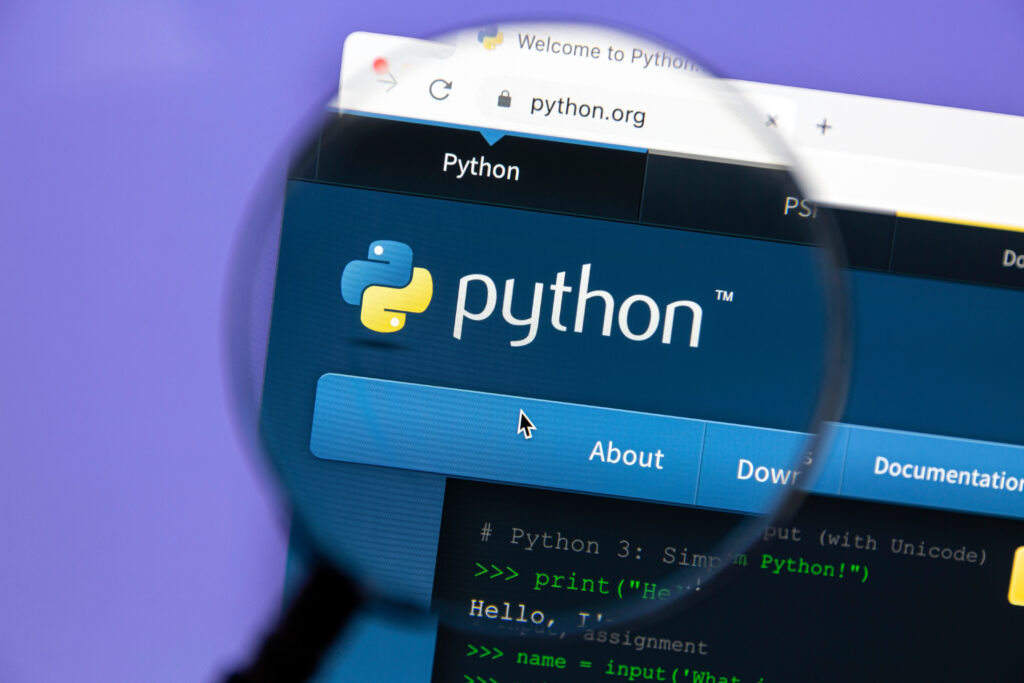
Python is an absolute must in the world of AI. Its readable syntax, rich ecosystem of libraries and frameworks, and dominance in the industry make it an indispensable tool for every AI developer. If you’re wondering whichprogramming language to start with, Python is the first and most important choice on your path to AI development.
Which libraries or frameworks are essential? First and foremost, we should mention NumPy and Pandas for working with numerical and tabular data, Scikit-learn—classic machine learning algorithms—PyTorch and TensorFlow/Keras for building and training neural networks, Hugging Face Transformers for working with pre-trained language models, and LangChain and the OpenAI SDK for creating LLM-based applications.
Linear algebra, probability theory, and statistics are the foundation for understanding how AI algorithms really work. Without this knowledge, you can certainly run off-the-shelf solutions, but it’s difficult to diagnose their errors or design your own architectures. This is particularly important when working with neural networks, where matrix transformations are a daily occurrence.
The ability to communicate effectively with language models has become a distinct and highly valued skill. We’re talking, of course, aboutprompt engineering—that is, designing queries and instructions for AI models. An AI developer should master advanced prompting techniques in particular, such as Chain-of-Thought, Few-Shot, and the construction of systemic instructions for agents.
An AI Dev is, first and foremost, a software engineer who works with a specialized set of tools. Therefore, knowledge of Git, CI/CD practices, containerization (Docker), cloud platforms (AWS, GCP, Azure), and API design patterns is also essential.
Avoiding mistakes common among novice programmers —such as failing to use version control, neglecting testing, or ignoring documentation—is just as important in AI projects as it is in any other code.
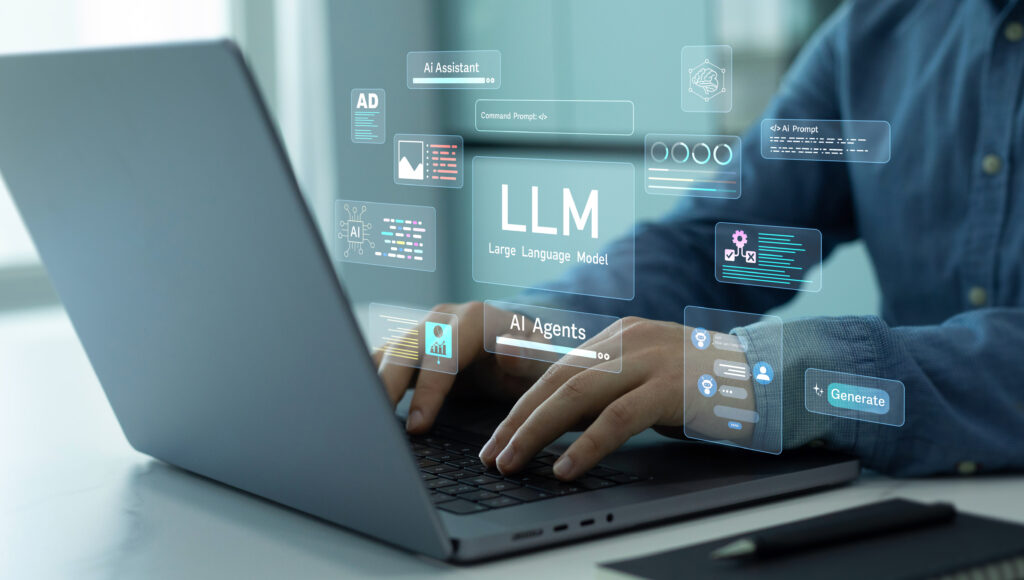
Today’s AI developer must understand how large language models work—their capabilities as well as their limitations. It’s worth learning what LLMs are and how large language models work so you can consciously choose the right tools for specific tasks and avoid pitfalls related to model hallucinations or overreliance on their results.
AI projects are rarely carried out alone—an AI developer collaborates with analysts, backend engineers, product managers, and business representatives. The ability to explain complex solutions in terms that non-technical people can understand is key, as is the ability to critically evaluate one’s own models and acknowledge their limitations.
It’s impossible to talk about the work of an AI developer today without mentioning the phenomenon of “vibe coding” —a trend in which code is generated with significant support from AI tools, and the developer guides the process rather than writing the code.
What’s important here—and what we need to keep in mind—is that while AI tools are changing and simplifying the way developers work, the demands placed on the specialists who use these tools are also increasing. An AI developer cannot rely solely on the code generated in this way—they must understand what lies beneath it in order to effectively verify the results and manage systems in production.
field of study (computer science ) atPJAIT provides a solid academic foundation, where the engineering program curriculum combines algorithmic, programming, and mathematical concepts essential for further specialization in AI. Meanwhile, those who already have professional experience and wish to enter the world of AI development can enroll in the postgraduate program “Python – Artificial Intelligence Programming” atPJAIT.
The program is delivered asynchronously—which means you can learn at your own pace, without having to attend live classes. It provides comprehensive training in working with data: from SQL database operations, through data processing and visualization, to advanced machine learning and deep learning models using NumPy, Pandas, Scikit-learn, and Keras.
The program director is Prof. Grzegorz Marcin Wójcik, Ph.D., who specializes in computational neuroinformatics and artificial intelligence. Graduates of this program are prepared to work as data scientists, machine learning engineers, AI specialists, or software developers specializing in AI solutions.
An AI Developer is a profession that lies at the intersection of software engineering, data science, and domain expertise. The combination of these skills makes good specialists hard to find and, as a result, highly valued—and, of course, well-compensated. Nevertheless, whether you’re starting from scratch or transitioning from another IT specialization, entering the field of AI development requires discipline, curiosity, and a willingness to work with constantly evolving tools.
There is no doubt that the demand for people capable of building, implementing, and maintaining AI systems will grow with each successive wave of technological implementations—in finance, medicine, logistics, marketing, and dozens of other industries.