Specialized areas
The curriculum is divided into two stages.
The first three semesters cover basic education, during which students acquire general knowledge in the area of fine arts and computer techniques. After the third semester, students choose a specialized area and deepen their knowledge in the area of computer techniques and fine arts in accordance with their chosen field of study.
Due to the nature of the studies, most classes after the third semester consist of seminar and workshop sessions in small project groups. Under the guidance of a supervisor, students complete a bachelor's thesis, which serves as the basis for obtaining their professional degree.
Students choosing the Visualization area will learn the problems, methods, and techniques, and acquire the skills necessary for designing short film forms, graphic design, creating series of illustrations, spatial packaging, utility objects, photography, exhibition design, designing the visual setting of performances, websites, and designing 2D and 3D visual information. A diploma in visualization – illustration, spatial packaging, photography, fine art graphics, must additionally include multimedia elements based on new IT technologies.
Students choosing this area upon completing their Bachelor's degree are prepared in particular to work in the following positions:
— Freelance graphic designer;
— Junior Art Director and Art Director in advertising agencies;
— Graphic designer in press and book publishing;
— Web designer in website design and implementation;
— Designer of computer game visualization elements;
— Illustrators;
— Photographers;
— Designer and creator of short film forms.
Within this area, the student acquires knowledge, skills, and social competencies that form the basis for professional development in the creation and management of visual communication content and form.
As part of the Animation area, the student gains detailed knowledge about the creation of computer games, music videos, short film forms, as well as computer animation and 3D graphics, and the computer generation of special effects.
Students choosing this area upon completing their Bachelor's degree are prepared in particular to work in the following positions:
— Independent graphic animator in the field of animated film and multimedia;
— Animation designers for computer games;
— Technical director of special effects;
— Creator of short film forms, music videos, and animated films;
— Junior Art Director and Art Director in advertising agencies;
— Web designer in website design and implementation;
— Content and intellectual property manager;
— Graphic editor of multimedia communications.
Within this area, the student acquires knowledge, skills, and social competencies that form the basis for professional development in the creation and management of animated content and form.
NeMA diploma theses, part-time studies
Diploma studios in part-time studies are chosen by students from the 4th semester. Along with the choice of the studio, students make a choice of the main promoter. At the beginning of the 5th semester, the choice of both the studio and the promoter can be changed. At that time, the other thesis supervisor are chosen - the technical supervisor , who is responsible for the artistry part together with the main supervisor , and the theoretical thesis supervisor .
Available studios and their instructors are presented below. Students choose 1 of 6 studios, while deciding on the scope of specialization.
area Visualization
In the Narrative Drawing Studio, the student deepens drawing skills in traditional and digital techniques. Within the framework of the classes, depending on the specialization chosen by the student (animation or visualization ), there are tasks focusing on the analysis of the human figure in motion, creative narrative drawing and illustrations to selected literary texts using multimedia tools. In the Studio there is a system of corrections and consultations of individual works and exercises and the credit is given on the basis of mandatory working reviews and mandatory final review.
Moderated by: prof. Piotr Smolnicki, prof. Jacek Staszewski
Prof. Piotr Smolnicki - diplomas are based on the implementation of their own projects in the art of graphic design, drawing, painting, photography, digital and alternative graphics with the use of multimedia in the broad sense in close cooperation with specialists, technical promoters. The graduate receives knowledge and skills for independent implementation of art projects in the field of design art, multimedia area and artistic activities in the above-mentioned areas of fine arts, creativity in the selection of tools appropriate for conducting an art project and workshop practice in independent implementation of the diploma project.
Prof. Jacek Staszewski , Ph. dr hab. . - The diploma work in the area of fine arts carried out in the interdisciplinary studio under my supervision allows combining various styles and
artistic techniques, such as graphic design (including sign design, graphic design publishing, art book), illustration, drawing, painting, video and intermedia techniques. Using a variety of media, the graduate student attempts a multifaceted exploration of the chosen topic. For example, the project may integrate painting with video art, digital graphics with manual illustration, and sound with interactive elements. Such an approach often involves exploring new boundaries in art and breaking down traditional divisions between media. The diploma project - carried out with the cooperation of a technical supervisor - can also include interactive components, involving the viewer in direct interaction with the work. In the implementation of the diploma work in the interdisciplinary studio, the creative exploration of the borderline of media and interdisciplinarity plays a key role, which enables a deeper understanding and presentation of the subject and its artistic context. As a result, this leads to the creation of a multidimensional and innovative diploma project.
The program provides the basis for building the plastic consciousness necessary to undertake artistic creation. Learning about and observing phenomena in nature, interpretation from analysis to synthesis, preparing students to form artistic expressions. The educational process is based on exercises and individual corrections, as well as presentations of student works. The basis of the course are exercises in the study of figures in space, as well as outdoor and compositional tasks on assigned topics.
Instructor: Kaja Kozon, M.A.
Work on the diploma project is based on the creation of the student’s own artistic projects in the fields of painting, drawing, contemporary drawing, spatial art, photography, sculpture, and artistic textiles; in the creation of these projects, a significant focus is placed on the search for an authentic creative path and the expression of the human being as an individual. These projects combine technical precision, experimentation with form, and reflection on space. Since a work of art originates with the artist and eventually reaches the viewer, the graduate’s task is to consciously construct the message and form of their works, the creation of which is preceded by a thorough analysis of the subject matter. Graduating students acquire the knowledge and skills to independently carry out artistic projects in the visual arts, as well as an awareness of the importance of selecting the tools necessary and appropriate for a given project. They focus on experimenting with form and reflecting on space, which can be understood both literally and symbolically. The studio utilizes a variety of materials and techniques and hosts discussions on contemporary art in both local and global contexts. The goal is to develop sensitivity, critical thinking, and creative expression, taking into account modern methods of artistic practice. The studio supports the creation of works that thoughtfully explore the theme of identity and respond to current cultural challenges.
graphic design is a studio whose area training covers graphic design in the broadest sense: visual identity, signage systems, poster and other outdoor forms, motion design, publication design (paper and digital), web interface design and other interactive forms. The program involves the creation of designs using mainly 2D, static and dynamic technologies, created using the latest technologies, with engineering support. The multidimensional, dialogue-based, dynamic structure of the studio's program enables students to work based on analysis of the latest trends and orientations in contemporary graphic design and related fields. Projects are introduced with lectures providing the knowledge necessary for the tasks carried out in it.
Presented by: Dr. Magdalena Zdraźil, dr hab. Małgorzata Bałdyga
Within the framework of this studio, students have the opportunity to explore various artistic forms and media, which creates opportunities for innovative and engaging projects in the field of graphic design in the broadest sense. This includes, for example, posters, comic books, publishing series, logos, sign books, complex visual identities, pictograms, packaging, etc. Diverse graphic forms, from posters to visual-sound installations, allow the free combination of design art with social, psychological and cultural issues. Preference is given to creating works that are embedded in a local or social context. This fosters a dialogue with viewers and can initiate important discussions. The studio provides a space for the realization of personal projects, where each participant can develop his or her ideas in a broader context, seeking answers to the questions that concern him or her. Creators are encouraged to address topics that are relevant and topical, allowing them to reflect on the reality in which we live. An added value is the opportunity to work on art books, traditional books, albums, artbooks and out-of-the-box multimedia projects. Participants have a chance to acquire not only visual skills, but also literary and technological skills. Alternative design, which is based on breaking common patterns, is also very welcome. It can lead to the discovery of new methods of expression and original solutions, which is especially important in today's art world. In this studio, we encourage challenges and exploration of diverse creative paths.
The printmaking studio focuses on improving technical and artistic skills in a variety of traditional printmaking techniques. In the course, students have the opportunity to learn and work with such techniques as linocut, etching, algraphy, monotype and screen printing. The goal is to develop the graphic design workshop and the ability to creatively use various methods of fine art printing, as well as to develop an individual artistic language. Students learn not only the techniques themselves, but also the principles of composition, expression and working with materials and tools. Great emphasis is placed on independence in the selection of the subject and graphic concept, as well as the development of a creative attitude, experimentation and the search for new means of expression. During the course of the diploma work in the studio, students are required to prepare a minimum of 10 diploma graphics, which should form a coherent whole in artistic and technical terms. Diploma works are evaluated both in terms of quality of execution and originality of concept. The classes are designed to prepare students for independent artistic work, and also enable them to develop towards a professional career as a graphic design artist.
Moderators: Professor Andrzej Kalina, Professor Krzysztof Szymanowicz
area Animation
The aim of the course is to familiarize students with advanced techniques of working in 3d environment and related digital techniques (mixed techniques - used in animation, 3D game design and computer graphics in the broadest sense) . This is accomplished through exercises that introduce students to successive tool environments centered around 3D technology, focusing mainly on various techniques of modeling, arranging digital image content, animation, lighting and rendering in 3d graphics.
Moderator: Dr. Michal Mazur -
Dr. Michal Mazur - The realization of the diploma is a wide-ranging work on digital image and sound for the creation of which the author uses software tools for 3D, 2D graphics and mixed techniques (combining photography, film, painting, mock-up, sculpture with digital painting, 3d, 2D animation embedded in a common graphic environment). Prepared 3D graphic design can be converted to an animated image, incorporated into other animation techniques, or placed directly on a rendering engine. The work can take the form of a story, visualization (which, for example, thanks to VR techniques, we can walk through), can take the form of a music video, etc. The work includes design for 3D game environments (character concepts, set design, interactive image design), short animated forms, experimental projects (using 3D generated graphics as an installation, procedural element). The goal of the diploma studio is for the diploma preparer to achieve a kind of confidence and discipline in navigating the complex environment of digital image creation tools so that by graduating the diploma student is able to independently create (design) an original valuable audiovisual message.
The Animation and Film Production Studio is designed for students who seek to understand the art of character development and storytelling in animation. Throughout the program, students receive comprehensive artistic and technical training to help each student develop their skills in both traditional animation and computer graphics.
Instructors: Dr. dr hab. Joanna Polak
dr hab. Joanna Polak – The diploma projects are based on the students’ own projects in the broadly defined field of film animation. Graduates choose the topics of their projects themselves and, with the help of their advisor, transform them into research topics suitable for visual representation through film animation. The most common form of a diploma project is an animated film etude lasting approximately three minutes, created using any traditional and/or computer-based technique and produced with digital tools. Also acceptable are series or episodes of a series, music videos, game trailers, game elements, explainer videos, social campaigns, advertising campaigns, teasers, opening and closing credits, animated virtual tours, etc. Other forms of the diploma include graphic design, painting, illustration, book design, tattoo designs, installations, etc., which, through AR technology, reveal short animated forms. Just as film animation cannot be confined to a rigid framework, this studio is open to innovative approaches to creating moving images and to experimenting with new trends. The studio’s motto is “Technique-Art-Mastery,” meaning the goal is to create animations that showcase the full spectrum of the graduates’ capabilities—works they wish to share beyond the walls of the university.
Best NeMA diplomas Part-time studies
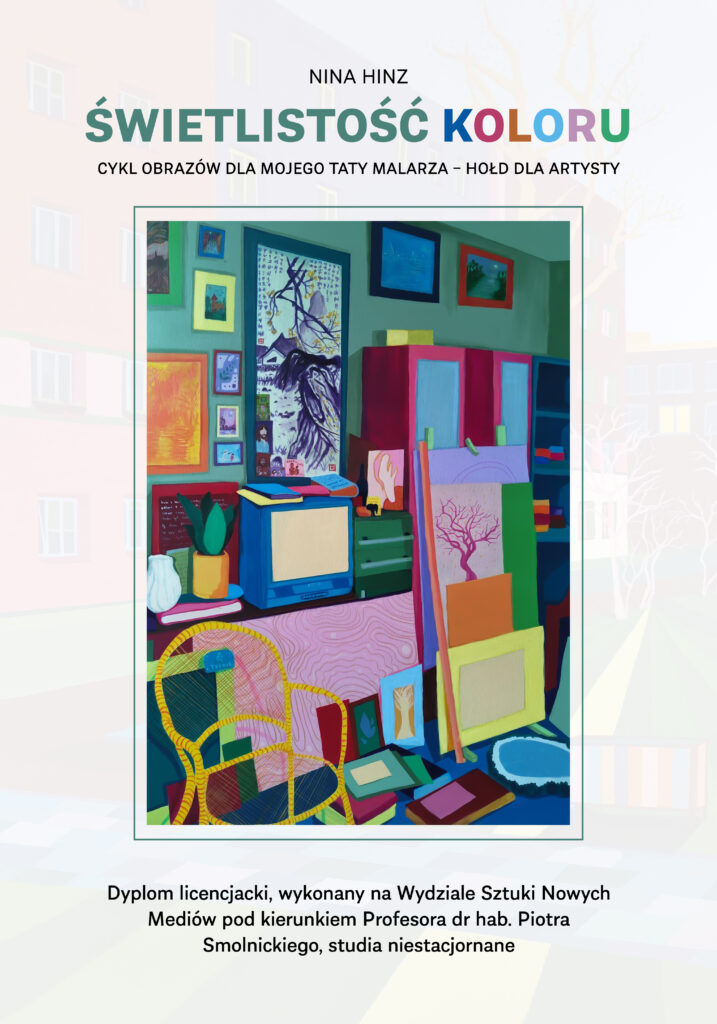
Brilliance of color
A series of paintings made as a tribute to the painter Michał Mazur (25.09.1954 - 05.06.2011), an acclaimed painter from Toruń and father of a graduate student. The work recreates the key places of his life and work, capturing their unique character through colorful painting. The work includes not only paintings, but also diaries, photographs and personal objects, creating a comprehensive portrait of the artist.
A total of 6 paintings in acrylic, measuring 100×140 cm, were created, using previous works that were first created digitally on a tablet. Inspiration comes from childhood photographs collected in family albums/.
Nina Hinz, undergraduate thesis 2023 done under the supervision of Professor Piotr Smolnicki.
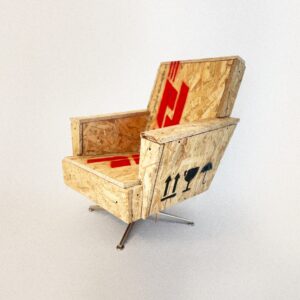
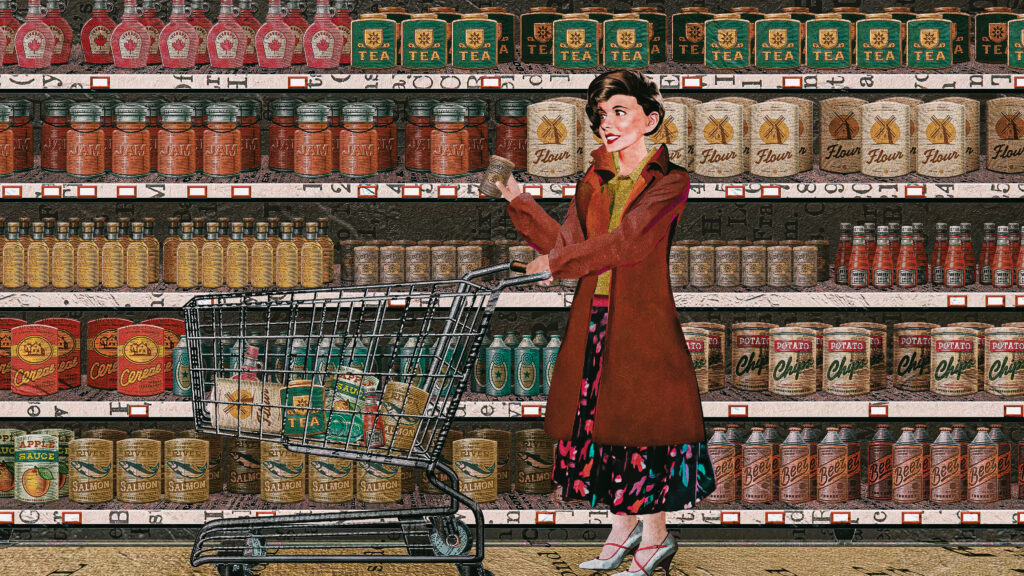
Deconstruction of the subject. On appropriation in art.
The activities described in the thesis, often stemming from rebellion driven by an anti-consumerist attitude, are associated with subversive practices that "disrupt" the reception of the work and the appropriated subject, creating a completely new semiotic layer. They examine our relationships with advertising, images, art itself, and everyday objects. An ordinary subject is an ideal canvas for artists dealing with themes of mass reproduction of art, as well as the fetishization and cult status we attribute to things. The result of this work is eight objects, each created in the spirit of art appropriation strategies.
Nicholas Śliwiński, 2023 master's thesis, supervised by Professor Małgorzata Bałdyga and Michał Mazur, M.A.
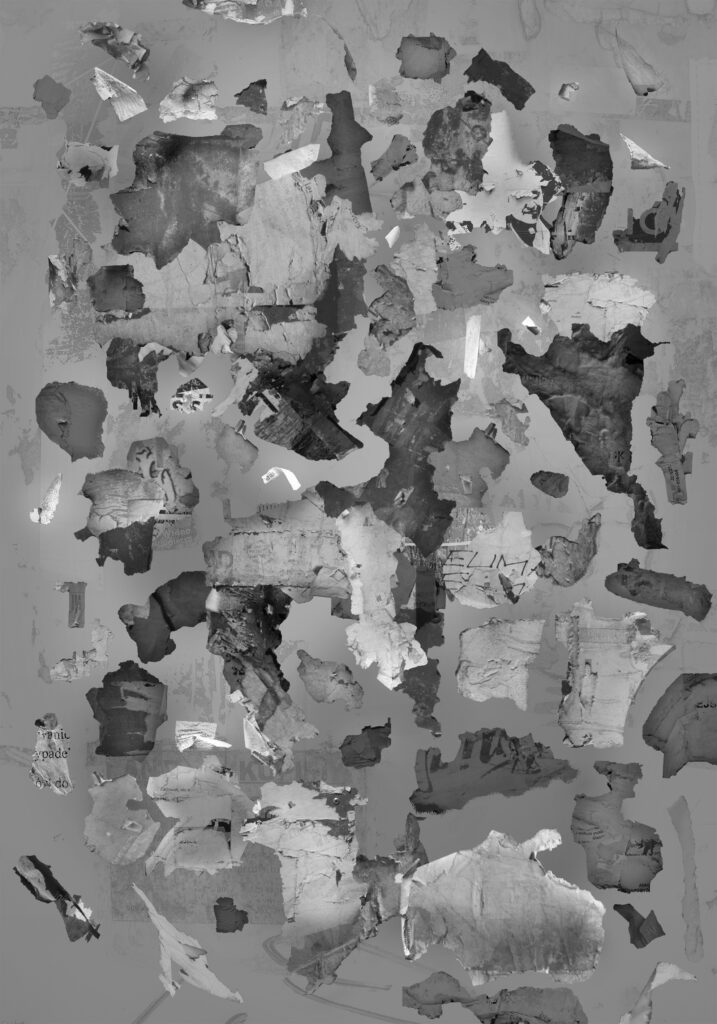
Series of graphic designs “Tissue”
The theme of the series is the city and the individual feelings and observations associated with it. The aim of the project was to create a series of digitally printed graphics which, through possible expansion in AR technology, can reveal further layers of visual-motion and sound experiences to the viewer.
Jan Daciuk, Master's thesis 2020, supervised by Professor Andrzej Kalina and Professor Krzysztof Szklanny.
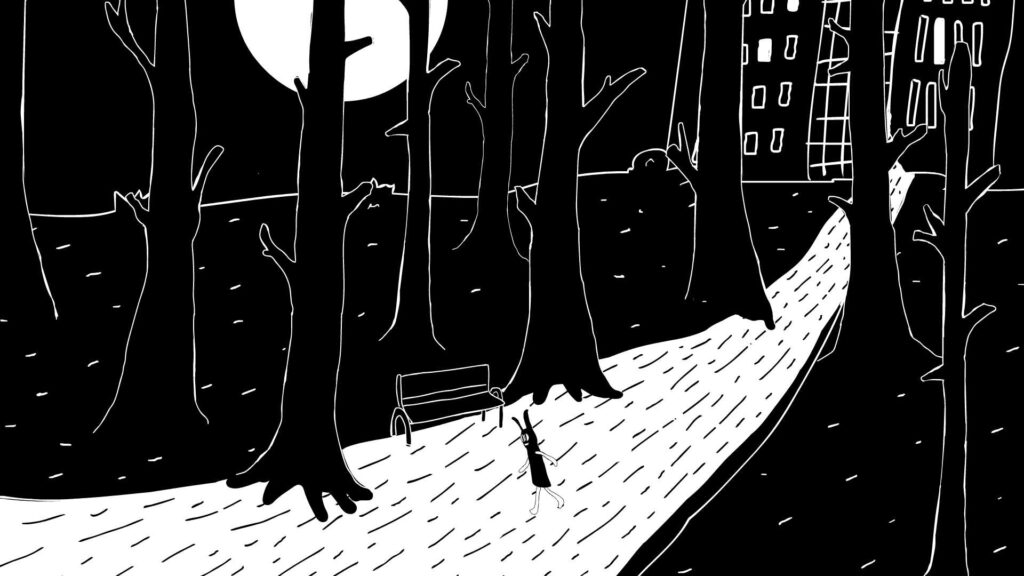
“Clairvoyance”
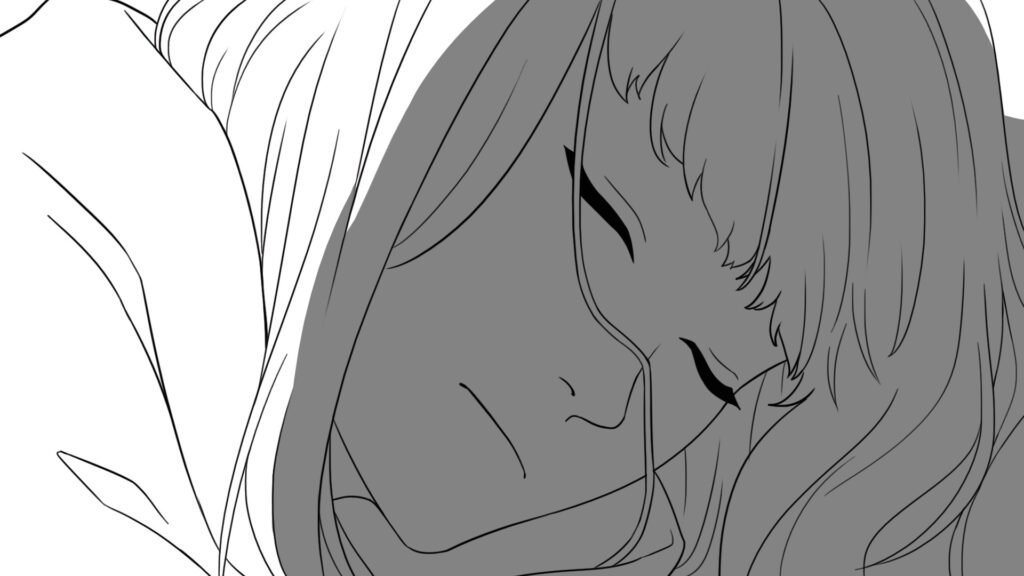
Abstract 2D animation on the border of drama and comedy. In Clairvoyance, an atmosphere of horror combines in parallel with absurdity. The film presents black-and-white visions full of fears and anxieties in unusual circumstances.
Weronika Krzewska, Bachelor's thesis 2020, supervised by Professor Joanna Polak and Marcin Wichrowski, MSc Eng.
Film screened at Animation Slam, Academy of Fine Arts in Gdańsk 2023
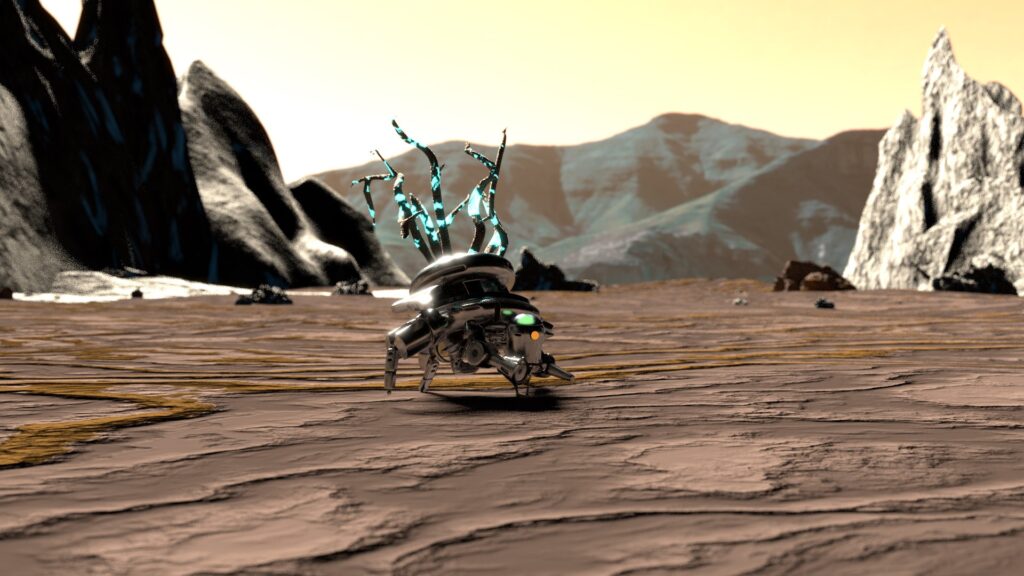
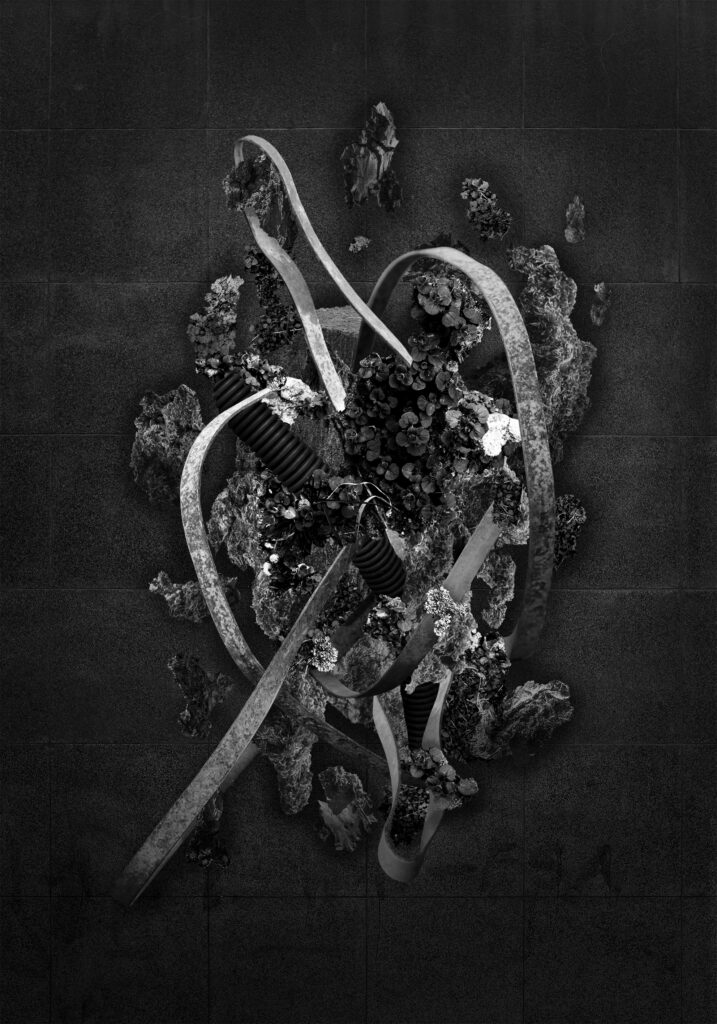
“Life Conducting Among Dendrobots: A Case Study”
3D animated film
The creation of dendrobots, a specific version of cyborgs: a combination of a plant and a machine, was an attempt to refresh the presentation of the classical dualism of soul and body, matter and the immortal element.
Jakub Dudek, Bachelor's thesis, 2018, supervised by Michał Mazur, MA, and Piotr Pawłowski, MSc Eng.
Animation Studio of Professor Joanna Polak
During classes, students learn advanced animation techniques – both traditional and 2D. They acquire skills in creating scripts and storyboards for animated films and video games.

“Dog Walker Punto App” Marta Kulińska, 2019, 1’34” – diploma project, explainer video
The explainer animation “Dog Walker App Punto” presents a solution for busy dog owners who, for various reasons, do not have time to walk their pets. The proposed solution is a mobile application that connects groups of owners into neighborhood communities who support each other in pet care.
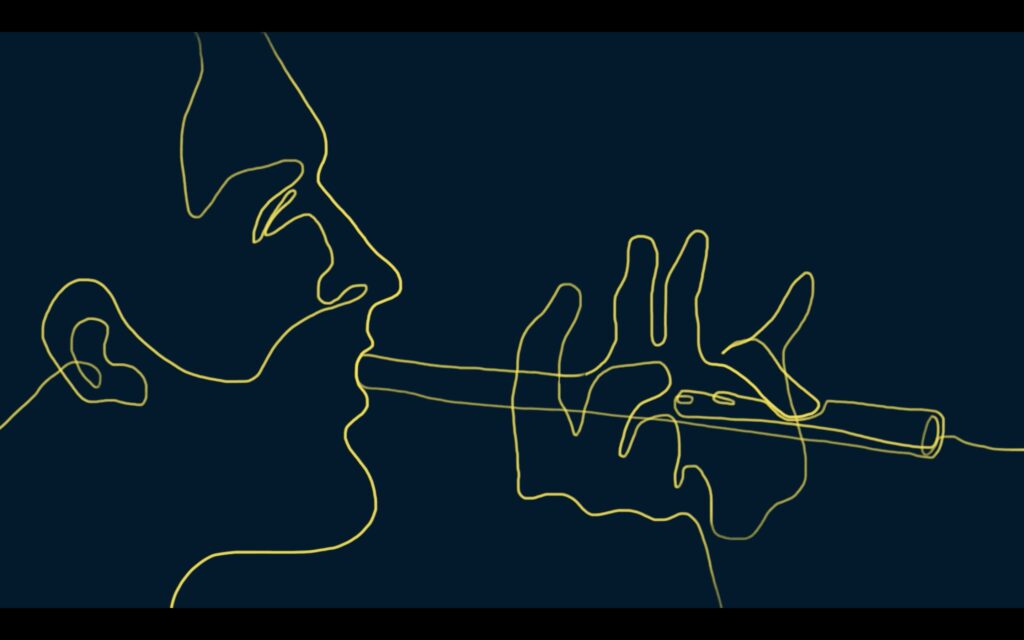
“Night” by Alisa Temchenko, 2019, 1’56” – exercise – honorable mention in the student category – 8th O!PLA National Animation Festival 2020
The starting point for creating the animation was a beautiful Ukrainian song “It is quiet by the river”, which the author and her husband sing to their daughter every night before bed.
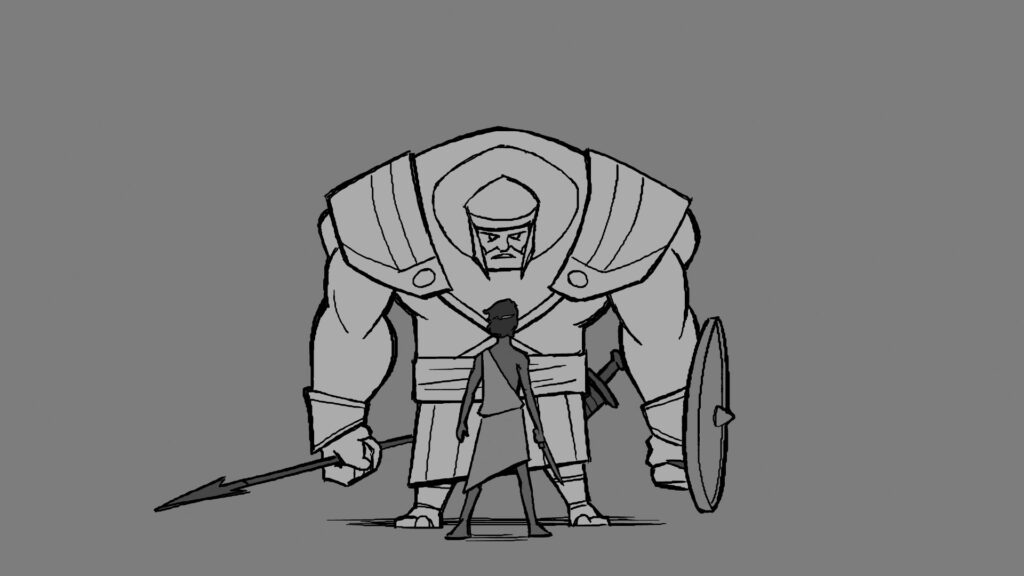
“David – Animators for Ukraine,” Maciej Kądziela, 2022, 2:29 – exercise – film screened: 2022 – Łódź – 4th RISING OF LUSITANIA AnimaDoc Film Festival; 2022 O!PLA Festival in Łódź
What is the price of freedom? “Devid” presents a comparison of the Russian attack on Ukraine to the duel between David and Goliath.

"Moonlit Night", Anastasiia Holovchuk, 2021, 3:05 – exercise, AR film
Film screened: 2021 – Lublin – Night of Culture 2021
A mythical story about a gramophone that awakens at the touch of moonlight.

“A Vampire's Friend” by Justyna Michałowska, 2018, 5’54” – diploma project, short film – honorable mention in the early-school category – 8th O!PLA National Animation Festival 2020, film screened: 2020 – 14th “Offeliada” Film Festival in Gniezno
A short animation about blind friendship. The protagonist of the story is a Vampire. One day he finds a flea. He begins to feed it, measure its growth, and treat it like his best friend. But over time, his dedication turns against him.
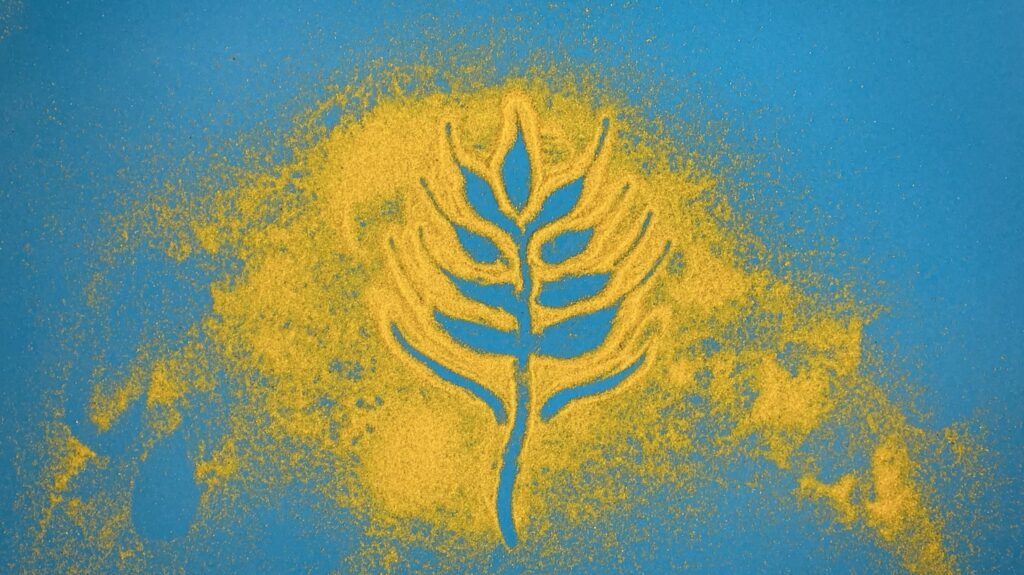
“Stand with Ukraine”, Sara Gołębiowska, 2022, 1:20 – exercise – film screened: 2022 – Łódź – 4th RISING OF LUSITANIA AnimaDoc Film Festival; 2022 O!PLA Festival in Łódź
The animation depicts a beautiful land destroyed by war and ordinary people drowned in tears, yet the land rises from the ashes anew.
Best Diploma Projects
of the Faculty of New Media Arts
!
Check out the best diploma projects of part-time students!