The fall edition of " Career Fair "PJAIT is coming up tomorrow—October 22!

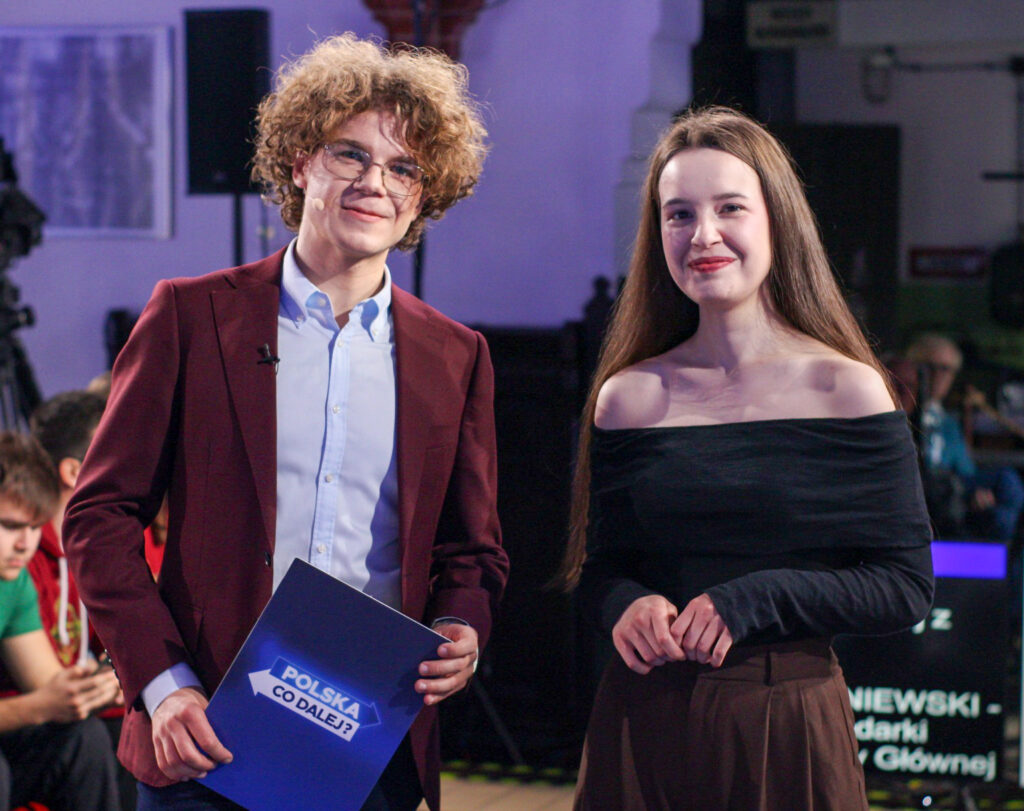
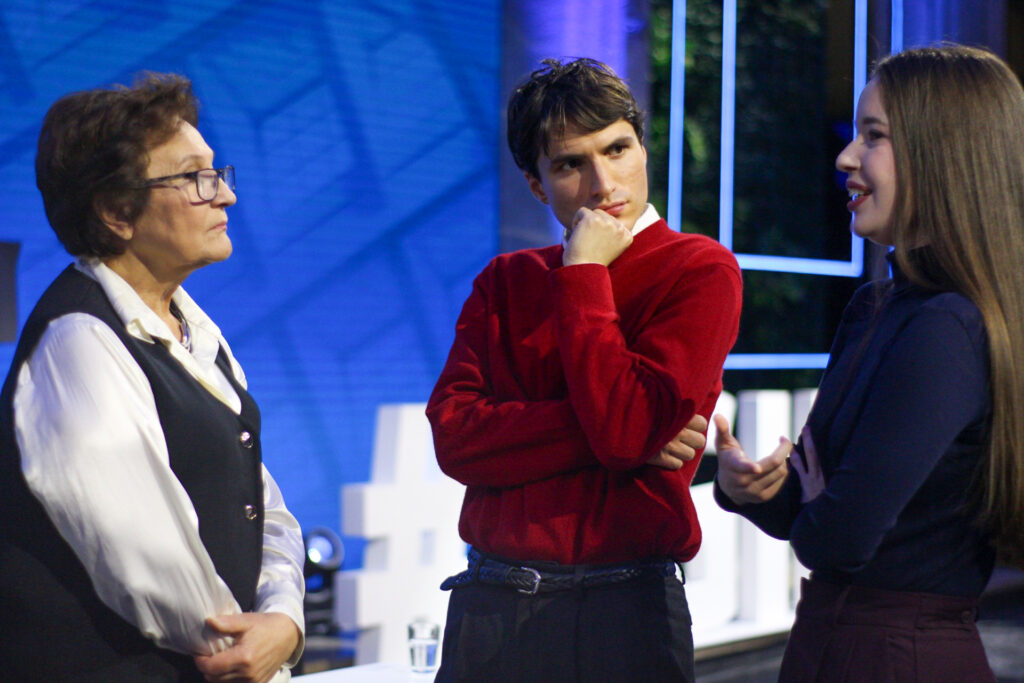
On May 24, 2026, TVP INFO aired the final episode of the current academic year of the current affairs program “Poland: What’s Next?”, produced in collaboration with the Warsaw School of Economics. This is a series of debates in which students, together with invited guests, discuss the most important social, political, and economic challenges in Poland. Students PJAIT of the Kaizen Debate Club participated in each of the program’s last eight episodes.
The main topic of the episode aired on November 30, 2025, was modern patriotism, its significance, possible forms, and the models worth emulating. PJAIT students Izabela Pawlukowska and Jeremi Lipniacki participated in the debate.
On December 14, an episode dedicated to the upcoming Christmas holidays was broadcast. Students from Warsaw universities, including Izabela Pawlukowska and Jeremi Lipniacki fromPJAIT, discussed whether the holidays are a time of unity or a source of division, whether they drive the economy or rather encourage excessive consumption, and whether they strengthen family bonds or become a cause of stress and conflict.
On January 18, 2026, TVP INFO aired another live episode of the program. The debate focused on philanthropy and the question of whether helping others can remain free from political divisions. Students from Warsaw universities discussed, among other things, the public perception of charitable organizations, the transparency of accounting for donations, and whether aid activities should unite or divide people. PJAIT students Izabela Pawlukowska and Jeremi Lipniacki also participated in the debate.
On February 22, 2026, the first on-site episode of the program “Poland. What’s Next?” took place at the European Solidarity Center in Gdańsk. The debate focused on the question of whether the healthcare system can be reformed. Students discussed topics such as preventive care, waiting lists for specialists, system financing, health insurance premiums, and challenges related to the accessibility of medical services. PJAIT student Izabela Pawlukowska also participated in the debate.
On March 29, 2026, the Waterworks Museum in Bydgoszcz hosted the second on-location episode of the program “Poland. What Next?”, produced by Telewizja Polska and the Warsaw School of Economics. The debate participants discussed the green transition, the pace of achieving climate neutrality, changes in the Polish energy sector, and the impact of climate policy on economic competitiveness. Topics discussed also included the social costs of the transition, the role of green technologies, and the problem of climate misinformation. Students from universities in Bydgoszcz, Warsaw, and Poznań participated in the debate, including PJAIT representative Izabela Pawlukowska.
On April 26, 2026, the third on-site episode of the program took place at the University of Rzeszów. The debate focused on Generation Z and the question of whether young people are actually changing the social and economic landscape, or whether they are instead facing discouragement, pressure, and burnout. Participants discussed, among other things, the job market, work-life balance, setting boundaries, well-being, online presence, and values important to the younger generation. The debate was attended by students from universities in Rzeszów, Warsaw, and Poznań, including PJAIT representatives Izabela Pawlukowska and Jakub Melzacki.
On May 24, 2026, the final episode of the season took place at the Silesian Stadium in Chorzów. The debate focused on the role of the European Union in Poland’s development and the question of whether EU membership brings more benefits or limitations to our country. Participants discussed, among other things, open borders, the Erasmus+ program, EU funds, the rule of law, the impact of the single market on Polish companies, and the relationship between the European community and Polish identity. PJAIT students Izabela Pawlukowska and Jakub Melzacki took part in the debate.
The participation PJAIT students PJAIT the “Poland. What’s Next?” program demonstrates their commitment to social issues and their willingness to speak out in public debate. Through their involvement in the Kaizen Debate Club, they develop skills in argumentation, critical thinking, public speaking, and active listening—skills that are useful not only in academic and professional life but also in everyday situations requiring conversation, collaboration, and the ability to articulate one’s own position thoughtfully.
All episodes of the show “Poland: What’s Next?” are available on the TVP VOD platform: