The fall edition of " Career Fair "PJAIT is coming up tomorrow—October 22!


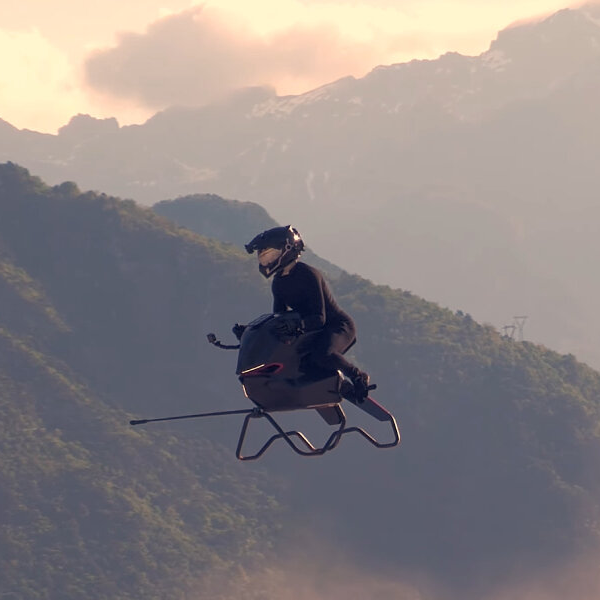
The future of everyday air transportation for everyone may be closer than we think. The Volonaut Airbike, an innovative project by Polish inventor Tomasz Patan, is ushering us into the era of personal air transportation, where flying may become as common as driving. This one-person air vehicle powered by a jet system, reminiscent of machines from science-fiction movies, was presented to the world on May 1, 2025, and immediately caused an international sensation.
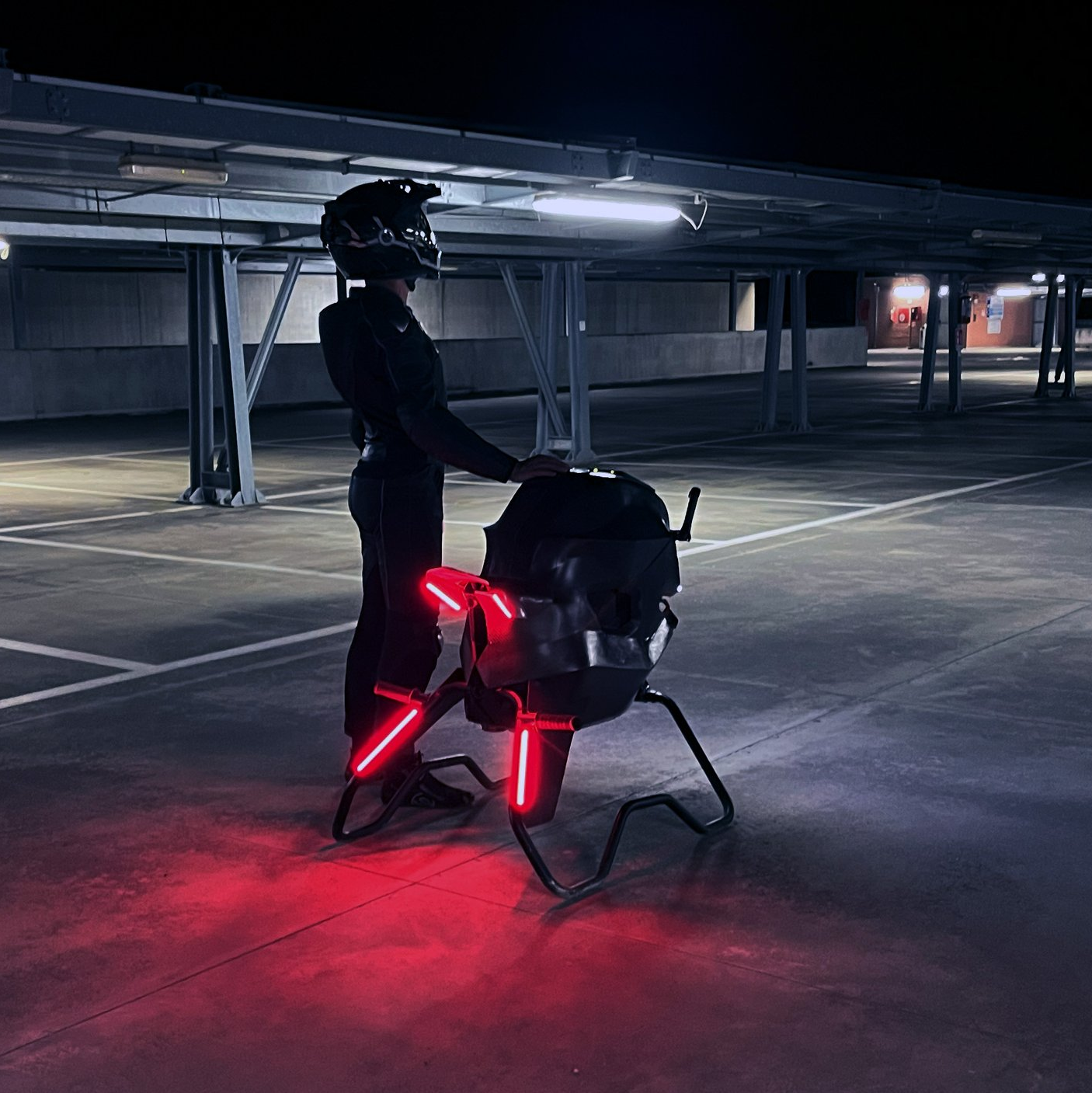
The Volonaut Airbike is a compact jet-powered aerial vehicle designed to carry one person. Unlike traditional drones or eVTOL vehicles that use propellers, the Airbike uses jet propulsion technology, allowing it to rise vertically and hover in place with no exposed, spinning components.
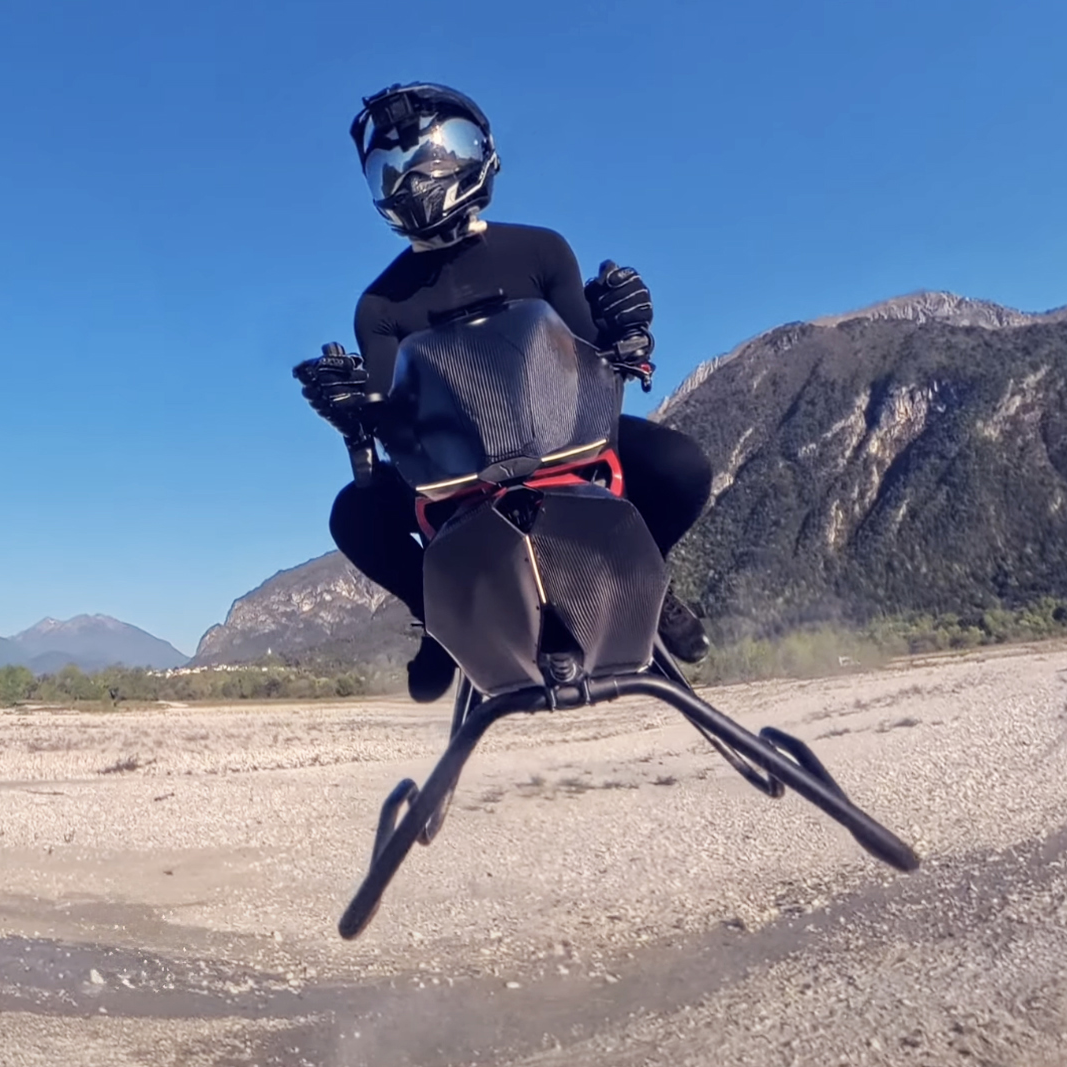
The vehicle's key technical features include an impressive speed of up to 200 km/h, seven times less weight than a traditional motorcycle, and an advanced design made of carbon fiber materials and 3D printed components. Thanks to a proprietary stabilization system assisted by an on-board computer, the vehicle offers automatic hovering and intuitive control and maneuvering, making it accessible even to those with no piloting experience.
The pilot's position is similar to riding a sports motorcycle - one sits in an occluded position with an unobstructed 360-degree view, which provides full freedom to observe the surroundings. The compact size and lack of rotating propellers allow it to move in confined spaces, which opens up new possibilities for use in dense urban areas.
The Volonaut Airbike project fascinates specialists in various fields of technology because of its breakthroughs in several key areas.
Human-Computer Interaction in the Volonaut Airbike represents the future of interface design for autonomous and semi-autonomous vehicles. The control system combines traditional elements familiar from motorcycles - handlebars, pedals and throttle - with an advanced on-board computer that automatically stabilizes flight and ensures safe hovering. This is an excellent example of a multimodal interface, where physical controls combine with AI systems to allow the user to control the vehicle intuitively.Designing such an interface requires a deep understanding of ergonomics, cognitive psychology and cognitive engineering. The interface must be intuitive enough for the pilot to quickly master the controls, while ensuring safety through full control of the three dimensions of motion.
Although the Airbike's stabilization system is proprietary and little is known about the details of its design, certainly the systems used in such vehicles of the future will rely on the use of artificial intelligence to process real-time sensor data and automatically correct the vehicle's position to ensure stable flight.
Onboard computers in such vehicles should analyze flight parameters, atmospheric conditions and pilot behavior, adjusting flight characteristics to the current situation with millisecond precision. It's a technology that could evolve into full autonomy in the future, where AI will take over most of the pilot's decisions.
Undoubtedly, advanced computer simulations were also used in the design of the Airbike to test aerodynamics, control and safety systems. This is because real-time flight simulation technology allows such innovative design solutions to be validated in a virtual environment, significantly reducing the costs and risks associated with real-world testing. And as can be seen in the videos already presented on the YouTube channel, such tests have already taken place.
VR and AR technologies can be used in the future to train pilots of vehicles like the Airbike, offering immersive training experiences without risk. Virtual training environments allow for the simulation of a variety of aviation scenarios, from basic maneuvers to emergency situations.
The Polish inventor's project may prove to be an inspiration for students at the Polish-Japanese Academy of Information Technology, especially those studying at the Faculty of New Media Arts and participating in the UX Design postgraduate program.
graphic design students can draw inspiration from cockpit design in vehicles like the Airbike, where minimalist design is combined with functionality. The degree program includes the creation of 2D and 3D animations, the design of computer games and interactive applications, and the use of VR and AR technologies - all of which are key to designing interfaces for vehicles of the future.
Sample undergraduate papers after this course, could include:
The UX Design postgraduate program at PJAIT offers ideal preparation for user experience design for innovative products like Airbike. The program includes planning and conducting UX research, interface modeling and prototyping, and evaluation of digital products.
This study will allow you to expand the knowledge needed to do postgraduate work in, for example:
Computer science students can be inspired by the advanced simulation systems used in Airbike development. In particular, it can be the design of real-time systems, stabilization algorithms or human-machine interfaces.
Potential undergraduate work may include:
PJAIT 's Faculty of New Media Arts offers an interdisciplinary approach combining art education, graphic design and computer science. Students gain expertise in multimedia, web design, and graphic and multimedia interface development.
In the context of Airbike, this may include work related to:
The Volonaut Airbike represents the democratization of aviation - a vision in which flying will become accessible to the average person. Like Jetson ONE, Tomasz Patan's previous project, which can be flown in the US without a pilot's license, Airbike could open the skies to millions of people.
The project shows how the convergence of technologies - AI, composite materials, control systems and UX design - can create products that seemed impossible a decade ago. For students and young designers, it proves that the future of transportation will be shaped by an interdisciplinary approach to innovation.
Heaven for Everyone is a vision of a future in which technology serves humanity by making the impossible possible. The Volonaut Airbike could prove to be a milestone toward that future - a future that can be co-created by today's students of computer science, graphic design and new media arts.