Spring Open Film – Sign up for interdisciplinary film workshops!

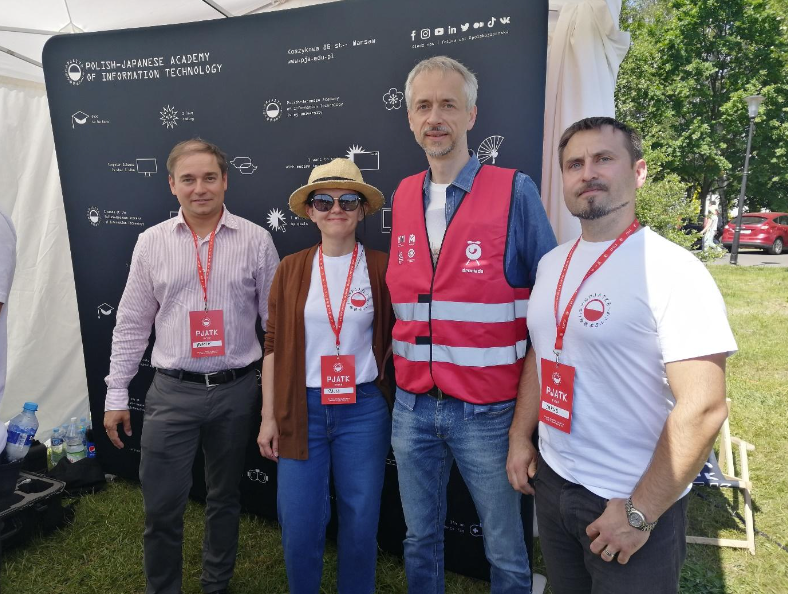
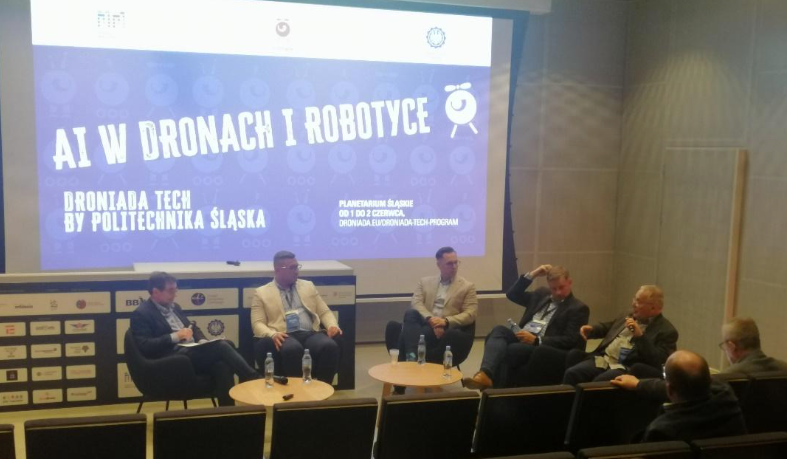
The 10th Droniada has come to an end, with Orange Polska as the Technological Partner and the Polish-Japanese Academy of Information Technology as the Substantive Partner. It was a four-day event combining the scientific conference "AI in Drones and Robotics", practical drone competitions, as well as the Droniada Expo & Kids exhibition and shows.
During the conference, Prof. Konrad Wojciechowski, PhD, DSc, Eng., Director of the Research and Development Center of the Polish-Japanese Academy of Information Technology in Bytom, took part in the debate entitled "What competencies are needed to master AI?", and Marcin Paszkuta, PhD, Eng. from PJAIT in Bytom presented a paper entitled "Emergency landing algorithm using AI".
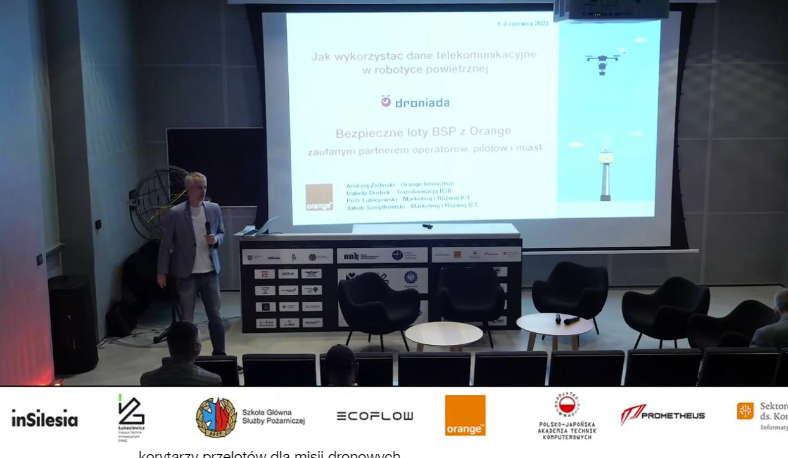
Orange Innovation representative Andrzej Zieliński, together with Piotr Lubiejewski from the ICT Marketing and Development team at Orange, gave a presentation entitled "How to use telecommunications data in aerial robotics – Safe UAV flights with Orange as a trusted partner for operators, pilots, and cities".
The main message of this presentation was to highlight Orange Polska's capabilities in the area of preparing and offering:
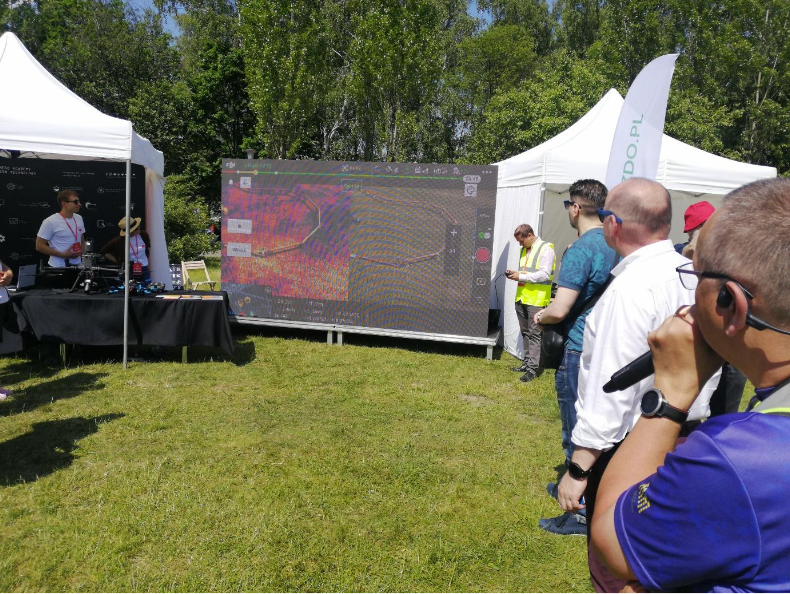
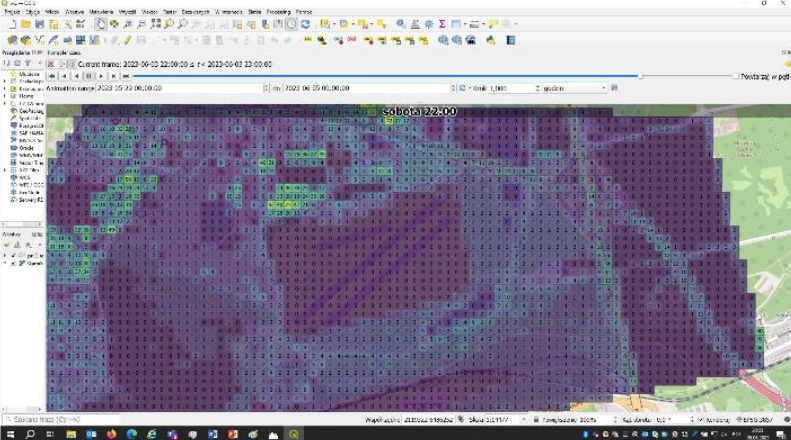
– data on population density in a given area, which constitute an important input for risk assessment of unmanned operations (data generated based on Orange customer activity),
– 3D maps of the availability of the Orange mobile network in airspace to plan flight corridors for drone missions.

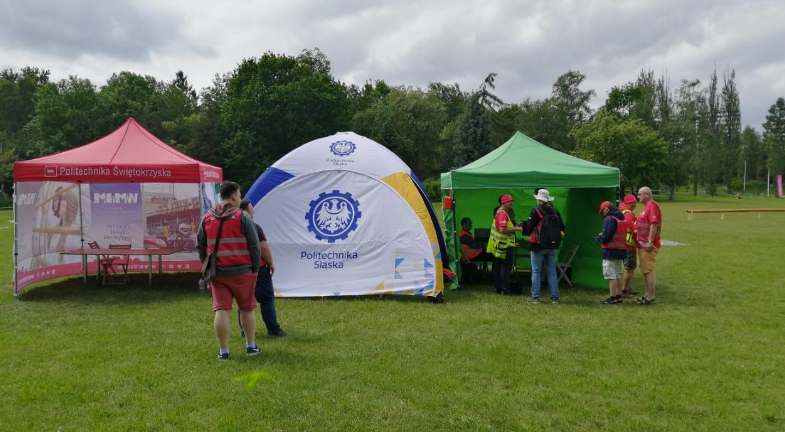
In the following days of Droniada, it was time for competitions in which teams (from the AGH University of Science and Technology, Lodz University of Technology, Silesian University of Technology, Kielce University of Technology, Warsaw University of Technology, Wrocław University of Technology, Main School of Fire Service, and Open – Muxtor, Poldrone, and zDRONowani) tackled challenges in the area of robotics, aviation, artificial intelligence, teleinformatics, and information processing. Equipped with a camera image from a drone and their own AI algorithms for processing it, the competition participants successfully detected pipeline failures, the presence of an intruder in a monitored area, missing persons, or plant pathogens in an orchard.
A particular challenge was a night flight over a distance of 16 km with a drop of luminous beacons, which marked the evacuation track in a situation of limited terrain orientation. There, one of the teams spectacularly demonstrated cooperation between a large drone – a base ship – and a group of small drones that detached from the base during the mission and autonomously carried out their tasks.
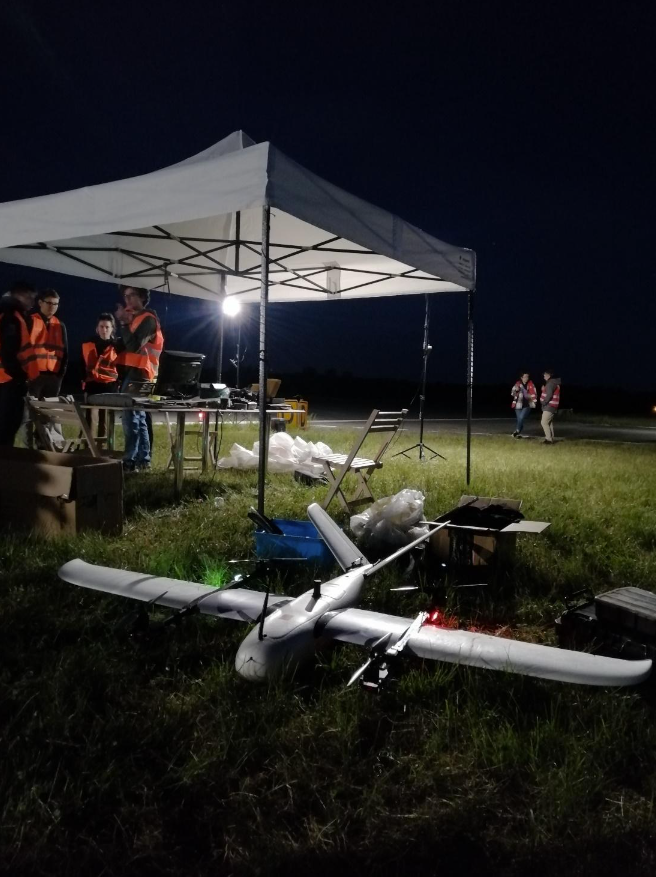
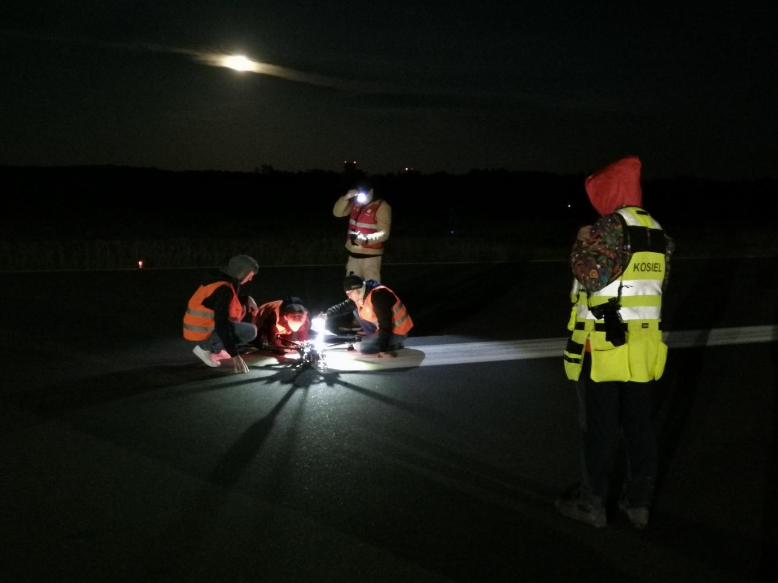
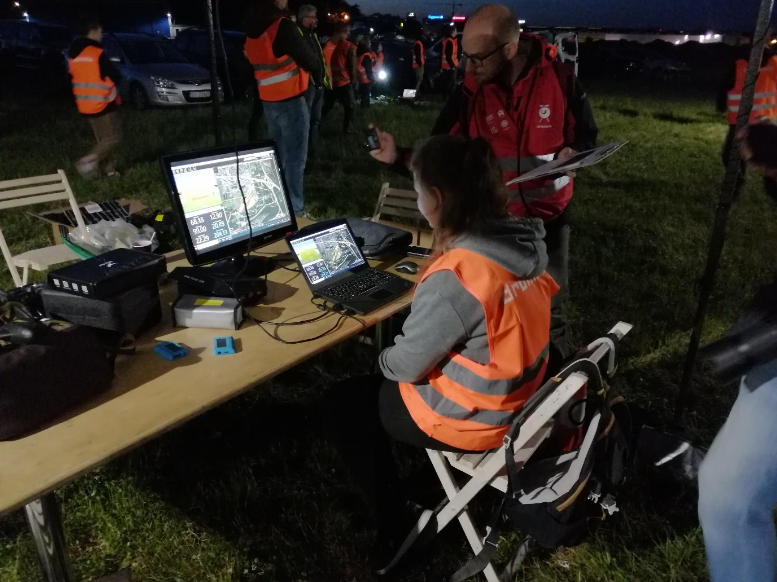
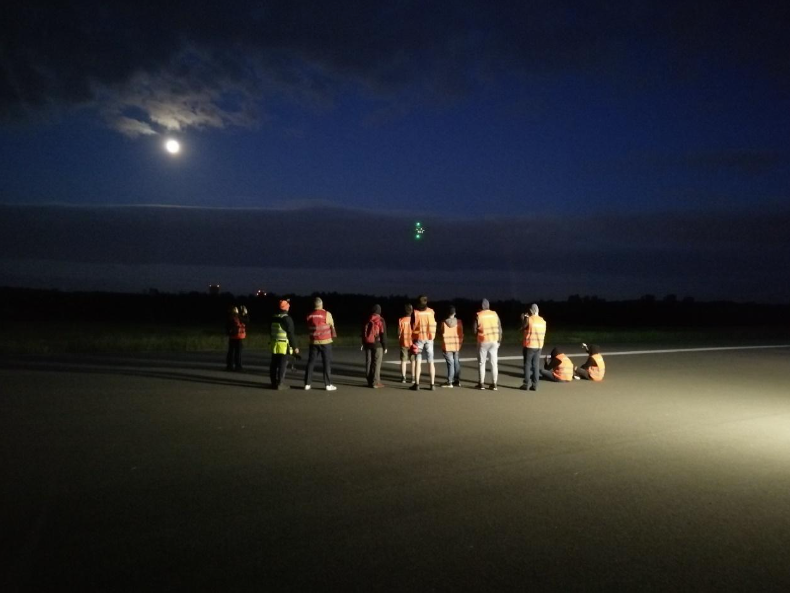

All competitions aimed to develop the participants' engineering competencies, organizational skills, and innovation in problem-solving approaches – but it must also be noted that the demonstrated effects can be an inspiration for the drone, robotics, aviation, and telecommunications industries. Practice shows that the best competition participants often receive job offers from observing companies and institutions.
Both during the conference "AI in Drones and Robotics" and the demonstration part of the event, the partnership between Orange and the Polish-Japanese Academy of Information Technology was strengthened, which has a strong drone team at the PJAIT Research and Development Center in Bytom. A topic of particular interest to both teams is the prospect of using 5G networks (low latency, wide bandwidth, and a large number of devices per unit of space) for communication for drone swarms – between drones in the air and with information processing systems on the ground.
On the last day of Droniada, the competition results were announced. The winner was the Academic Aviation Club of the Wrocław University of Technology, followed by High Flyers from the Silesian University of Technology and Raptors from the Lodz University of Technology. Congratulations to the winners and to all teams that took on these difficult challenges.