
The fall edition of " Career Fair "PJAIT is coming up tomorrow—October 22!


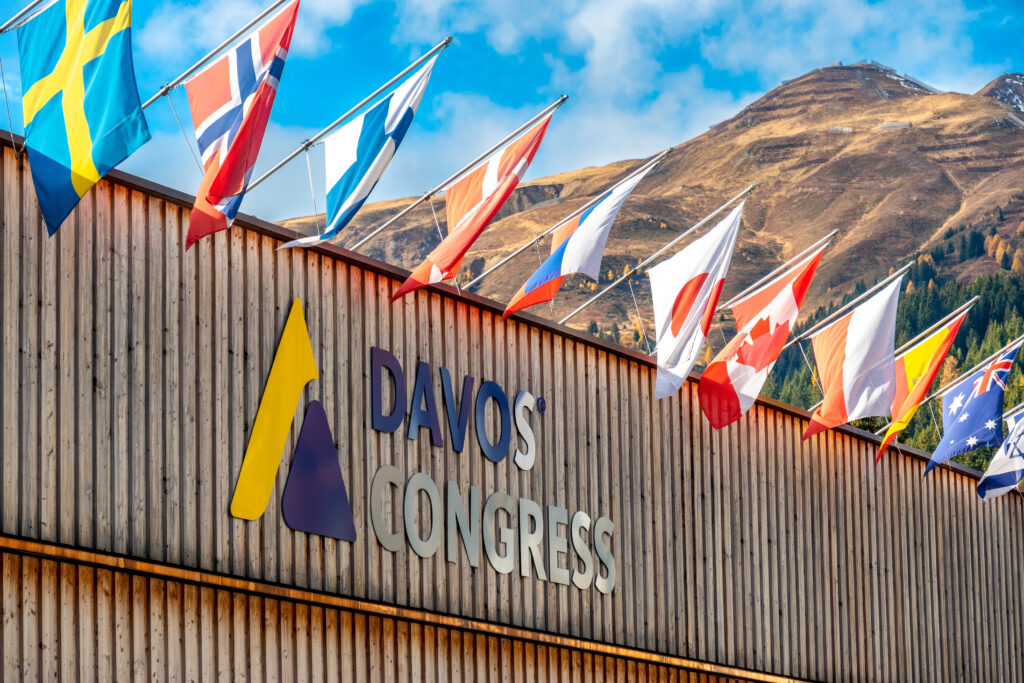
The World Economic Forum, held in Davos from January 19–23, 2026, under the theme “A Spirit of Dialogue” (A Spirit of Dialogue), brought together many leaders from the worlds of business, technology, and science, and one of the central themes was the role of artificial intelligence in the economy and society.
The organizers structured the program around five key challenges: cooperation in times of conflict, unlocking new sources of growth, investing in people, the responsible implementation of innovation on a large scale, and building prosperity within the limits of the planet (planetary boundaries).
A clear message that resonated strongly during the 2026 Davos Forum was the recognition of artificial intelligence not merely as another tool, but as a general-purpose technology comparable to the revolution brought about by electricity or the internet. For this reason, investments in AI have become a fundamental economic factor influencing growth forecasts, capital markets, and productivity assumptions.
Patrick Moorhead of Forbes noted that in 2025, discussions about AI were based on demonstrations and pilot projects, whereas in Davos, realistic and actionable strategies for integrating AI into current practices were already being presented.
Jensen Huang of NVIDIA expressed optimism: “I’m quite optimistic about the potential of AI to empower and elevate people.” Satya Nadella of Microsoft, in turn, stated that as a global community, we must reach a point where “we use AI to do something useful that transforms the outcomes for people, communities, countries, and industries.”
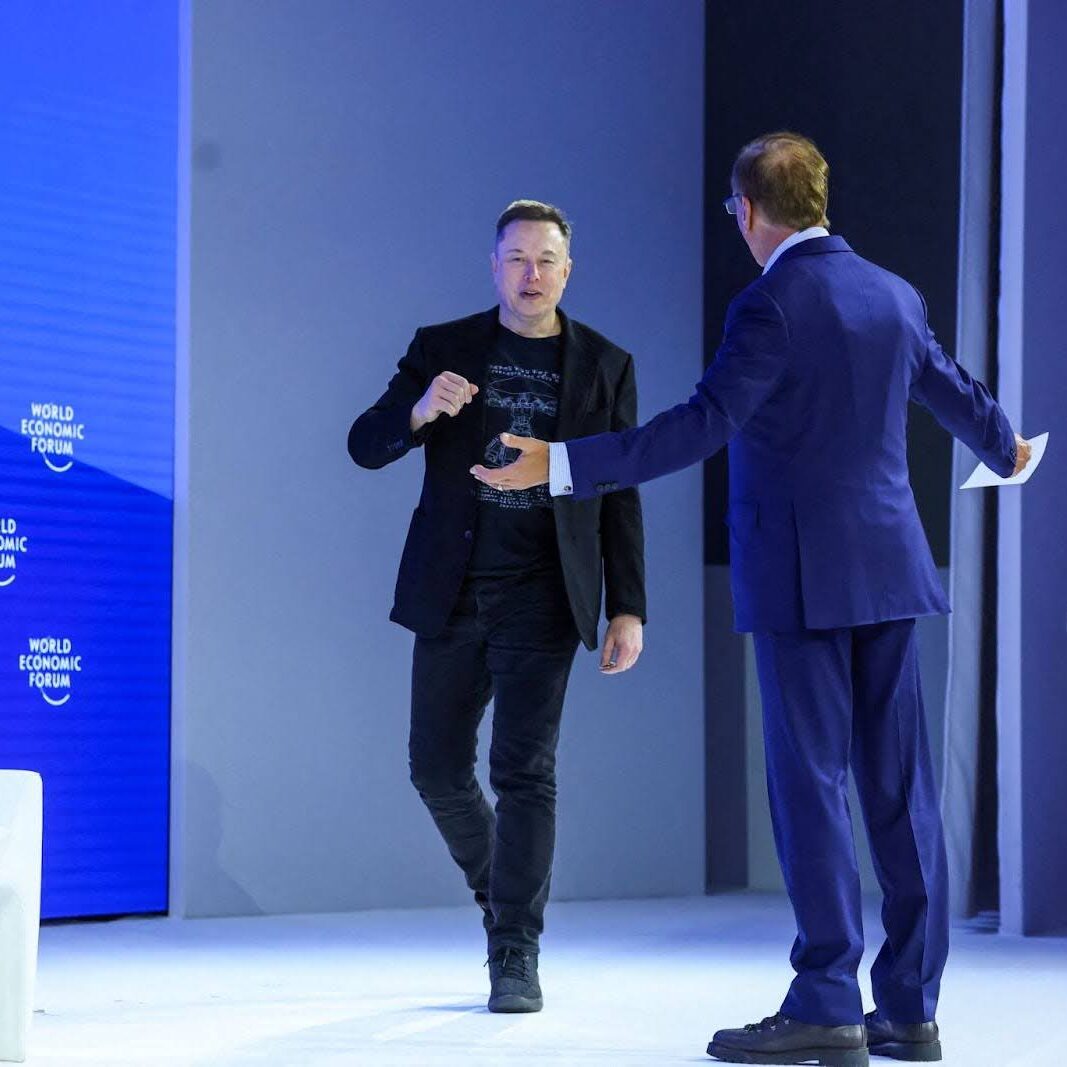
In a widely discussed conversation with Larry Fink of BlackRock, Elon Musk stated that by the end of the year, “we may have artificial intelligence that is smarter than humans.”
The message from technology leaders was therefore consistent: AI is no longer a product—it has become an infrastructure layer. McKinsey, a strategic partner of the WEF, even highlighted “Agentic AI Transformation”—the use of agentic artificial intelligence to transform companies and entire industries—as a key topic.
There was also extensive discussion in Davos about the impact of artificial intelligence on the labor market. According to data presented at the forum, as many as 86% of companies expect AI to significantly impact their operations by 2030, and the WEF’s “Reskilling Revolution” initiative indicated that the integration of generative AI and automation is accelerating faster than traditional educational cycles. Meanwhile, the “Future of Jobs Report 2025,” discussed during one of the sessions, showed that these changes will extend far beyond the technology sector—encompassing roles in healthcare, finance, and industry.
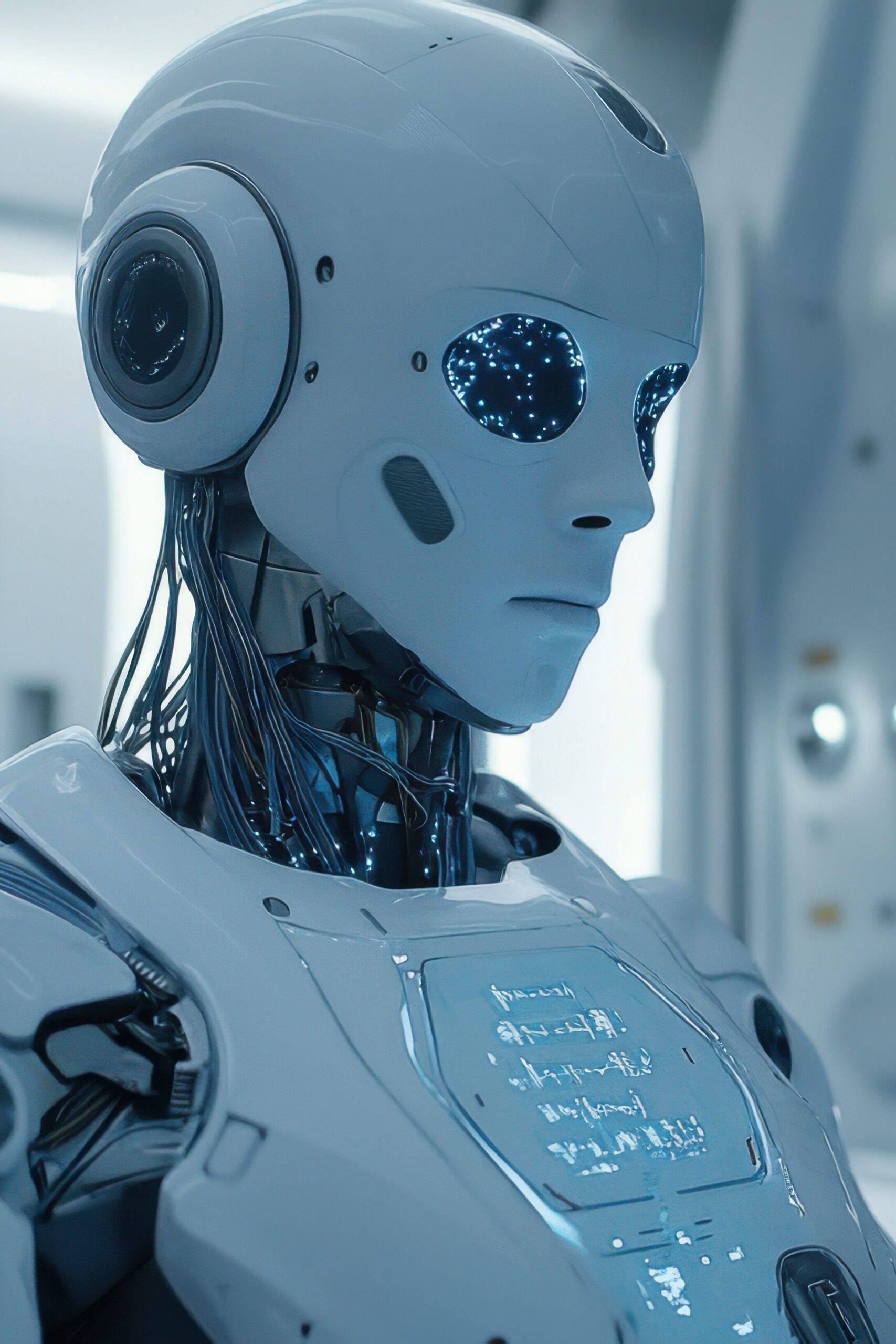
The forum also highlighted the growing importance of the conceptof “Physical AI”—artificial intelligence embedded in robots, machines, and industrial systems. Europe’s manufacturing and engineering base was repeatedly cited as a strategic asset, provided that the continent focuses not only on software AI but also on robotics and the automation of physical processes.
Digital twins—virtual replicas of factories and processes—have moved from the conceptual stage to measurable implementations, delivering double-digit increases in productivity and reductions in energy consumption. Meanwhile, labor shortages in manual and repetitive jobs are driving interest in humanoid robots, particularly in construction and logistics.
In the job market, the discussion has shifted from concerns about AI replacing humans to the transformation of professional roles—new, hybrid job profiles are emerging that combine software, hardware, and operational skills. Tech companies are no longer looking just for AI researchers, but for specialists capable of implementing artificial intelligence in factories, logistics networks, and critical infrastructure.
One of the key themes turned out to be the energy paradox of artificial intelligence. By 2030, global data centers could consume 945 terawatt-hours of energy annually, and nearly 20% of the increase in electricity demand could stem from AI-related computations. Technology leaders therefore acknowledged that the AI revolution and climate goals must be integrated, rather than treated as separate agendas.
The convergence of AI and quantum computing was also a topic at Davos 2026. During a session featuring representatives from IonQ, ETH Zurich, HorizonX, and Microsoft, it was emphasized that the future lies in a hybrid approach—combining classical computing, AI, and quantum technologies. Contrary to popular belief, quantum computing is an accelerator, not a solution to all problems, and post-quantum cryptography is becoming an urgent security priority.
This topic took on particular significance in the Polish context—during the Polish Business Hub, Poland’s ambition to become the “Quantum Valley of Europe” was presented. Minister of Digital Affairs Krzysztof Gawkowski announced that a national quantum technology strategy, involving significant budgetary investments, is scheduled to be unveiled later this year.
The topic of cybersecurity was also a major focus in Davos, now viewed as a shared threat that extends beyond the purview of IT departments. Incidents in a single industry are increasingly triggering a domino effect—impacting supply chains, healthcare, and critical infrastructure.
Among the topics discussed were: the risk of cloud computing concentration (reliance on 1–2 providers), the protection of industrial systems, and the management of AI as it becomes critical business infrastructure. During the discussion, it was noted that artificial intelligence amplifies both the capabilities of attackers and the effectiveness of defensive tools, while at the same time, staffing shortages in the cybersecurity sector leave many organizations without adequate protection. Among the conclusions were the need to strengthen international cooperation in responding to cyberattacks and to elevate responsibility for digital security to the level of corporate boards and government strategies.
During the session titled “Digital Embassies for Sovereign AI,” participants discussed the need to standardize the legal framework for data and computational sovereignty—comparable to the “Vienna Convention” in a digital context. Participants emphasized that trust in AI will depend on demonstrating tangible benefits, integrating human oversight into business processes, and resolving issues of jurisdiction over data and computing power.
Poland made its presence felt at the forum more strongly than ever before, thanks to the Leaders Forum powered by Poland —a five-day series of debates and meetings held in parallel with the WEF program—andthe Polish Business Hub.
The event, organized by the Center for International Relations Foundation and THINKTANK, with support from Autopay, Adamed, and the Żabka Group, featured nearly 30 sessions attended by leaders from the worlds of business, politics, science, and culture from various regions of the world. The goal was to present Poland as “a new European leader in development and a hub of innovation with global ambitions.”
The initiative was supported by the presence of Deputy Prime Minister Radosław Sikorski, who, in his remarks, emphasized, among other things, the strong position of our economy on the international stage.
The Polish Business Hub operated under the slogan “Poland Future Ready” and focused on AI, automation, dual-use technologies, the energy transition, and digital sovereignty. The sessions included panels on large-scale AI deployment, cyber resilience, drones and satellite technologies, and the digital transformation of public services.
The “From AI to Orbit” Fireside Chat drew particular attention, during which Mati Staniszewski (co-founder of ElevenLabs) and Rafał Modrzewski (CEO of ICEYE) discussed how innovations from Poland are transforming global markets—from groundbreaking AI technologies to advanced satellite systems.
Among the Polish companies and leaders present at the forum were Marcin Kuśmierz (CEO of Allegro), Paweł Wrona (CFO of Billennium), Sebastian Kulczyk (Kulczyk Investments), and representatives of Creotech Quantum.
During the session titled “Amid a Revolutionary Transformation: Science as Growth Infrastructure,” participants discussed the role of science as a foundation for economic growth in an era of rapid technological change. The panel, featuring representatives from NAWA, the National Center for Research and Development, and the Warsaw School of Economics, focused on translating research findings into market solutions, talent mobility, and the importance of public investment in innovation ecosystems.
Marek Górski of the Lewiatan Confederation summed up Poland’s presence at Davos as follows: “An energy transition aimed at lowering energy prices, investments in innovative technologies, and the reduction of barriers in the single market (…) are the prerequisites for the further development and improved competitiveness of our economies.”
This year’s Davos Forum cemented the view of artificial intelligence as a foundational technology—not just another product, but an infrastructure layer upon which new business models and services are built. The concept of agentic AI—that is, autonomous systems capable of independently managing complex processes—has gained particular momentum. At the same time, interest has grown in quantum computing in conjunction with AI, as well as in cybersecurity understood as a strategic challenge—not merely a technical one. The discussion on employee reskilling has also gained significance, as the pace of technological change outstrips traditional educational cycles.
From a Polish perspective, Davos 2026 demonstrated the growing international recognition of the country’s technology sector. Companies such as ElevenLabs, ICEYE, Allegro, and Creotech Quantum presented their solutions alongside global leaders, and the announcement of a national quantum strategy positions Poland in the European race for leadership in new computing technologies.