The fall edition of " Career Fair "PJAIT is coming up tomorrow—October 22!

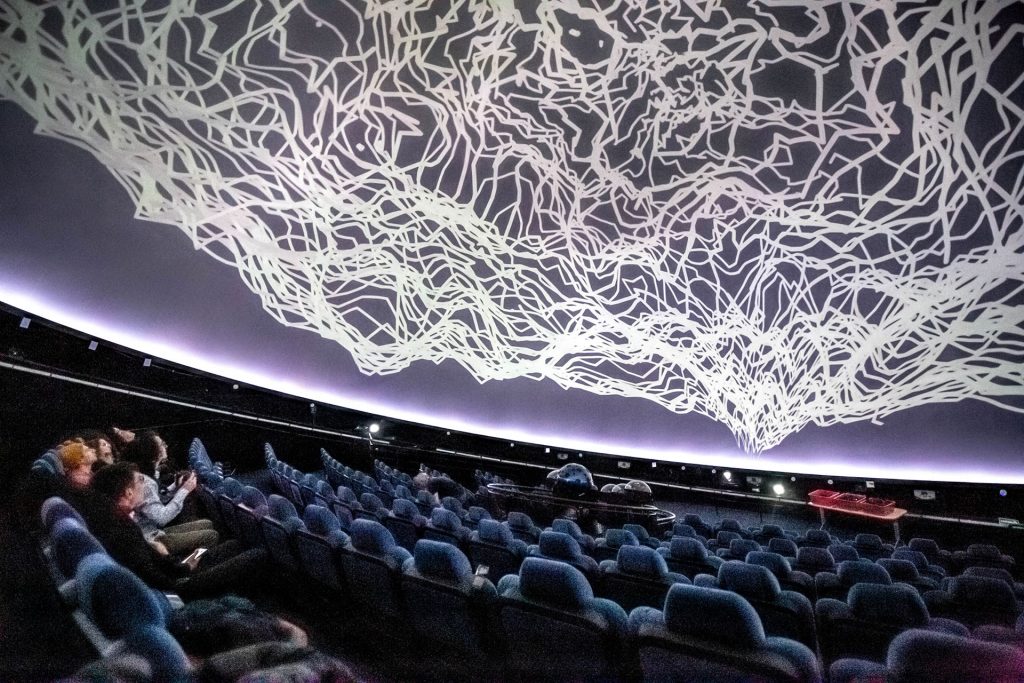
Multimedia installations by graduates of the Polish-Japanese Academy of Information Technology offer both fun, interactive entertainment and a dark world of artistic fantasy. At the festival in Rzeszów, visitors can test whether they are true "tough guys," see themselves in Snapchat-inspired facial filters, or experience a painting process where light serves as the artistic medium. All works were created at the Faculty of New Media Arts in Warsaw.
This is a unique place where education in the field of visual arts is combined with programming knowledge – points out Ewa Satalecka, Dean of the PJAIT NeMA. Creative activities based on real-time data processing systems and interdisciplinary experiments are permanently embedded in the curriculum of the Multimedia Studio, which is led, along with a team of specialists, by Anna Klimczak – a visual artist and curator of the presented exhibition. At the RE: Rzeszów Festival, it will be possible to view works from this exceptional laboratory. We will see projects by graduates and multimedia creators who teach students the languages of new technologies.
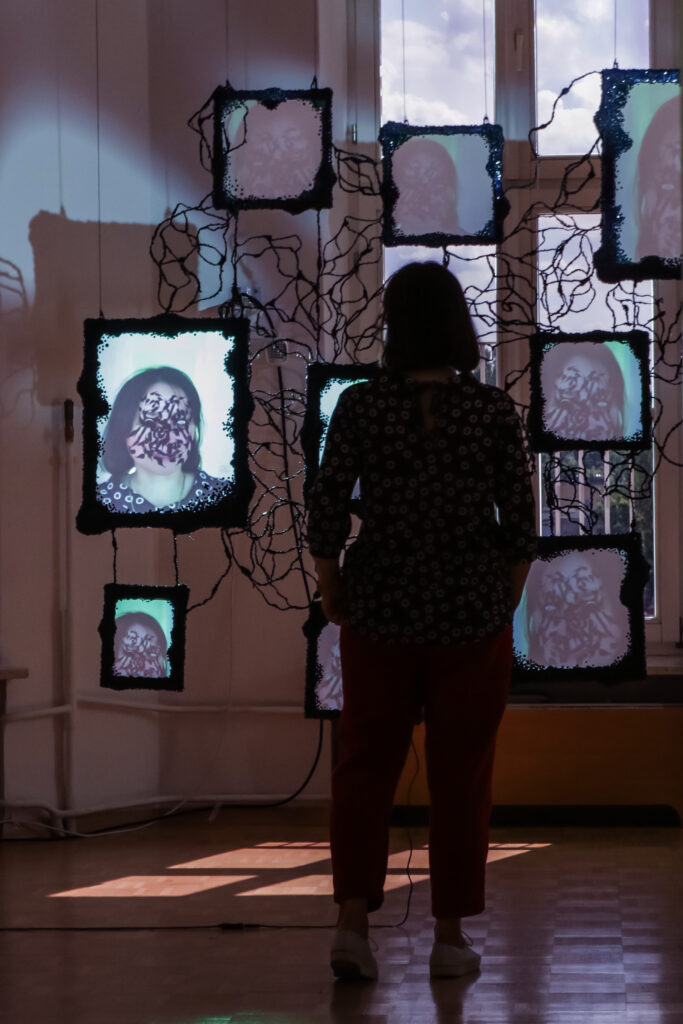
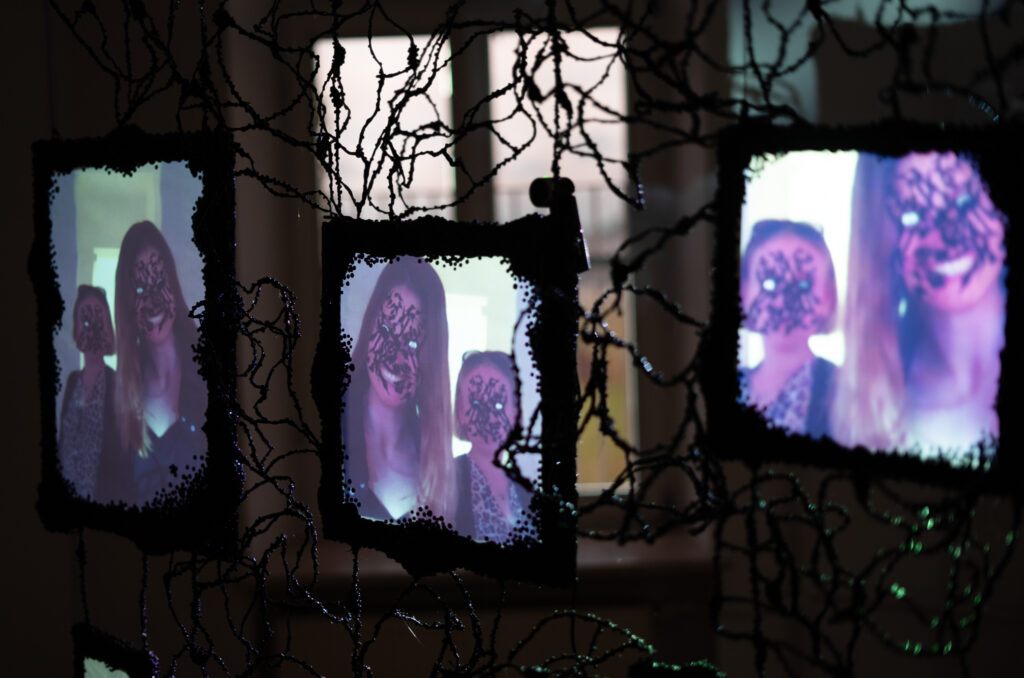
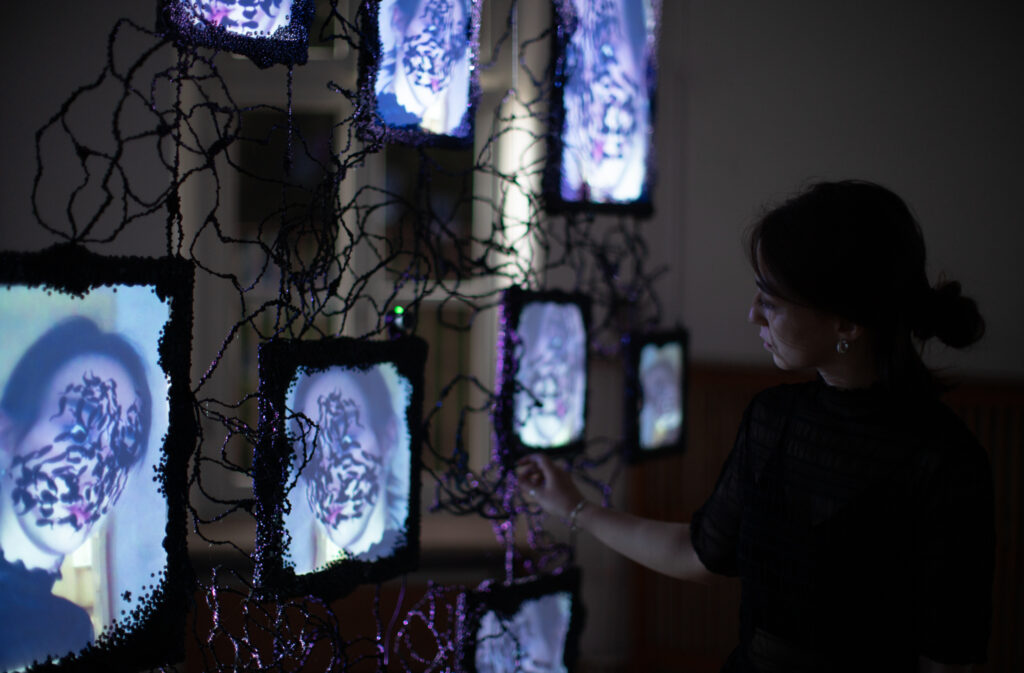
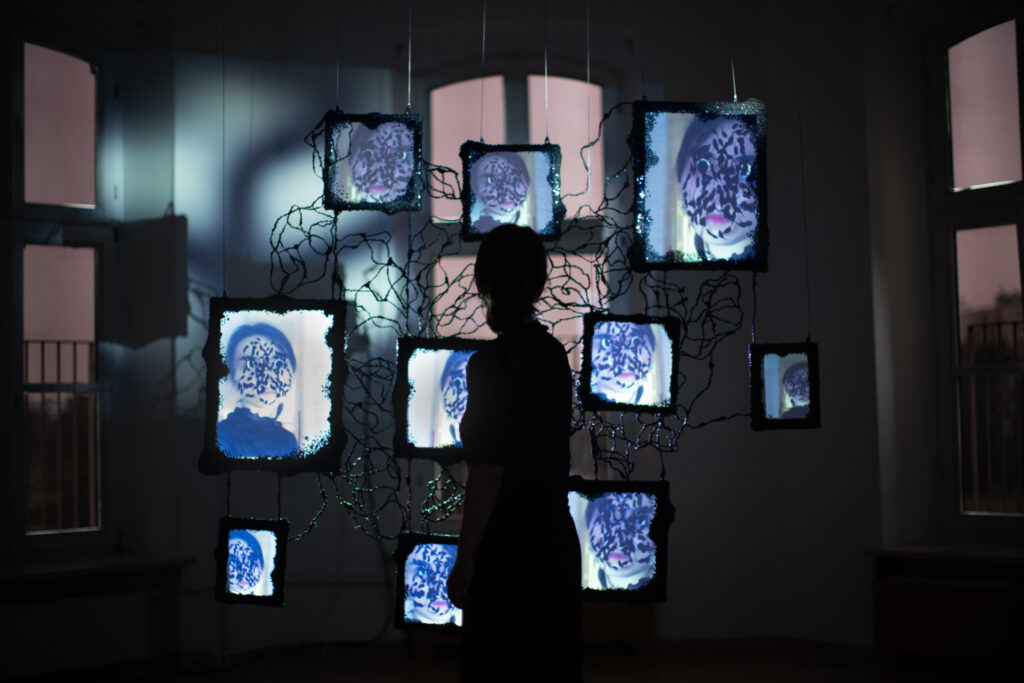
The boxes, isolated from the light, will show, among other things, Emilia Ishizaki's virtual portraits entitled 'Noppera-bō' (2022), which the author has placed in frames flooded with organic matter. The name is a term for a mythological Japanese faceless demon that frightens mortals. His world
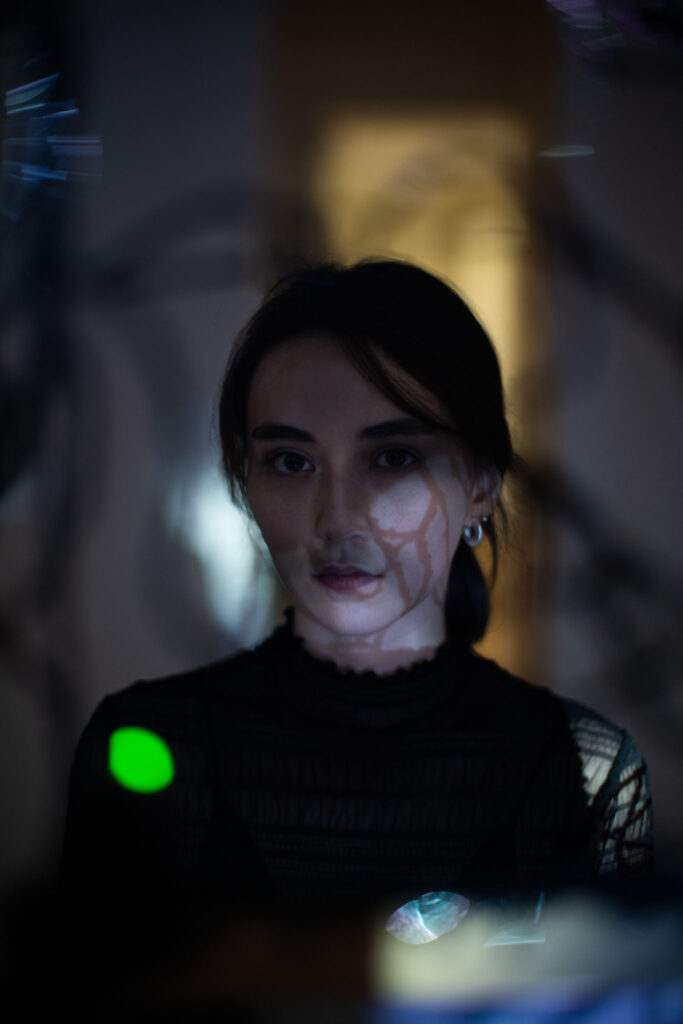
is terrifying because it is devoid of a face. Viewers entering the installation area are observed from a hidden camera, and their images are transformed into "unwelcome" masks. Emilia Ishizaka creates by orbiting around illustration and cartoon animation. She draws inspiration from the understated, and aesthetically draws from her origins, namely Japanese culture. The artist works in areas such as motion design, 3D and graphic design generative.
Thesis Supervisors: Anna Klimczak, PhD, Olga Wroniewicz, MA, dr hab. Monika Murawska.
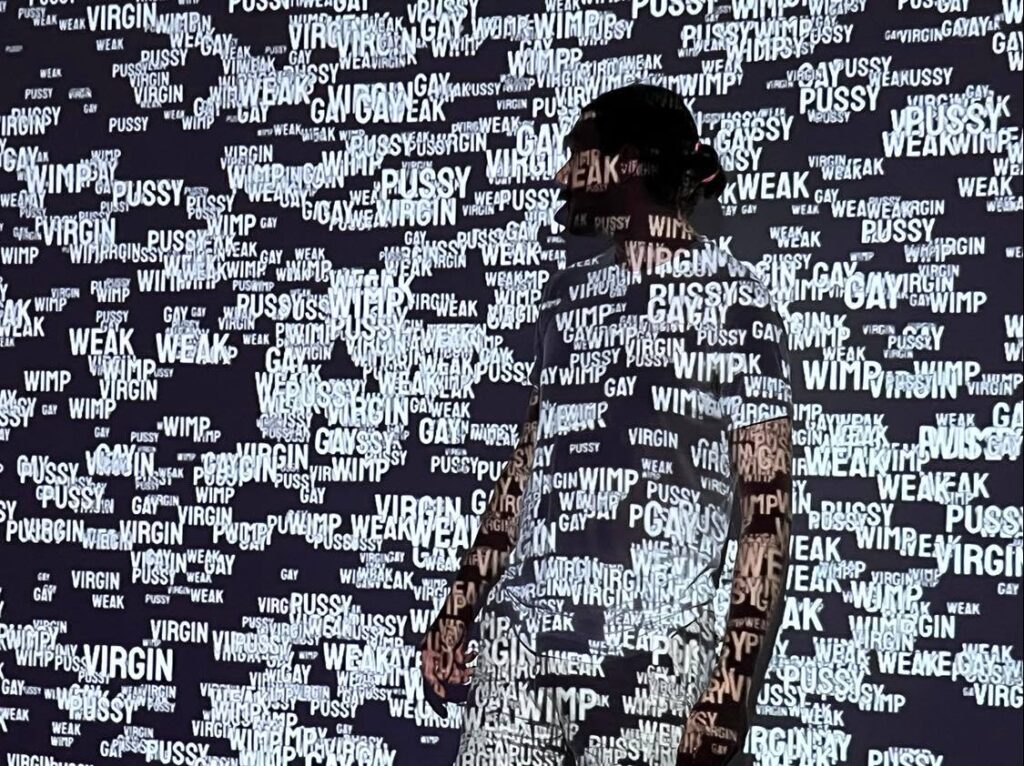
Another young artist inseparable from new technologies is Bartosz Wyszynski. Working intensively with music collectives, he builds, among other things, visual solutions during concerts. His graduation thesis titled. 'BE A MAN!', which will be seen at
Bulwary nad Wisłokiem, is a multimedia attempt to capture the non-obvious stereotypes indicative of so-called true masculinity. Using devices we know from game consoles, we will have the opportunity to confront metaphors about the limitations contained in being the proverbial tough guy. Playing in a rain of interactive, offensive epithets is meant to make us realize how low societal patterns go. Bartosz Wyszynski, analyzing masculinity as described in Western culture, recognizes, following some researchers, that men, sacrificing self-reflection and spontaneity, throw themselves into battle with the outside world allowing the destruction of what is most important, that is, the sense that they are simply human.
Thesis supervisors: dr hab. Anna Klimczak, Tomasz Miśkiewicz, MA, Jakub Karpoluk, PhD.
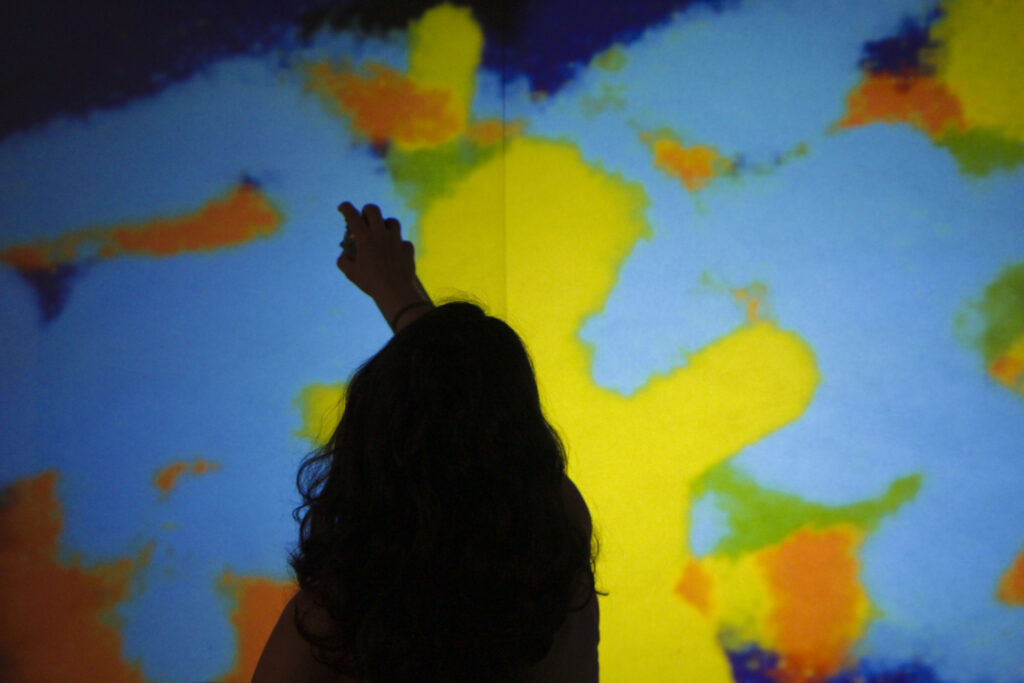
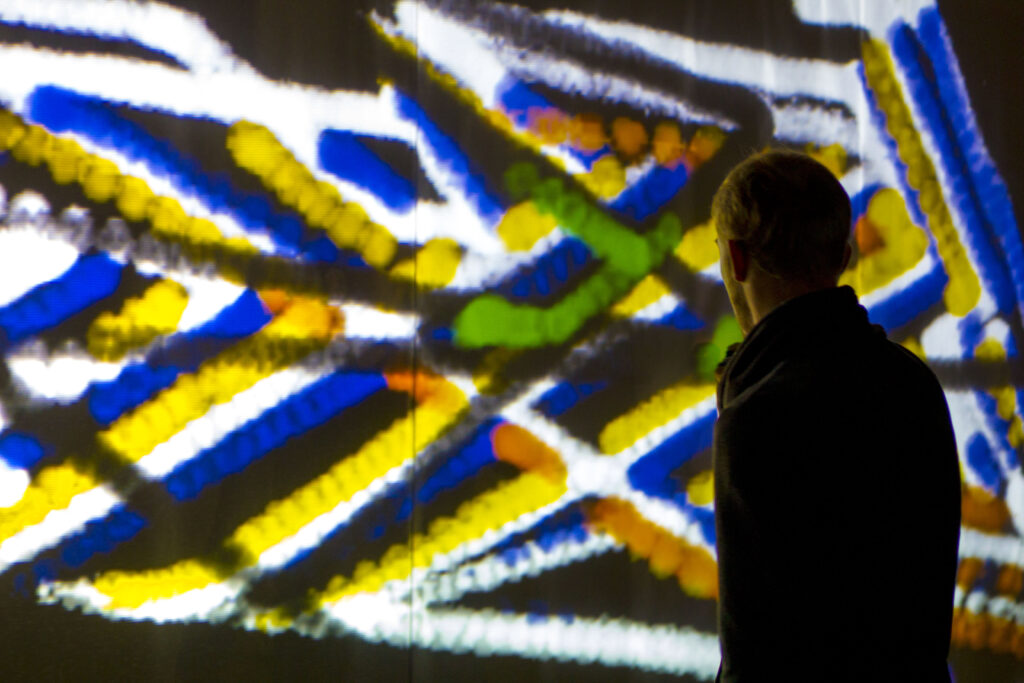
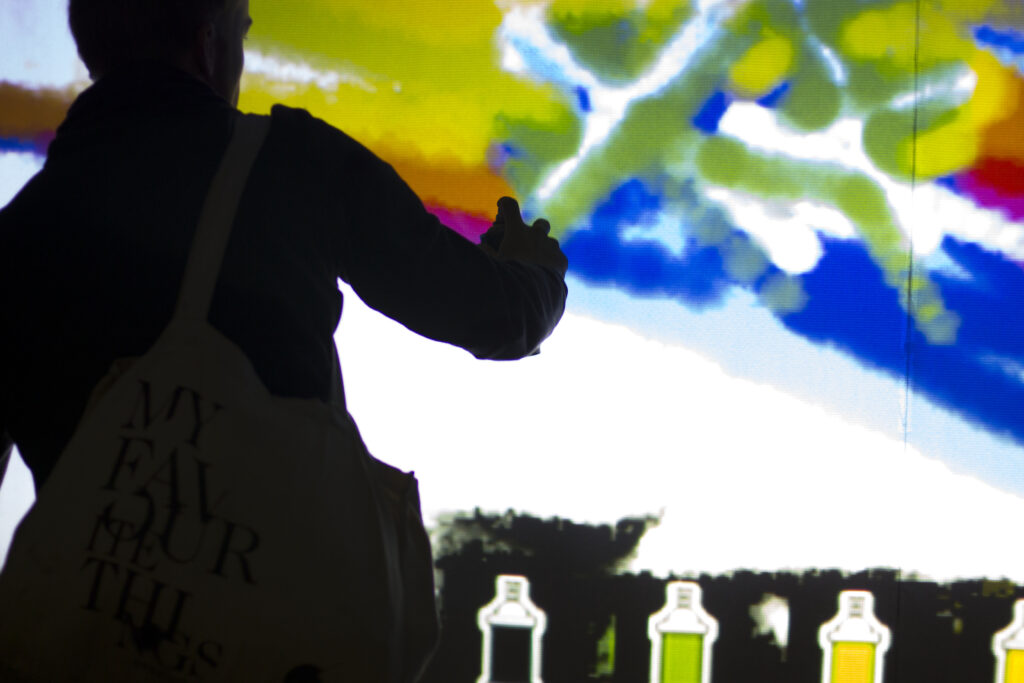
During the open-air event in Rzeszów, visitors will also be able to explore a virtual art studio. Tomasz Miśkiewicz, who creates large-scale visual shows on a daily basis and is a regular participant in international programming conferences, invites you to a presentation entitled 'diBrush' (2022). The multimedia installation is inspired by street art. The project uses specially designed brushes in which paint is replaced by light invisible to the viewer. A real brush and virtual paint allow you to experience street art techniques in a surprising 'mixed-reality' form.