






Meet-and-greet with Dr. Jaśmina Wójcik!


The IT industry is full of roles with English names that sound mysterious but actually entail specific, well-defined responsibilities. Product Owner is one of them—and is increasingly becoming one of the most sought-after roles on the market.
In teams working with the Scrum it is this person who decides what will be built and why. They are not the boss of the developers or a traditional project manager; rather, they serve as a kind of spokesperson for the product, the user, and the customer all at once. What exactly does that mean?
The Product Owner is a key role within the Scrum methodology, which is part of the broader Agile approach. According to the definition in the Scrum Guide, the person in this role is primarily responsible formaximizing the value of the product being developed by the development team.
Does that sound abstract? In practice, it means that the Product Owner must always know what the end user wants and what is strategically important for the business, and translate that into specific requirements—the so-called product backlog.
The Product Owner operates atthe intersection of business and technology. They represent the interests of all project stakeholders—from customers and managers to the sales department and regulators—translating their expectations into language that the engineering team can understand. At the same time, they stand on the user’s (customer’s) side, ensuring that what ultimately reaches the user actually meets their needs.
It’s worth noting here that the Product Owner is not the direct supervisor of developers or testers. In a Scrum framework, the Product Owner doesn’t manage people—the Product Owner manages the product. The Product Owner acts as an internal entrepreneur responsible for ensuring that the product delivers real value, rather than merely meeting formally defined requirements. This is a subtle but very important difference.
To understand exactly what a Product Owner’s responsibilities are, it’s necessary to look at the day-to-day aspects of the role. The work of a Product Owner is dynamic and heavily focused on communication—both internal (with the team) and external (with stakeholders).
The Product Owner’s most important tool is the product backlog— a list of features, requirements, improvements, and fixes awaiting implementation. Importantly, this is not a static document; the Product Owner continuously adds new items, removes those that are no longer relevant, updates descriptions, and, above all, sets priorities. Prioritization is one of the most difficult tasks, as there are often more ideas than there is time and resources to handle them, so tough decisions must be made in this regard.
One of the Product Owner’s key responsibilities is to clearly define the product’s purpose, which includes defining its final form and business case. This vision must be understandable to both management and every developer on the team. A good Product Owner is able to communicate it at both the strategic and operational levels simultaneously.
Scrum is based on work cycles called sprints—typically two weeks long. Before each sprint, the Product Owner participates in asprint planning meeting, where they present priorities and explain what they expect from the upcoming work cycle. During the sprint, the Product Owner stays in constant contact with the team, answers questions, clarifies requirements, and resolves any ambiguities.
The Product Owner’s responsibilities also include maintaining regular contact with people outside the development team, such as external clients, business representatives, and management. The Product Owner gathers the requirements defined by these stakeholders, explains the technical capabilities, and works out compromises between what the stakeholders want and what is realistic to implement within a given timeframe.
In subsequent stages of the work, the Product Owner participates in demonstrations of completed features (sprint review) and assesses whether the team’s work meets the previously established criteria. If necessary, the Product Owner provides feedback and decides on further adjustments. It is the Product Owner who has the final say in accepting or rejecting a given feature.
A good Product Owner doesn’t rely solely on intuition; above all, they analyze data on user behavior, conversion rates, A/B test results, and performance metrics. Based on this information, they make decisions about the future direction of product development.
This is one of the most frequently asked questions by people entering the world of IT project management. Both roles are important, and both require excellent organizational and communication skills, but they focus on completely different aspects of the job.
The Product Owner focuses on what the team is building and why, and ensures that the product delivers value from both the user’s and the business’s perspectives. The Project Manager, on the other hand, is responsible for how the project is executed—that is, managing the schedule, budget, risks, and human resources within the project.
To put it simply, the Product Owner ensures proper field of study, while the Project Manager ensures the journey runs smoothly. Both roles are complementary, and in larger organizations, they often work closely together.
The role of a Product Owner combines technical, business, and interpersonal skills. You don’t have to be a programmer, but you must understand how software works and what is feasible within a given technological context.
Specific hard skills are key here. A solid understanding of Agile andScrum methodologies—including the principles of working in sprints, roles, and events—is essential. The ability to manage the backlog —creating epics, user stories, and acceptance criteria, and prioritizing them using methods such as MoSCoW or Kano—is also essential. In day-to-day work, proficiency in tools such as Jira, Confluence, Trello, and Azure DevOps is crucial .
Another important element is business analysis—that is, understanding the processes within an organization and translating customer needs into product requirements—as well as the fundamentals of UX andproduct thinking, which help in designing good user experiences.
Soft skills are equally important, as they enable you to effectively align the needs of the business, the team, and the users. Communication is key — a Product Owner must be able to communicate effectively with engineers, managers, customers, and senior leadership alike, adapting their language to the audience. Negotiation and assertiveness are also important, as it is often necessary to make difficult decisions and say “no” or “not now.” Decision-making is essential—failure to make a decision also has consequences, which are often costly. Added to this is empathy toward the user—that is, the ability to view the product from their perspective—as well as strategic thinking, which allows for planning product development over the long term, rather than just within the current sprint.
Product Owner is one of highest-paying positions in the Polish IT sector , and this trend persists regardless of fluctuations in the job market. According to data collected last year by No Fluff Jobs, the median salary for employees on an employment contract is 14,780 PLN gross per month. Those working under a B2B contract can expect median earnings of around 18,000–19,000 PLN net per invoice.
It’s worth noting that experienced Product Owners working in industries such as fintech, the AI sector, or large technology corporations often earn significantly more—both in full-time positions and in the B2B model. These salaries increase in proportion to experience, certification level, and the complexity of the products for which the individual is responsible.
There is no single answer to the question of how to become a Product Owner, and that’s good news. There are many different paths you can take to reach this role. Many Product Owners started out as business analysts, developers, QA testers, and even project managers. The key is combining knowledge of the product, processes, and people.
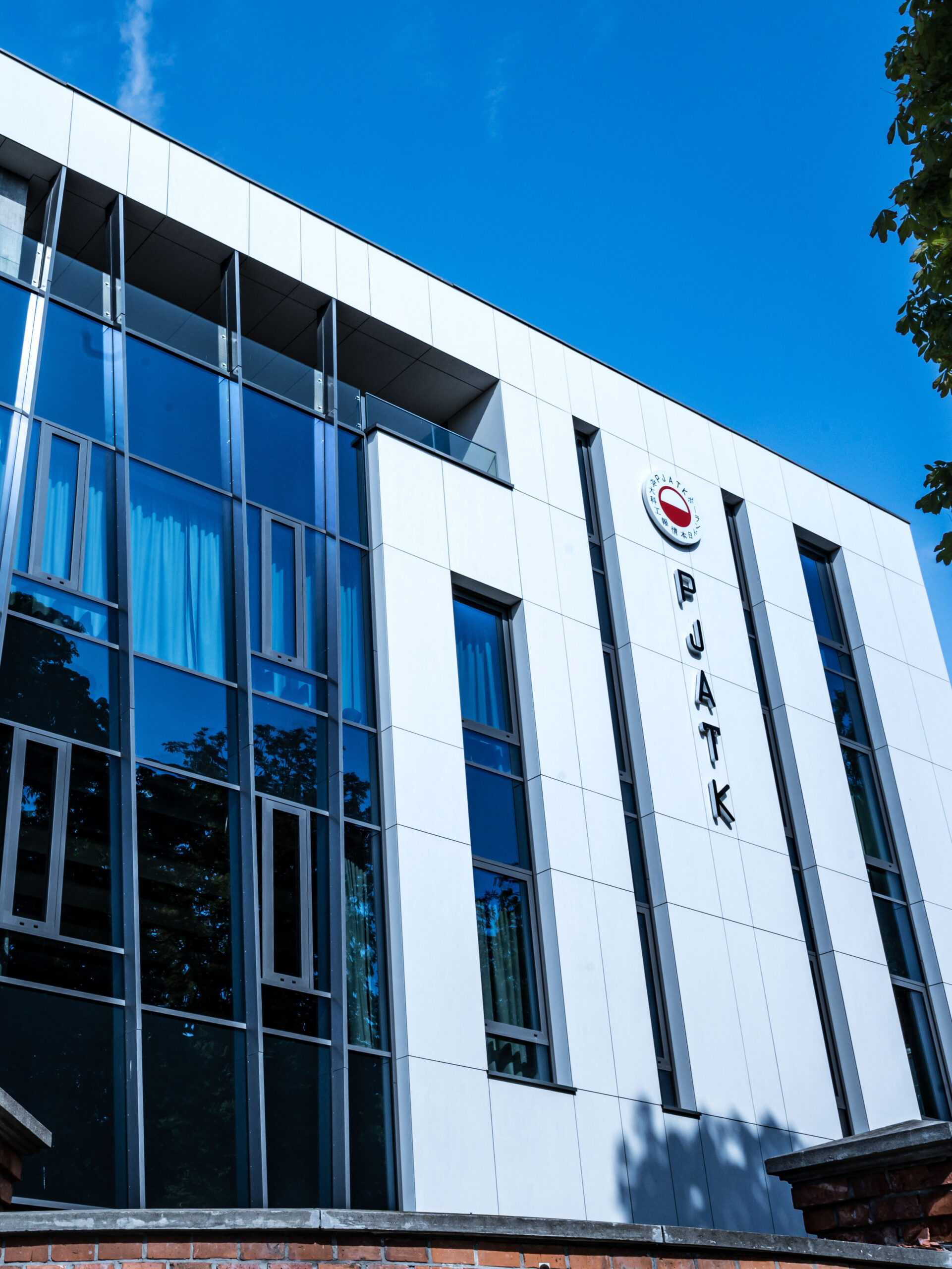
A college degree in IT and management provides a solid foundation. Since 2003, our university has Faculty of Information Management offering bachelor’s (first-cycle) and master’s (second-cycle) degree programs in Information Management. The program is designed to provide students with both technical skills (approximately 75% of the courses are IT-related) and managerial skills (approximately 25% of the curriculum focuses on project management, business analysis, and soft skills).
As part of the Information Management program atPJAIT, students learn, among other things, project management using the Scrum methodology, data analysis, IT team management, and business analysis. Typical career paths for graduates of this program include IT project manager, product engineer, and business analyst—roles closely related to the day-to-day work of a Product Owner. The program is delivered in collaboration with the business community, which means students have access to hands-on workshops and projects grounded in real-world market conditions.
For those who wish to formally validate their skills, there are two main certification paths available on the market:
Both certificates are recognized in the Polish and international job markets and can significantly enhance the appeal of your resume.
No certificate can replace the experience gained in a real-world work environment. If you have the opportunity to join a team using the Agile methodology—even in a junior role—it’s an invaluable chance to learn the ins and outs of the job. Understanding what Agile really is, how a sprint works, and what happens during a retrospective is the foundation for anyone aspiring to become a Product Owner.
Before applying for your first Product Owner role, it’s also a good idea to familiarize yourself with the tools that are widely used in this industry: Jira and Confluence (Atlassian), Azure DevOps, Miro, and Notion. Many of them offer free versions or educational plans, so you can start experimenting with your own project and build a portfolio even without a full-time job.
The Product Owner is a demanding but also exceptionally rewarding role. It combines strategic thinking with day-to-day interaction with people, both from technical backgrounds and the broader business world. People who thrive in a dynamic environment, enjoy making decisions, and are able to reconcile different perspectives will find tremendous opportunities for growth in this role.
The job market is strong, demand for experienced Product Owners remains high, and salaries rank among the very highest in the IT industry. At the same time, there is no single, definitive path to this role—you can start with a degree that combines IT and management, spend a few years as an analyst or developer, or pursue a certification path while working.
If you’re considering a career in product management, now is a good time to start building your profile. Gain knowledge aboutAgile andScrum, learn the tools, and actively seek out your first experiences in an agile environment. Studying a field such as information management atPJAIT can be a concrete step forward in this direction.