PJSEC CYBERADVENT – Daily Cybersecurity Challenges

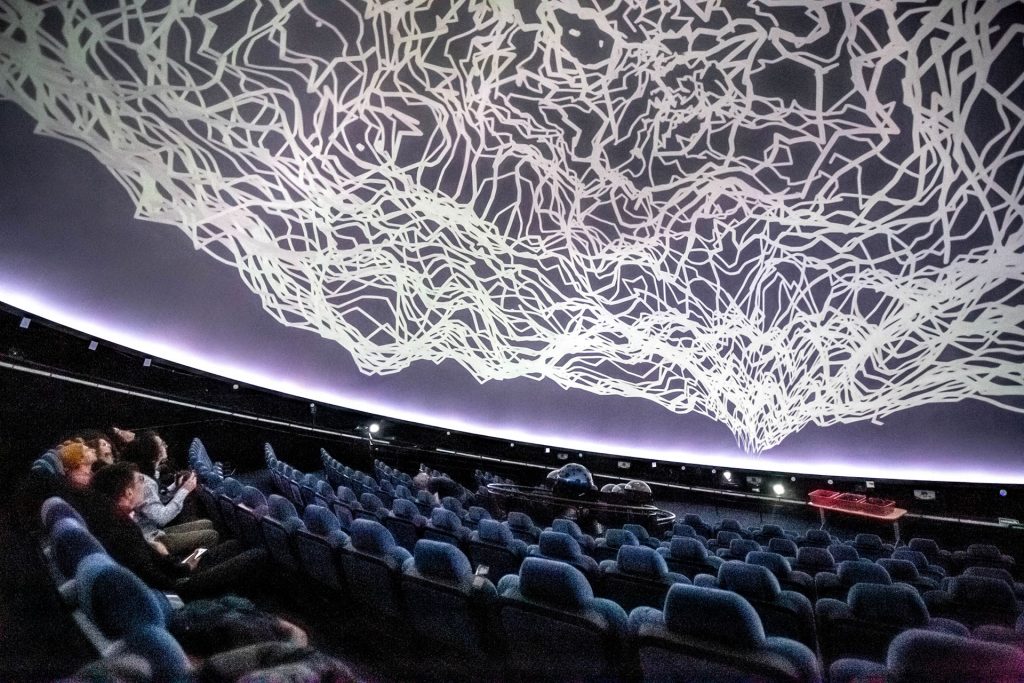
They say we’re made of stardust. Stephen Hawking wondered what happens to information that falls into a black hole. Carlo Rovelli shows that things might be beautiful on the other side of a black hole, and Sabine Hossenfelder wonders if the universe was created with us in mind.
How can astronomical data be translated into the language of art? Is it possible to “hear” the stars, depict the phenomenon of a black hole through a comic book, or explore the universe through a conversation with artificial intelligence?
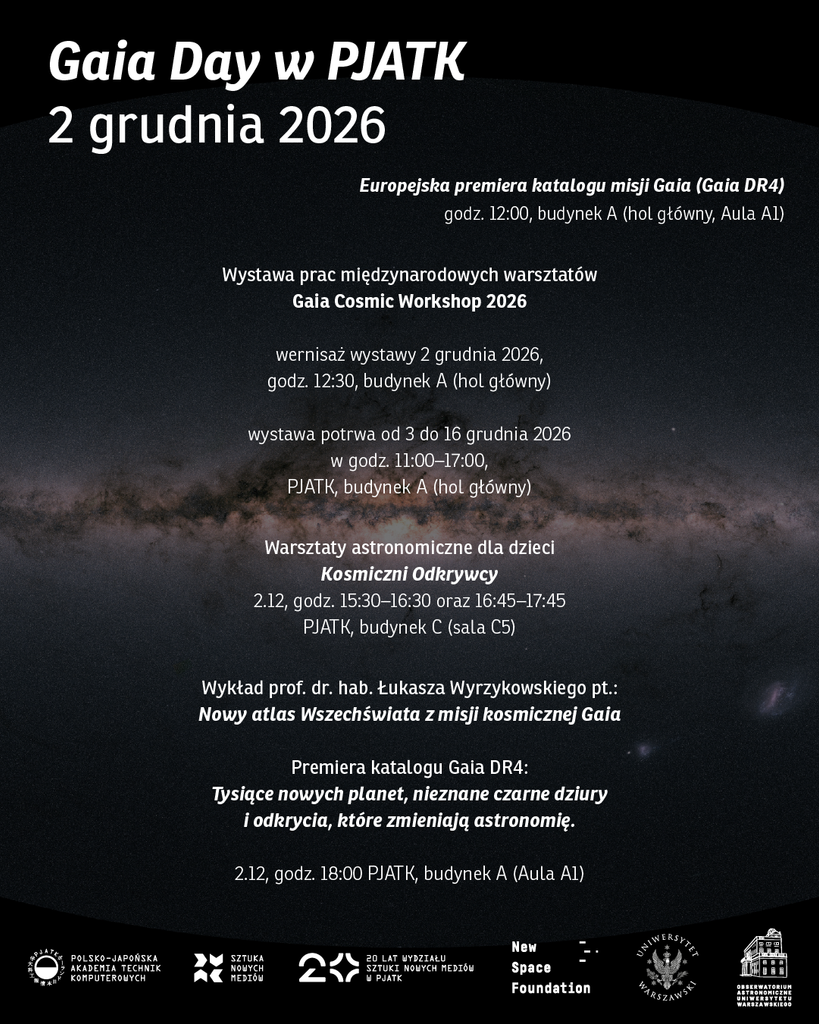
On December 2, 2026, during Gaia Day at the Polish-Japanese Academy of Computer Science, there will be an opening reception for an exhibition of works from the international Gaia Cosmic Workshop 2026, showcasing student projects inspired by the European Gaia space mission.
The works were created in March and April 2026 during the Gaia Cosmic Workshop atPJAIT, led by an international team of scientists, artists, and designers. Drawing on real astronomical data and scientific research findings, the students sought new ways to interpret and popularize knowledge about the universe.
The exhibition will feature posters, digital comics, infographics, visual identity designs, app and game prototypes, as well as multimedia and interactive installations. Among the featured works will be, among others, comic book stories about the birth and death of stars, visualizations inspired by the structure of meteorites, original AI voice agents explaining the Gaia mission, and installations that transform astronomical data into images, motion, and sound in real time.
During the exhibition opening, scientists from the Observatory and the exhibition curator— Dr. Anna Klimczak, Prof.PJAIT —will take us on a journey through the Universe .
GAIA COSMIC WORKSHOP 2026
We warmly invite you to explore the Universe through the lens of science, art, and design!