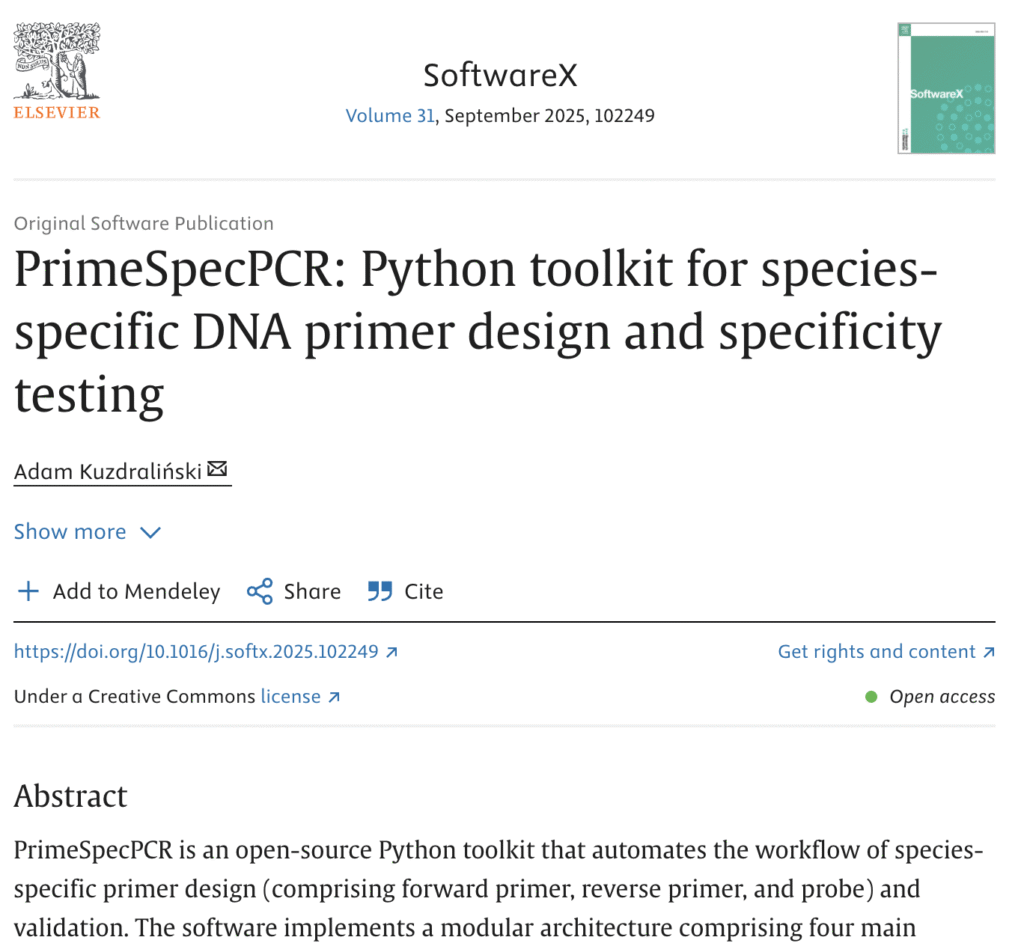
The journal SoftwareX has published a new article titled "PrimeSpecPCR: Python toolkit for species-specific DNA primer design and specificity testing," authored by Adam Kuzdralinski, dr hab. , of the Department of Bioinformatics. The publication presents a tool supporting the design of species-specific PCR primer pairs and verification of their specificity under in silico conditions.
PrimeSpecPCR is open-source software written in Python that automates the process - from downloading sequences from public NCBI databases, to generating primer proposals using Primer3-py and analyzing potential non-specific amplification sites in the broad context of available genetic resources. Thanks to its modular architecture, the tool is easy to install and customize, but also ensures reproducibility and logging of each analysis step.
PrimeSpecPCR's applications cover a wide area biological research. The tool will work well for species identification in ecological studies and eDNA monitoring, as well as in molecular diagnostics for microbiology or medical laboratories. It can also be used in phylogenetic studies and in epidemiology for rapid detection of pathogens, as well as in applications where specific detection of biological threats is crucial.
PrimeSpecPCR's source code is available on the GitHub platform under an MIT license, allowing the tool to be freely used, modified and extended. The repository includes documentation, sample test data and step-by-step installation instructions.