“Cold Cellar” – an exhibition marking the 20th anniversary of the Artistic Graphics Studio PJAIT


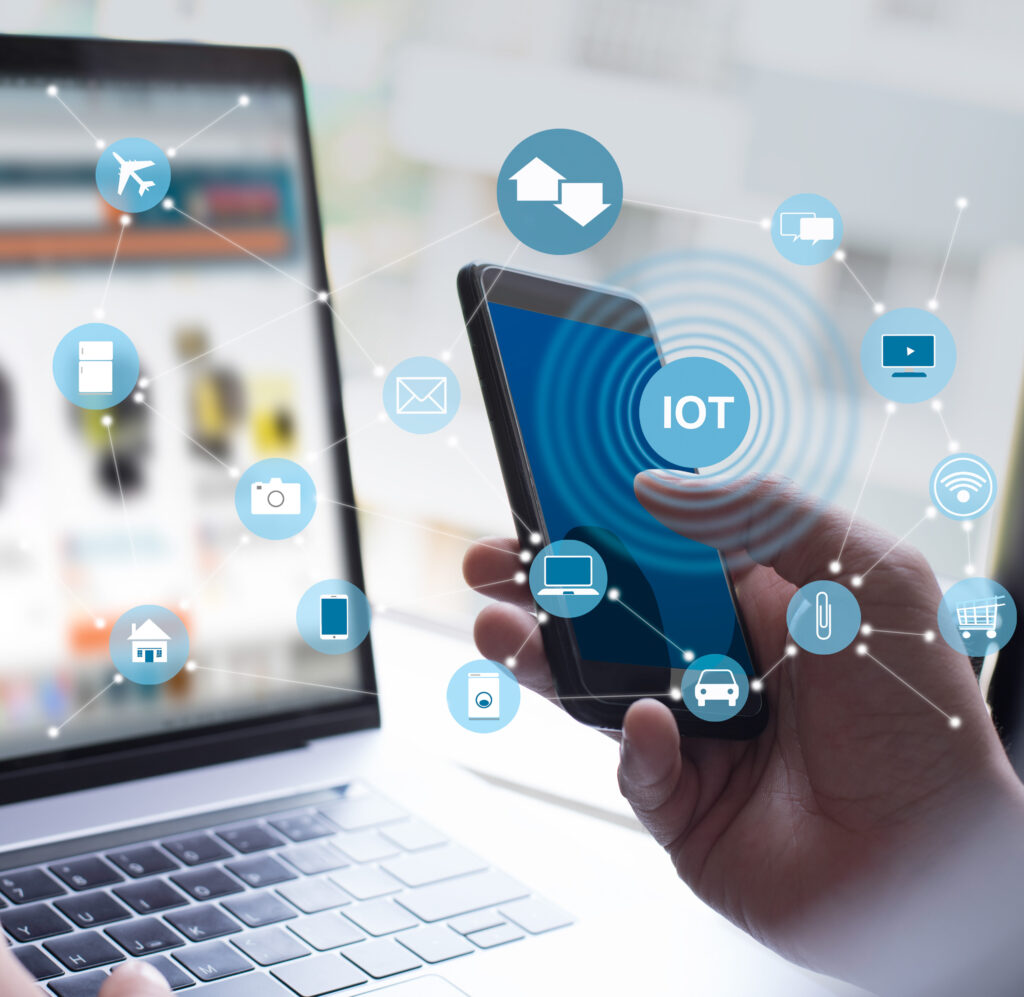
The Internet of Things has long been part of our everyday lives—it’s found in a heart rate monitor, a thermostat that responds to the presence of household members, a car that analyzes driving parameters, and a system that monitors energy consumption in a building. The IoT (Internet of Things) is therefore neither a single application nor a specific device. Rather, it is a fascinating way of connecting the physical world with the digital world.
Simply put, the concept of the Internet of Things can be defined as a network of devices that collect data, communicate with each other or with IT systems, and perform specific actions based on that data.
In a broader sense, however, the IoT should be viewed as a complex ecosystem of hardware, software, connectivity, and data. It is precisely thanks to this ecosystem that the objects around us can operate more autonomously, with greater precision, and in close alignment with their surroundings.
Every IoT system starts with a device. It could be a simple temperature sensor, a camera, a fitness tracker, an energy meter, a GPS module, an industrial machine, or a smart home appliance. These devices continuously collect information such as motion, humidity, location, noise level, the technical condition of components, power consumption, and other parameters necessary for the system to function.
Data alone, however, is not enough. Communication is also needed—that is, an effective way to transmit information to other components of the architecture. Depending on the project, Wi-Fi, Bluetooth, cellular connectivity, industrial networks, or specialized standards for energy-efficient devices are used. The data is then sent to the appropriate application, analytics platform, or cloud environment. There, it can be organized, analyzed, and used to make specific decisions.
That is precisely why the IoT so often and naturally integrates withcloud computing (a model for delivering IT resources—including computing power, storage space, and software—over the Internet). In the case of the Internet of Things, the cloud serves as a powerful backend that stores data from thousands of smaller devices, processes it, and makes it available to users in real time through user-friendly applications or administrative dashboards.
The Internet of Things is easiest to understand through real-life examples, because “IoT” is almost never listed by name on a product’s label. Users primarily see the convenient features: lights that turn on automatically, remote meter readings, fault notifications, payments via a smartwatch, or an app that monitors sleep quality. Behind all these conveniences, however, lies the same universal mechanism—a device records data, instantly transmits it, and the system responds according to its programmed logic.
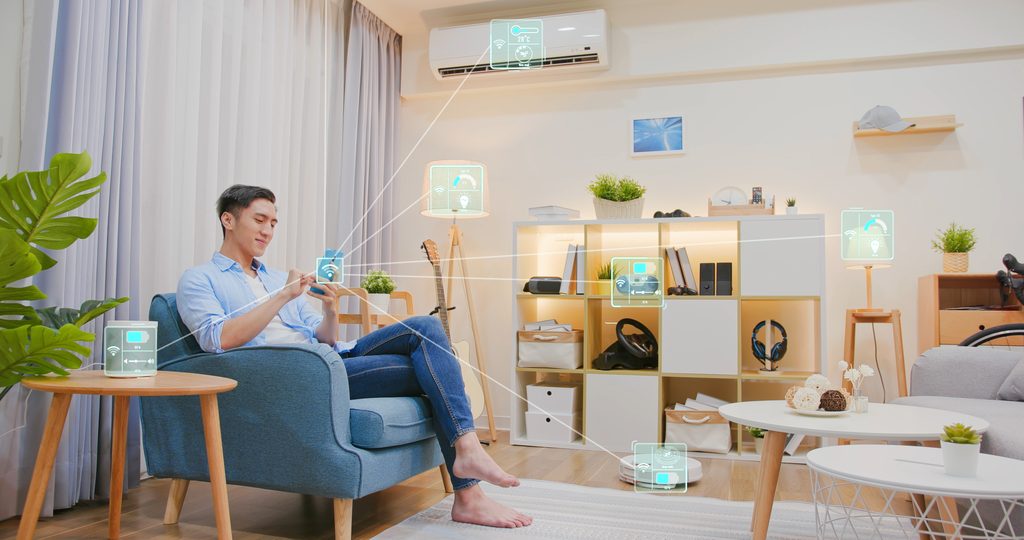
In a smart home, devices can independently manage heating, lighting, security, and energy consumption. In medicine, meanwhile, modern sensors support remote monitoring of patient vital signs, enabling doctors to respond more quickly to concerning changes. In logistics, advanced transmitters help track entire transport processes by monitoring cargo temperature and the exact location of shipments. Industrial IoT, meanwhile, allows for continuous monitoring of machine operation, detection of unusual vibrations, planning of maintenance work, and a drastic reduction in costly downtime.
The list of applications seems endless, but ultimately, it’s not the sheer number of gadgets that matters most. What’s truly significant is that the Internet of Things is bringing information technology closer to the physical world. Programmed code is no longer confined to a computer or smartphone screen—it begins to have a real impact on room temperature, the flow of traffic, the efficiency of an entire factory, the smooth functioning of a city, and even the security of critical infrastructure.
The more devices we decide to connect to the network, the more important a rigorous, engineering-based approach to system design becomes. Implementing the IoT isn’t simply a matter of adding a Wi-Fi module to just any object. We need to think very carefully about what data we really need, how often it should be collected, how it will be stored, who will have access to it, and exactly what will happen in the event of a sudden connection failure.
Security remains a major technological challenge. A simple camera, a small sensor, or an industrial controller can unexpectedly become the weakest link in the entire infrastructure if they are not professionally secured. For this reason, designing IoT solutions requires comprehensive knowledge of computer networks, distributed systems, databases, programming, and cryptography, as well as thorough testing and risk analysis.
Privacy is also of the utmost importance, especially since smart devices operate very close to the user on a daily basis—in their bedroom, car, workplace, and often even directly on their body. The information they collect can reveal a great deal about our habits, daily routines, or hidden health issues. A responsibly designed IoT system should therefore minimize area the amount of data collected, transparently specify the purpose of its processing, and absolutely ensure that the user has full control over what happens to that data.
The IoT only gains real business value when we’re able to draw practical conclusions from the data noise. A single, context-free reading of temperature or humidity usually makes little difference. Only through continuous monitoring of trends, combining data from multiple devices, and early detection of anomalies can we create systems that proactively predict problems rather than merely recording them after the fact.
For example: a smart building will not only track electricity consumption but will also automatically adjust heating and ventilation based on the actual occupancy of the rooms. An innovative manufacturing plant will not merely monitor machine performance but will automatically schedule maintenance precisely when the data indicates an increasing risk of a malfunction. A smart city, on the other hand, will not only collect statistics on traffic but will use them to dynamically manage traffic light cycles and the entire public transportation network.
This is precisely where the Internet of Things intersects so closely with data science and artificial intelligence (AI). Hundreds of sensors provide raw signals from the physical world, while trained algorithms help distinguish natural market volatility from an emergency situation requiring an immediate response. It’s no wonder, then, that the development of the Internet of Things today involves not only a small group of hardware manufacturers, but above all thousands of programmers, analysts, cloud solution specialists, talented designers, and security engineers.
A modern specialist working in the IoT industry must be equally at home in both the world of hardware and software. Extensive knowledge of networking, communication protocols, database administration, operating systems, application development and maintenance, and cybersecurity is essential. As a project grows in scale and complexity, this list expands to include elements of machine learning, industrial automation, robotics, and deep integration of modern cloud systems.
field of study computer science AtPJAIT, you can gain a comprehensive understanding of all the competencies listed above. Our curriculum places special emphasis on hands-on experience, working on cutting-edge projects, and tackling real-world challenges in the IT industry on a daily basis. The program covers, among other things, modern application development methods, distributed system architecture, and big data processing—precisely the areas of expertise without which the successful implementation of IoT projects would be impossible.
It’s also worth clearly noting that today, the Internet of Things is no longer the exclusive domain of a single, isolated specialty. When creating a successful market solution, enthusiasts from the fields of electronics, backend development, mobile apps, UX, IT security, cloud administration, analytics, and comprehensive product management all come together. The conclusion is therefore obvious: the more complex the system we’re working on, the more crucial clear communication within the team becomes—as well as the rare ability to view the entire project simultaneously from three perspectives: the everyday user, the underlying infrastructure, and business objectives.
The rapid growth of the IoT clearly demonstrates that the next, inevitable stage of global digitization is no longer simply the migration of traditional services to the Internet. Currently, the main goal of the IT arms race is to design intelligent, trusted environments in which the real world, through vast amounts of data, feeds our IT systems seamlessly and autonomously. Thanks to such technologies, the modern world is able to respond ever more quickly to sudden global changes, successfully automate the most tedious and repetitive human tasks, and genuinely help us all make much more accurate and optimal decisions in our personal lives and in the marketplace.
Let’s remember, however, that this doesn’t mean we have to artificially turn every small and trivial household item into an invention worthy of being called a “smart device.” A good, sensible solution in the IoT industry should have clear business and human value, solve a specific, pressing everyday problem, genuinely save us time, enhance general physical and digital security, or at the very least reduce household costs and visibly improve the overall quality of life. Simply attaching and connecting a network module to an ordinary household device is by no means a revolutionary innovation. True and sustainable market innovation lies in designing a stable and secure digital system that delivers the desired, real-world market value that many have been waiting for.
That is why the Internet of Things should be viewed as one of the most important areas of development in modern computer science. It combines programming, networking, cloud computing, data analysis, and device design into a single, cohesive ecosystem. And since more and more areas of life and the economy rely on data, the role of specialists capable of creating and securing such systems will only continue to grow.